Indian Legal System and Framework
Constitutional Architecture
The Architecture of Governance
The Constitution of India isn't just a set of rules; it's a carefully designed blueprint for running the country. At its heart are three main pillars: the Legislature, the Executive, and the Judiciary. Think of them not as separate, isolated towers, but as interconnected parts of a single, complex machine. Each has its own job, but they all work together to uphold the principles of democracy.
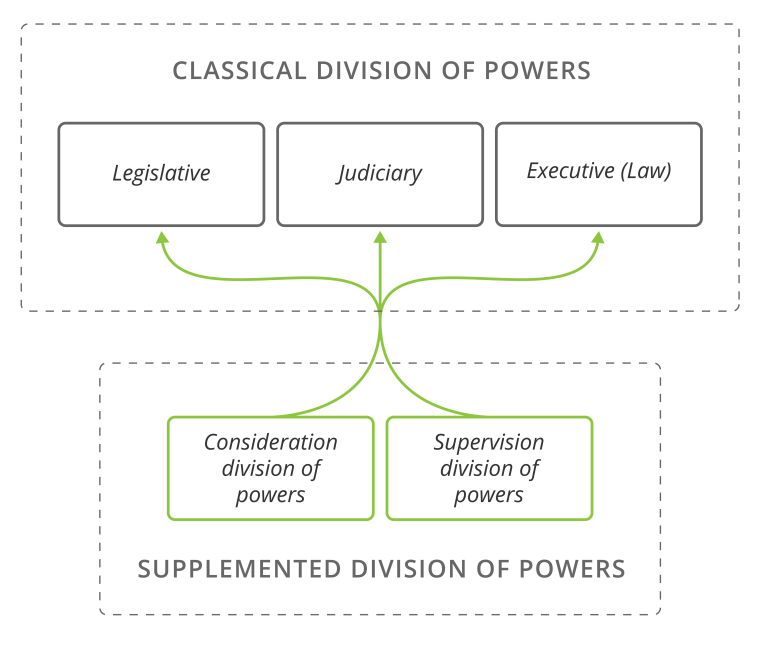
Separation of Powers, Indian Style
The principle of 'Separation of Powers' suggests that the main functions of government should be divided among different branches to prevent any one body from becoming too powerful. However, India doesn't follow a rigid, watertight separation. Instead, our system is built on a network of checks and balances, where each organ can influence and restrain the others. The Executive, for instance, is drawn from the Legislature. The Prime Minister and the Council of Ministers are members of Parliament, making them directly accountable to the body that makes the laws.
This functional overlap ensures that the government remains responsible to the elected representatives of the people.
This framework of controlled cooperation is considered so fundamental that it forms a part of the 'Basic Structure Doctrine'. This judicial principle, established in the landmark Kesavananda Bharati case, holds that Parliament cannot amend the Constitution in a way that would destroy its essential features. The separation of powers is one of those core features.
Checks and Balances in Action
So how do these three branches keep each other in check? The system is a dynamic interplay of power and accountability.
-
The Legislature (Parliament), comprising the Lok Sabha (House of the People) and the Rajya Sabha (Council of States), is the primary law-making body. However, its power isn't absolute. Laws passed by Parliament can be scrutinized by the courts.
-
The Executive (The Government), led by the Prime Minister and the Union Council of Ministers, is responsible for implementing laws. But it is answerable to the Legislature through mechanisms like no-confidence motions, question hours, and debates. If the government loses the confidence of the Lok Sabha, it must resign.
-
The Judiciary (The Courts) acts as the interpreter of the Constitution. Its most powerful tool is Judicial Review, derived from articles like Article 13. This allows the Supreme Court and High Courts to strike down any law passed by the Legislature or any action taken by the Executive if it violates the Constitution, especially the Fundamental Rights.
This intricate dance ensures that power is never concentrated in a single entity. The executive's appointment of judges is balanced by the legislature's power to impeach them. The legislature's law-making power is checked by the judiciary's power to review those laws. It's a system designed for stability and the protection of citizens' rights.
Understanding this constitutional architecture is key to seeing how the Indian legal system functions as a whole. It moves us from just knowing what the law is, to appreciating the dynamic process of how laws are created, implemented, and upheld. Every law and government policy operates within this carefully balanced framework.
How does the Indian Constitution implement the principle of 'Separation of Powers'?
The power of the Judiciary to strike down laws that violate the Constitution is known as: