Indian Ingenuity in Space Energy Efficiency
Introduction to Space Missions
Why Go to Space?
At its heart, space exploration is driven by a deep-seated human curiosity. We look up at the night sky and wonder what’s out there. This curiosity fuels missions that seek to answer fundamental questions: How did the universe begin? Are we alone? What can other planets teach us about our own?
Scientific discovery is a primary objective. We send rovers to Mars to hunt for signs of ancient life in dried-up riverbeds and deploy powerful telescopes to capture images of galaxies billions of light-years away. Each mission is a carefully designed experiment to peel back another layer of the cosmos.
But the benefits aren't just out there. Pushing the boundaries of space travel forces us to invent new technologies that often find their way back to Earth. GPS, medical imaging devices, and even the lightweight materials in your running shoes have roots in the space program. Solving problems for space often solves problems for us here at home.
Finally, there's the long-term vision: ensuring the survival of humanity. Becoming a multi-planetary species, with outposts on the Moon or Mars, is a hedge against a global catastrophe. It’s about building a future where our existence isn't tied to a single, fragile planet.
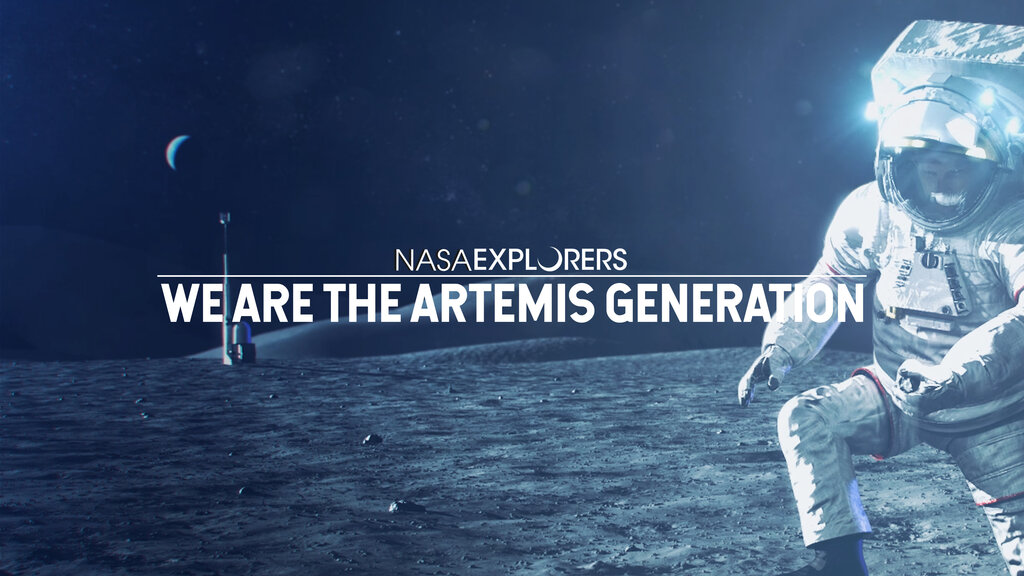
Surviving the Void
Space is an incredibly hostile environment, and getting there and back is one of the greatest technical challenges we've ever faced. The sheer distances are mind-boggling. A trip to the Moon takes a few days, but a journey to Mars can take over six months, one way. That’s a long time to be in a small metal box.
Once you leave Earth's protective atmosphere and magnetic field, you're exposed to the raw vacuum of space. There's no air to breathe and no pressure, requiring spacecraft and suits to be perfectly sealed. Then there's the radiation. High-energy particles from the sun and deep space can damage electronics and pose a serious health risk to astronauts.
Temperature swings are extreme. In direct sunlight, a spacecraft's surface can get hotter than boiling water, while in shadow it can plummet to hundreds of degrees below freezing. And all the while, you have to worry about micrometeoroids, tiny bits of rock and debris zipping around at speeds faster than a bullet.
Space travel includes launch and in-space propulsion systems, cryogenic fluid management, and thermal management, as well as navigation and landing systems to get our supplies, equipment, and robotic or human explorers to diverse surface destinations.
Finally, there’s the simple act of getting off and back to Earth. Escaping our planet’s gravity requires immense power and precision. The launch is a controlled explosion that hurls a vehicle into orbit. Coming home is just as tricky. A spacecraft must re-enter the atmosphere at the perfect angle. Too steep, and it burns up; too shallow, and it skips back into space. It's a high-stakes balancing act from start to finish.
Anatomy of a Mission
While every space mission is unique, most follow a similar blueprint and rely on a few key components to succeed.
It all starts with the spacecraft. This isn't just one piece, but a system. The launch vehicle, or rocket, provides the raw power to get to orbit. The payload is the whole point of the mission, whether it's a telescope, a rover, or a capsule carrying astronauts. Finally, a service module often houses the essential systems that keep everything running: power, propulsion, and communications.
The mission itself is the master plan. What are we trying to accomplish? Where are we going? This plan includes the specific scientific objectives, the trajectory the spacecraft will follow, and a detailed timeline for every phase from launch to landing.
Overseeing everything are the operations teams on the ground. Mission Control is the nerve center, communicating with the spacecraft, monitoring its health, and making critical decisions. They rely on a global network of large radio antennas, often called the Deep Space Network, to stay in touch across millions of miles.
These components work together to explore a specific destination. Whether it's orbiting the Moon, landing on Mars, or flying by Jupiter, every action is carefully planned to achieve the mission's goals at that target.
Ready to test your knowledge? This quiz will cover the basics of space missions we've just discussed.
According to the provided text, which of the following is NOT a primary motivation for space exploration?
What is the primary function of the Deep Space Network in space missions?
From the initial spark of curiosity to the complex execution, a space mission is a massive undertaking. It combines ambitious goals with incredible technical challenges, all managed by dedicated teams here on Earth.