Indian Constitutional Preamble Analysis
Legal Status Evolution
A Shifting Status
For a document as foundational as a constitution, you might assume every word has a clearly defined legal weight from the start. However, the Preamble to the Indian Constitution had a surprisingly uncertain beginning. For years, its legal status was a subject of debate. Was it merely an eloquent introduction, or did it hold actual legal power?
The Supreme Court first tackled this question in the of 1960. The court's judgment was clear: the Preamble was not a part of the Constitution. It was seen as a key to open the mind of the makers, but not a source of substantive power or limitation. Essentially, it was considered an ornamental preface, helpful for understanding the framers' intent but not legally binding.
A Landmark Reversal
This view held for over a decade, but a dramatic shift occurred in 1973 with the landmark . This case is famous for many reasons, but its impact on the Preamble was profound. The Supreme Court reversed its earlier position completely.
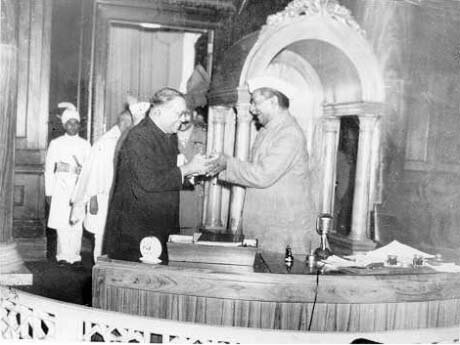
In a historic judgment, the Court declared that the Preamble is an integral part of the Constitution. It acknowledged the Preamble's significance in interpreting the document and understanding the basic framework the framers intended to create. This decision meant the Preamble could be used by courts to help understand ambiguities in the Constitution's articles.
Clarifying the Role
So, the Preamble was now officially part of the Constitution. But what did that mean in practice? Could a citizen sue the government for failing to uphold the
fraternity
mentioned in the Preamble? This question was clarified in the 1995 case, LIC of India v. Consumer Education & Research Centre.
The Supreme Court reaffirmed that the Preamble is indeed an integral part of the Constitution. However, it also clarified that it is . This means that its principles cannot be directly enforced in a court of law on their own. You cannot file a case based solely on a perceived violation of the Preamble's ideals.
The Preamble acts as a guide for interpreting the Constitution, but it is not a source of power for any branch of government, nor does it place limitations on their power. Its purpose is to illuminate, not to legislate.
The Preamble's legal journey shows its evolution from a simple introduction to a core, guiding element of the Constitution. While it doesn't grant powers or create rights that can be fought for in court, it provides the philosophical backbone and interpretive lens through which the entire document is understood.
What did the Supreme Court conclude about the Preamble's legal status in the 1960 Berubari Union case?
Which landmark Supreme Court case is responsible for establishing the Preamble as an integral part of the Indian Constitution?
This journey from a non-essential preface to an integral, guiding soul of the document highlights the dynamic nature of constitutional law.