Indian Constitutional Dynamics and Landmark Jurisprudence
Basic Structure Doctrine
A Tug of War
The power to amend a constitution is crucial for any democracy to adapt. But what if that power is used to change the very soul of the document? This question sparked a decades-long struggle between India's Parliament and its Supreme Court. At the heart of it was Article 368, the provision granting Parliament the power to amend the Constitution.
Initially, the Supreme Court took a hands-off approach. In the 1951 case of Shankari Prasad v. Union of India, the court ruled that Parliament's power under Article 368 was absolute. This meant that even the Fundamental Rights, the core protections guaranteed to citizens, could be amended. The judiciary saw no distinction between an ordinary law and a constitutional amendment.
The Ground Shifts
This position held for over a decade. But as Parliament passed more amendments that curtailed individual rights, particularly property rights, the judicial mood began to change. The turning point came in 1967 with the Golaknath v. State of Punjab case. In a dramatic reversal, an 11-judge bench declared that Fundamental Rights were 'transcendental and immutable' and could not be amended by Parliament at all.
This ruling effectively placed Fundamental Rights beyond the reach of parliamentary amendment, creating a direct confrontation between the legislature and the judiciary.
To avoid throwing the country's legal system into chaos by invalidating past amendments, the court introduced the doctrine of ''. This meant the Golaknath ruling would only apply to future amendments, while past ones, like the one challenged in Shankari Prasad, would remain valid. This was a clever way to change the law going forward without creating a retrospective mess.
The Watershed Moment
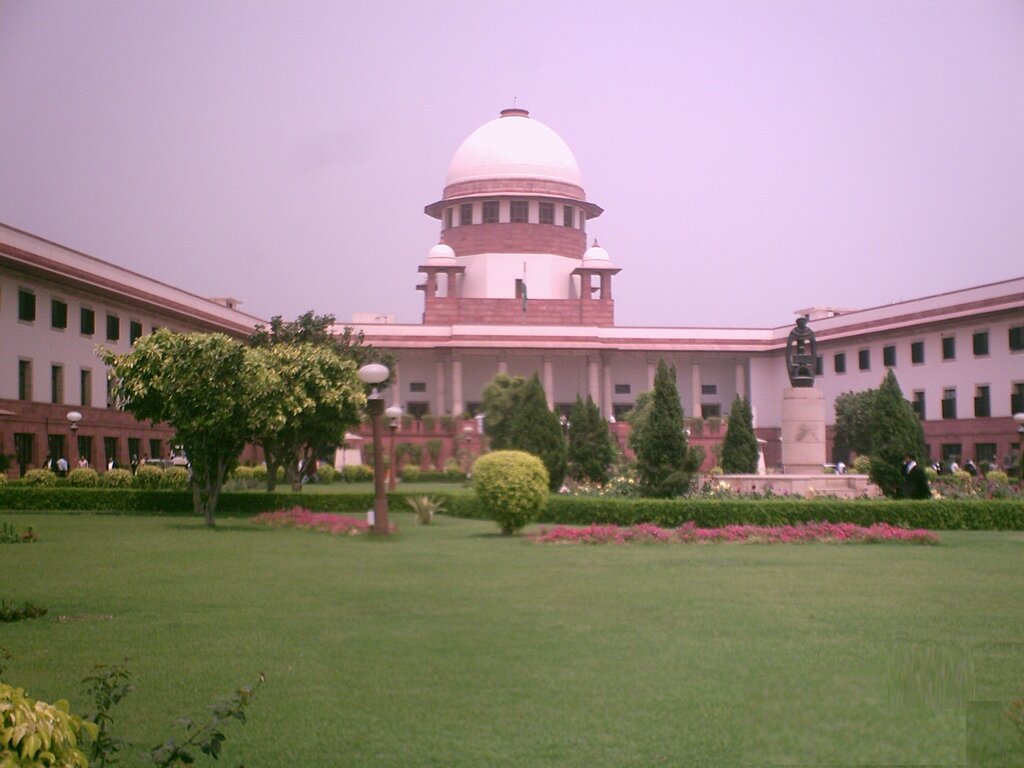
The tension was palpable. Parliament responded to Golaknath with the 24th Amendment, explicitly stating its power to amend any part of the Constitution, including Fundamental Rights. This set the stage for the most significant constitutional case in India's history: in 1973.
A full 13-judge bench was convened to hear the case. For 68 days, they debated the limits of parliamentary power. The final verdict, delivered in a razor-thin 7:6 majority, was a masterstroke of judicial balancing. The court overturned the Golaknath decision, affirming that Parliament did have the power to amend Fundamental Rights. However, it added a monumental caveat: this power was not unlimited. Parliament could amend the Constitution, but it could not alter or destroy its 'basic structure' or 'identity'.
The basic structure doctrine is an Indian judicial principle that the Constitution of India has certain basic features that cannot be altered or destroyed through amendments by the parliament.
This ruling established that there are implicit limitations on the amending power in Article 368. While the Constitution doesn't explicitly list these features, the court asserted that its core framework must remain intact. The 'Basic Structure Doctrine' was born.
Defining and Solidifying the Doctrine
The court didn't provide an exhaustive list of what constitutes the 'basic structure', leaving it to be determined on a case-by-case basis. Over the years, however, key elements have been identified, including:
- Supremacy of the Constitution
- Secularism and Federalism
- Separation of powers
- The Rule of Law
The doctrine faced immediate challenges. In the Minerva Mills v. Union of India (1980) case, the Supreme Court struck down parts of the 42nd Amendment which had been enacted to give Parliament unlimited amending power and to place certain laws beyond judicial review. The court held that 'limited amending power is itself a basic feature of the Constitution'.
The final piece of the puzzle came in Waman Rao v. Union of India (1981). The court decided that the Basic Structure Doctrine would apply prospectively. It set the date of the Kesavananda Bharati judgment, April 24, 1973, as a cutoff. Any constitutional amendment made after this date could be challenged on the grounds of violating the basic structure, while those made before were safe.
Now, let's test your understanding of this constitutional journey.
What was the Supreme Court's initial stance on Parliament's power to amend Fundamental Rights, as established in the 1951 Shankari Prasad case?
The landmark 'Basic Structure Doctrine' was established in which case?
Through this series of landmark judgments, the Indian Supreme Court forged a powerful check on legislative power, ensuring that the foundational principles of the nation's democracy remain permanent.