India to Europe Payment Flows
International Payment Basics
Sending Money Across Borders
When you buy a product from another country or pay a freelancer overseas, you're making an international payment. These transactions, also called cross-border payments, are the backbone of the global economy. They allow businesses to trade, families to send money home, and companies to pay employees who live around the world.
Decades ago, sending money abroad was slow and expensive. You had to go to a bank, fill out forms, and wait days for the funds to arrive. Today, technology has made it faster and cheaper, but the underlying process can still be complex. Understanding how it works is key to navigating the world of global finance.
As more and more of us are purchasing goods, selling services and paying partners or employees on a global scale, the need for fast, straightforward, and reliable cross-border payments has never been greater.
The Key Players
Several organizations work together to move your money from point A to point B. Think of them as the cast of characters in the story of your transaction.
Banks are the traditional players. To send money internationally, your bank connects with the recipient's bank through a network of correspondent banks. These are intermediary banks that have relationships with each other, passing the money along until it reaches its destination. This system is reliable but can be slow and involve multiple fees.
Payment Service Providers (PSPs) are newer, technology-focused companies like PayPal, Wise, or Revolut. They often have their own networks of local bank accounts in different countries. This allows them to receive your money in one country and pay it out from their account in another, bypassing the complex correspondent banking system. The result is often a faster, cheaper transfer.
Regulatory Bodies are government agencies like central banks or financial authorities. They don't handle your money directly, but they set the rules. Their job is to ensure the system is secure, prevent financial crimes like money laundering, and protect consumers. Both banks and PSPs must follow their regulations.
The Journey of a Payment
An international payment moves through three main stages. This process ensures the money gets from the right sender to the right receiver securely.
The three key stages are Initiation, Processing, and Settlement.
-
Initiation: This is where it all starts. The sender provides the payment details, such as the recipient's name, bank account information, and the amount to be sent. They also choose how to send the funds, whether through their bank or a PSP.
-
Processing: This is the journey. The bank or PSP verifies the transaction details and sends the payment instructions through its network. If it's a traditional bank, the payment might hop between several correspondent banks. If it's a PSP, it might move money between its own internal accounts.
-
Settlement: The final step. The recipient's bank or PSP receives the payment instructions and credits the money to the recipient's account. The transaction is now complete.
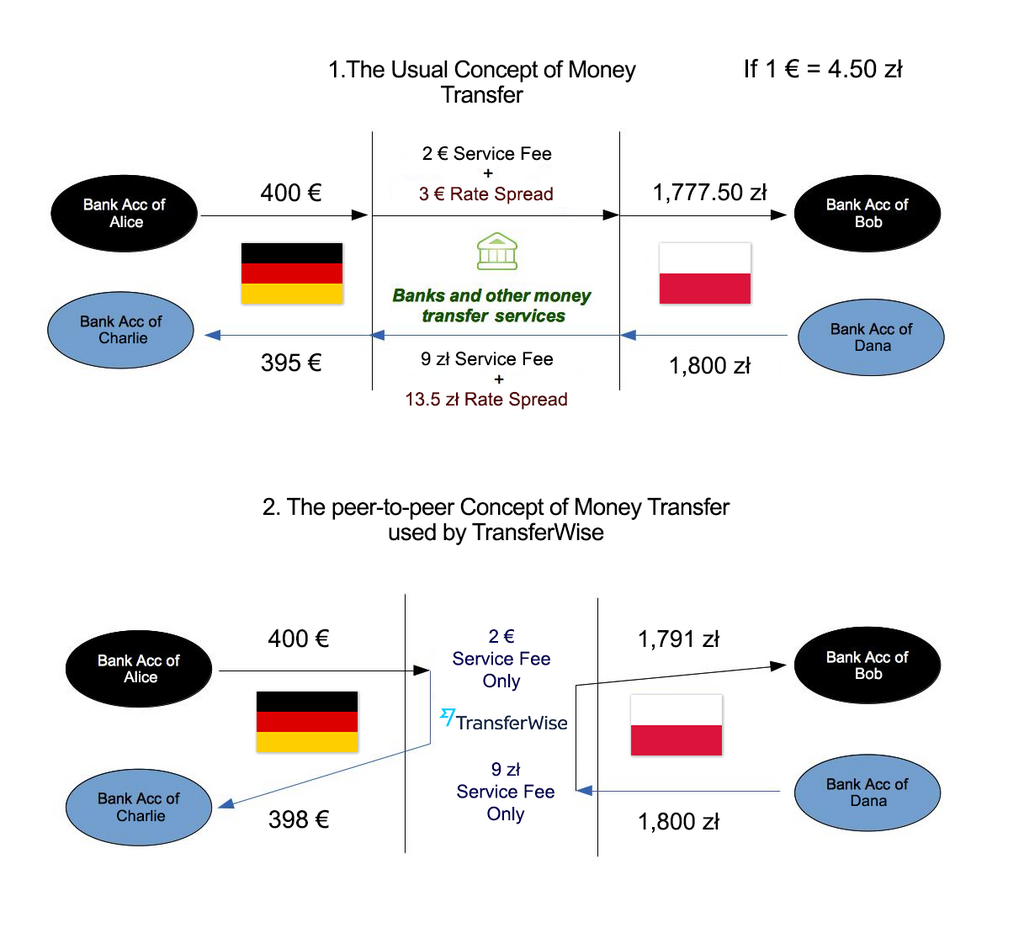
The path the money takes during processing can significantly impact the speed and cost of the transfer. Modern PSPs were created specifically to simplify this stage.
Common Hurdles
While technology has improved, sending money across borders isn't always seamless. Several challenges can complicate the process.
Each country has its own financial rules. Banks and PSPs must navigate this complex web of regulations to ensure every transaction is compliant, which can add time and cost.
Another challenge is transparency. With traditional bank transfers, hidden fees and unclear exchange rates can mean the recipient gets less money than the sender intended. The money's path through multiple banks can also make it difficult to track its status in real-time.
Finally, speed can be an issue. While some modern services offer instant transfers, traditional bank transfers can still take several business days to complete, which can be a problem for time-sensitive payments.
Understanding these basics helps demystify what happens behind the scenes when you send money internationally. It highlights the roles of different players and the journey your money takes to cross the globe.