Impressionist Painting Techniques
Origins of Impressionism
A Break with Tradition
In the mid-19th century, the French art world was ruled by one institution: the Académie des Beaux-Arts. To be a successful artist, you had to play by their rules. That meant painting grand historical, mythological, or religious scenes with a polished, hyper-realistic finish. Every brushstroke was blended away until the surface was smooth as glass. The goal was to create a timeless, idealized image, not to capture a fleeting moment.
Each year, the Académie hosted the Salon de Paris, the most important art exhibition in the world. Getting your work accepted was the only path to fame and fortune. But a group of young, rebellious artists found this tradition stifling. They looked at the world around them—a world rapidly changing—and felt that the grand, stuffy paintings of the Salon had nothing to say about their modern lives.
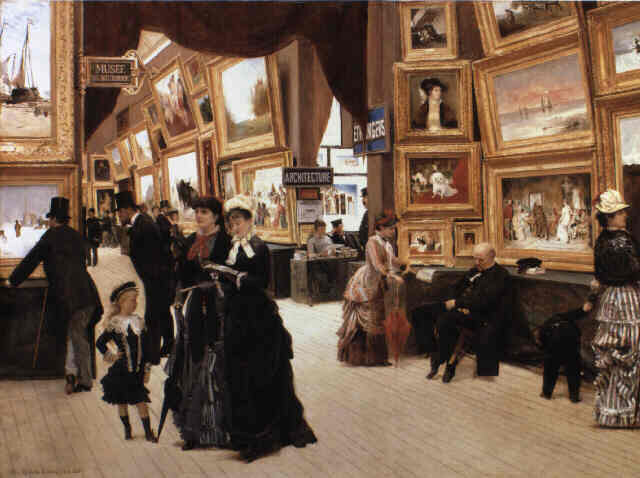
These artists, including Claude Monet, Pierre-Auguste Renoir, and Camille Pissarro, wanted to paint what they saw every day. They were tired of historical reenactments and classical myths. They wanted to capture the real world, in real time.
Paris in Motion
The France these artists lived in was undergoing a massive transformation. The Industrial Revolution brought factories, railways, and a surge of people moving to cities. Paris itself was being completely redesigned by Baron Haussmann, who tore down medieval alleys and replaced them with the wide boulevards, grand apartment buildings, and public parks we know today.
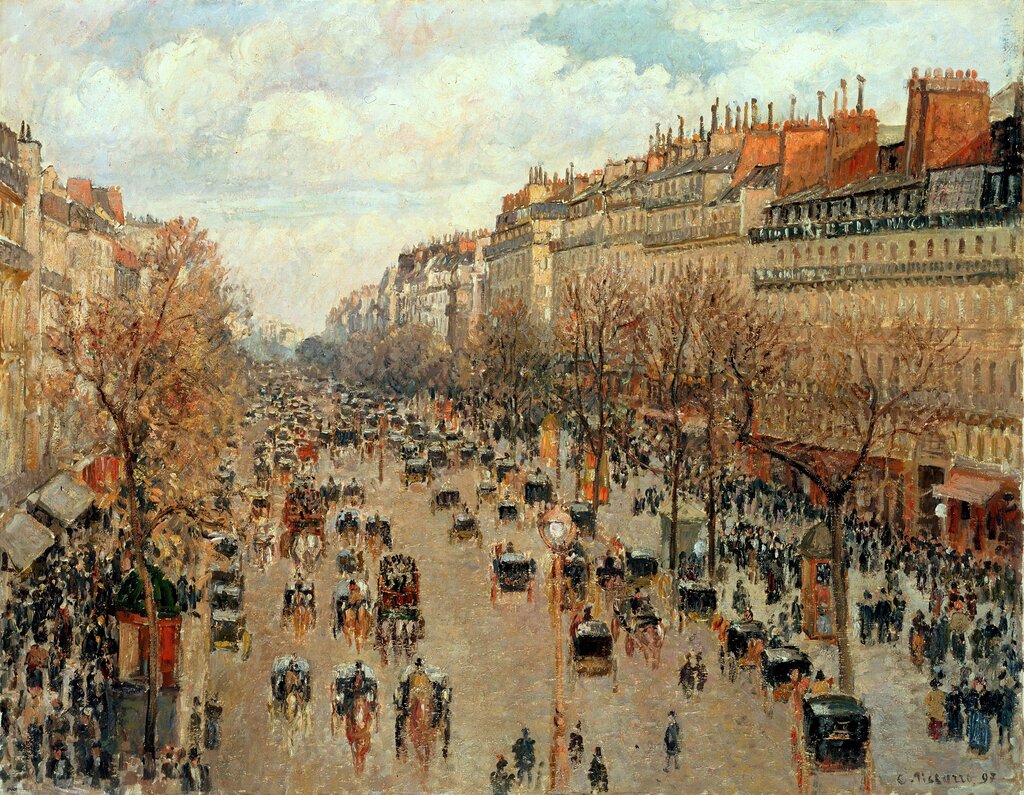
This new urban landscape was a feast for the eyes. Suddenly, the subject of art wasn't just in a studio. It was everywhere: the hustle of a busy street, the smoke rising from a train, the dappled sunlight in a park, or people relaxing in a café. A growing middle class had more leisure time, and their activities—boating, picnics, and strolls along the Seine—became worthy subjects for a painting.
Impressionists often depicted scenes from ordinary life, such as city streets, parks, and cafes, rather than grand historical or mythological themes.
To capture these fleeting moments, artists needed to work quickly. They left the studio and began painting outdoors, or en plein air. This practice forced them to focus on the immediate sensations of light and color, rather than precise details.
The Camera's Eye
Another revolution was also underway: photography. When the first cameras appeared in the 1830s and 40s, they sent a shockwave through the art world. For centuries, painting's primary job was to create a faithful record of reality. Now, a machine could do that faster and more accurately than any human hand.
This was liberating for many painters. If a camera could capture reality, what was the purpose of painting? The Impressionists' answer was that painting could capture something a camera couldn't: the feeling of a moment. They weren't interested in a perfect, frozen copy of a scene. They wanted to paint the way the eye actually sees—the shifting light, the shimmering water, the blur of motion. It was about capturing a personal, subjective "impression."
The First Exhibition
After years of rejection from the official Salon, the artists decided to take matters into their own hands. In 1874, they organized their own independent exhibition in the former studio of the photographer Nadar. It was a radical act.
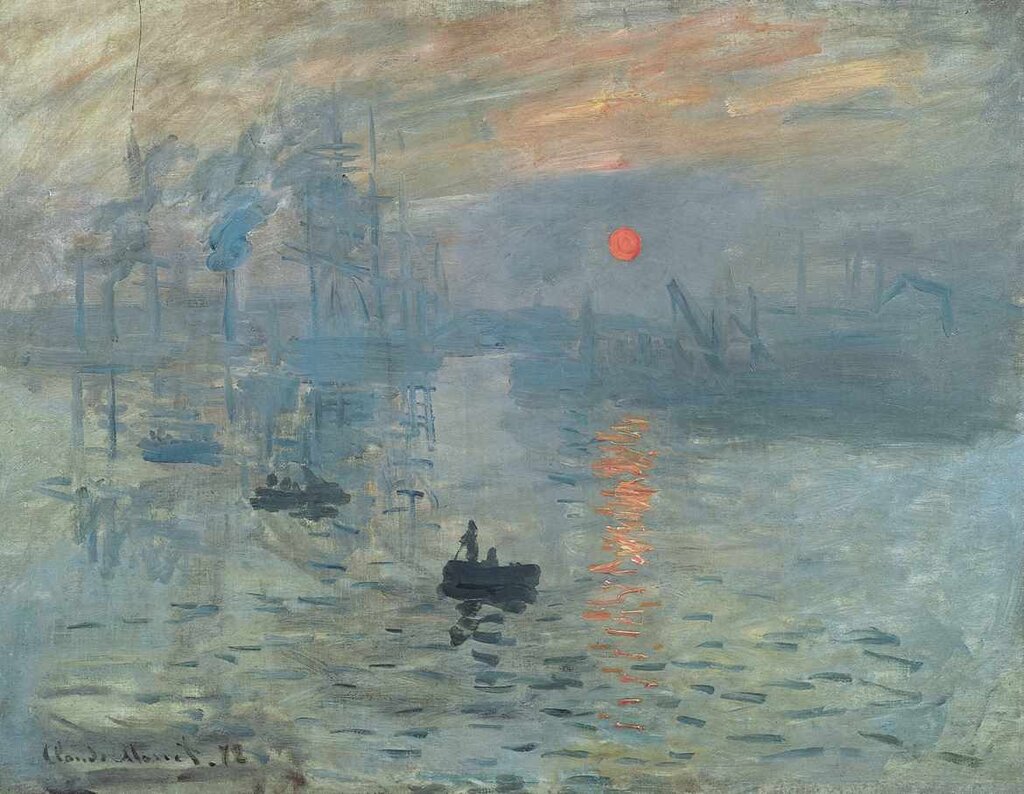
Among the works on display was a painting by Claude Monet titled Impression, soleil levant (Impression, Sunrise). One critic, Louis Leroy, seized on the title to mock the entire group. He called his scathing review "The Exhibition of the Impressionists," and the name, meant as an insult, stuck.
The first exhibition was a financial failure, and the critics were harsh. They called the paintings unfinished sketches, blurry, and messy. But it was a turning point. The Impressionists had declared their independence from the old guard and started a conversation that would change art forever.
What institution controlled the French art world in the mid-19th century, championing a highly polished, traditional style?
Which of the following was a primary motivation for the Impressionists to paint scenes of everyday modern life?