Impressionist Painting Techniques
Introduction to Impressionism
Capturing a Moment
In the late 19th century, a group of young Parisian artists decided to break the rules. At the time, the art world was dominated by the Académie des Beaux-Arts, which prized historical subjects, realistic details, and a polished, almost invisible, brushstroke. It was art that looked back at the past. But these new artists wanted to paint the world around them, right as it was happening.
They weren't interested in creating a perfect, photographic copy of a scene. Instead, they wanted to capture the feeling of a moment—the impression it left on them. This radical idea gave their movement its name: Impressionism.
Their timing was perfect. Paris was changing rapidly. The Industrial Revolution brought new life to the city, with bustling boulevards, cafes, and railways. A growing middle class had more time for leisure, creating new scenes to paint, like picnics in the park or boating on the Seine.
Crucially, new technology helped make their style possible. Pre-mixed paints became available in portable tubes for the first time. Artists could finally leave their studios and paint outdoors, a practice known as en plein air. This allowed them to directly observe and capture the fleeting effects of sunlight on a landscape.
The Rebels of Paris
The Impressionists were a diverse group, but they were united by their desire for artistic freedom. They organized their own independent exhibitions after being repeatedly rejected by the official Salon, the annual exhibition run by the Académie.
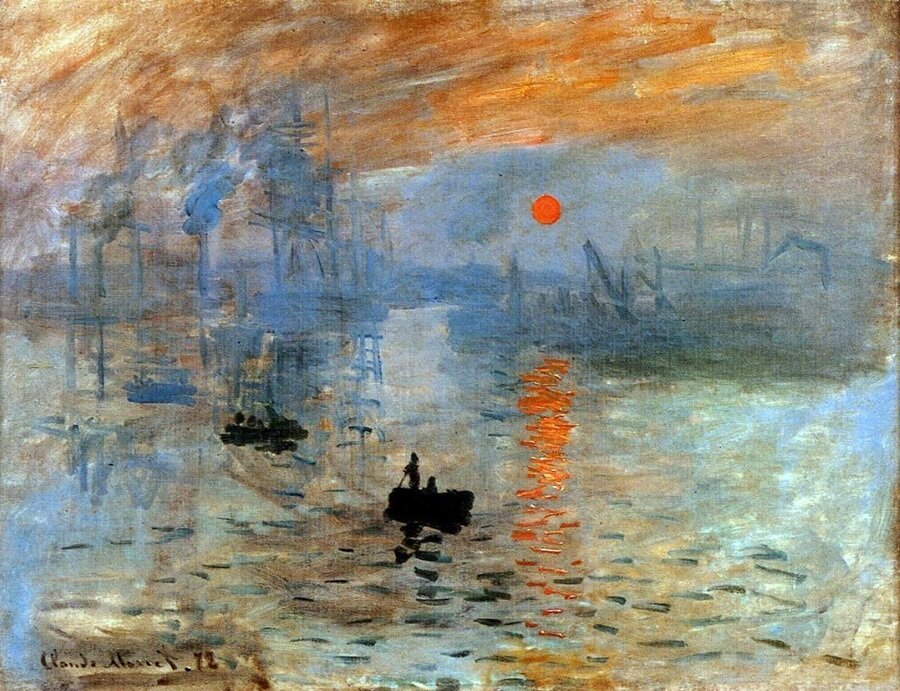
Their first exhibition in 1874 was met with ridicule. A critic mockingly used the title of Monet's painting, "Impression, Sunrise," to coin the term "Impressionists," and the name stuck.
Several key figures led the movement:
- Claude Monet was obsessed with light. He would paint the same subject—like haystacks or the Rouen Cathedral—over and over at different times of day to study how the changing light altered its appearance.
- Pierre-Auguste Renoir focused on the beauty of life, often painting people in social settings. His work is filled with dappled light and vibrant color, capturing moments of joy and intimacy.
- Edgar Degas was fascinated by movement. He is famous for his paintings of ballet dancers and horse races, often using unusual angles and compositions that feel spontaneous, like a snapshot.
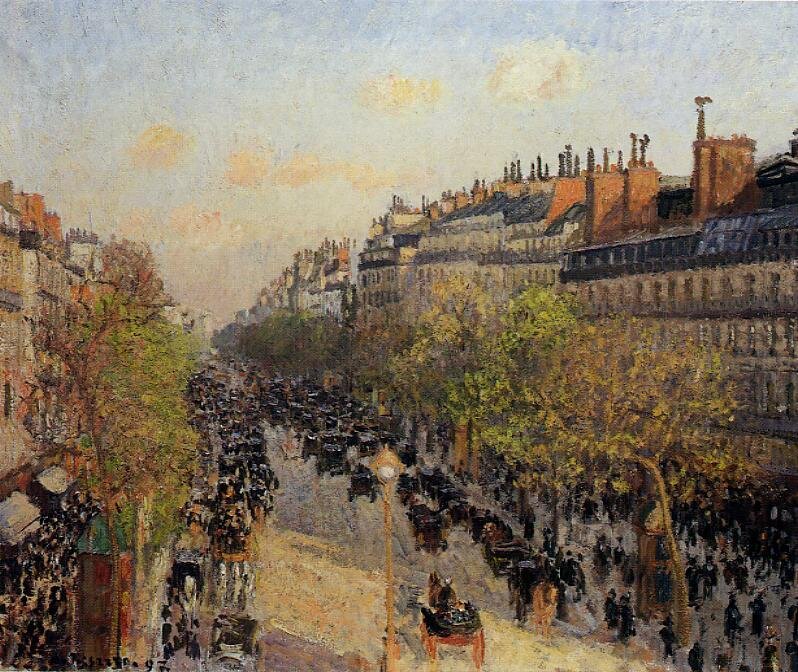
- Camille Pissarro was a mentor to many younger artists. He painted cityscapes and rural landscapes, capturing the atmosphere of modern Parisian life and the quiet dignity of the countryside.
A New Way of Seeing
So, what makes a painting look "Impressionist"? The style is defined by a few core characteristics.
Impressionism is characterized by short brushstrokes, vivid colors, and an emphasis on capturing light and its effects.
The brushwork is often thick and visible, giving the surface of the painting a sense of texture and energy. Rather than blending colors smoothly, Impressionists often placed unmixed colors side-by-side, letting the viewer's eye mix them from a distance. They also noticed that shadows weren't just gray or black, but filled with reflected color from their surroundings.
Their subject matter was also revolutionary. They abandoned grand historical, mythological, and religious scenes in favor of the everyday world. They painted landscapes, city streets, cafes, and portraits of their friends and family.
| Characteristic | Academic Art | Impressionism |
|---|---|---|
| Brushwork | Smooth, blended, invisible | Short, thick, visible |
| Subject | History, mythology, religion | Everyday life, landscapes |
| Color | Realistic, somber tones | Bright, vibrant, unmixed |
| Setting | Studio | Outdoors (en plein air) |
| Goal | Idealized perfection | Capture a fleeting moment |
Ready to test your knowledge of this groundbreaking movement? Let's see what you've learned.
The Impressionist movement was a rebellion against the dominant artistic standards of which institution?
Which technological innovation was crucial for enabling the Impressionist practice of painting en plein air (outdoors)?
By breaking from tradition, the Impressionists opened the door for all of modern art. They taught the world to see beauty not just in grand subjects, but in the light and color of a single, passing moment.