Immunology Cytokines and Immune Cells Explained
Immune System Basics
Your Body's Two-Part Defense
Your body is constantly under siege from microscopic invaders like bacteria, viruses, and fungi. These potential troublemakers are called pathogens. To protect you, your body has a sophisticated defense network called the immune system. It works around the clock to identify and eliminate threats.
The immune system has two main branches that work together: the innate system and the adaptive system.
Pathogen
noun
A bacterium, virus, or other microorganism that can cause disease.
Think of the innate immune system as your body's first responders. It's the defense you're born with. When a pathogen gets past your physical barriers, like your skin, the innate system launches a rapid, general attack. It doesn't recognize specific pathogens, but it can spot common features of microbes that don't belong.
The adaptive immune system is more like a team of specialized detectives. It's slower to act the first time it encounters a new pathogen, but its response is highly specific and powerful. Crucially, it creates a
The adaptive immune system remembers past invaders. This memory is why you often only get sick from a particular virus, like chickenpox, once. It's also the principle behind vaccines.
Here’s a quick comparison of the two systems:
| Feature | Innate Immunity | Adaptive Immunity |
|---|---|---|
| Speed | Fast (minutes to hours) | Slow (days) |
| Specificity | Non-specific | Highly specific |
| Memory | None | Yes, long-lasting |
| Key Cells | Macrophages, NK cells | T cells, B cells |
Where Immune Cells Are Made and Trained
Immune cells don't just appear out of nowhere. They are produced and mature in specialized locations called primary lymphoid organs. These are the boot camps of the immune system.
The main primary lymphoid organs are:
-
Bone Marrow: The soft, spongy tissue inside your bones is the factory for all blood cells, including every type of immune cell. It's where they are born from a common parent cell, known as a hematopoietic stem cell.
-
Thymus: This small organ sits behind your breastbone. It's a specialized school for a critical type of immune cell called a T cell. In the thymus, T cells learn to distinguish between the body's own cells ("self") and foreign invaders ("non-self"). This training is vital to prevent the immune system from attacking your own body.
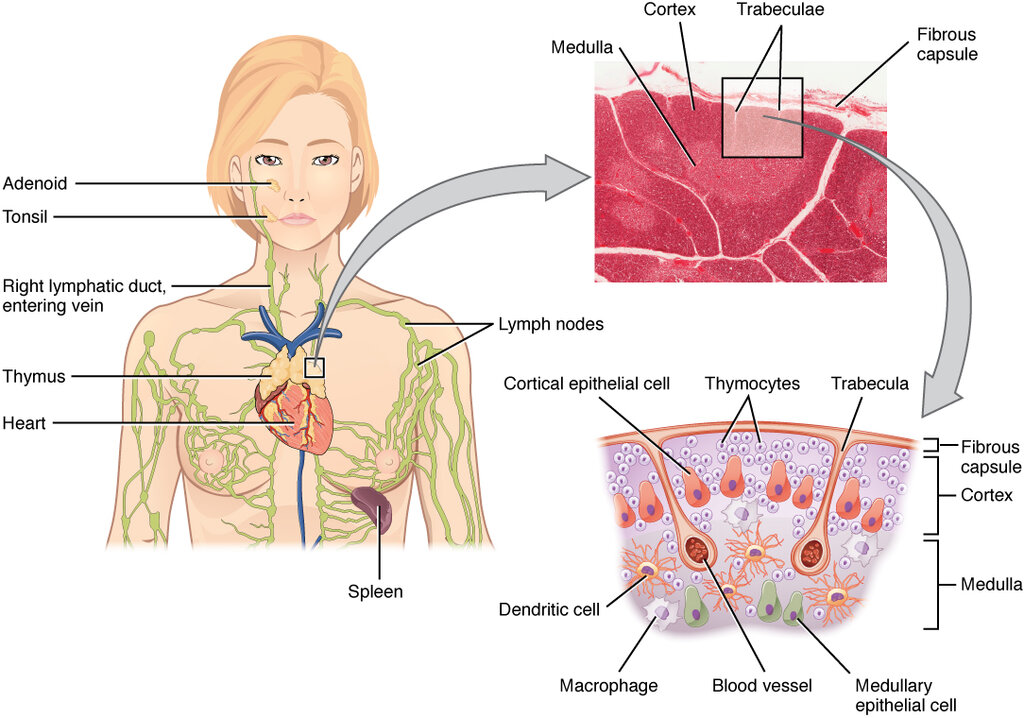
Once immune cells are mature, they need a place to work. They patrol the body and gather in secondary lymphoid organs, which are like strategic command centers. Here, they can encounter pathogens and launch a coordinated attack.
Secondary lymphoid organs are where immune cells are activated to fight infection.
The major secondary lymphoid organs include:
-
Lymph Nodes: You've probably felt these small, bean-shaped structures in your neck or armpits when they swell up during an illness. They are filtering stations connected by a network of lymphatic vessels. As fluid from your tissues (lymph) circulates through them, immune cells inside the nodes screen for pathogens.
-
Spleen: This organ, located in your upper-left abdomen, filters your blood. It traps blood-borne pathogens and removes old or damaged red blood cells. It's a major hub for immune surveillance.
The Cells of the Immune Army
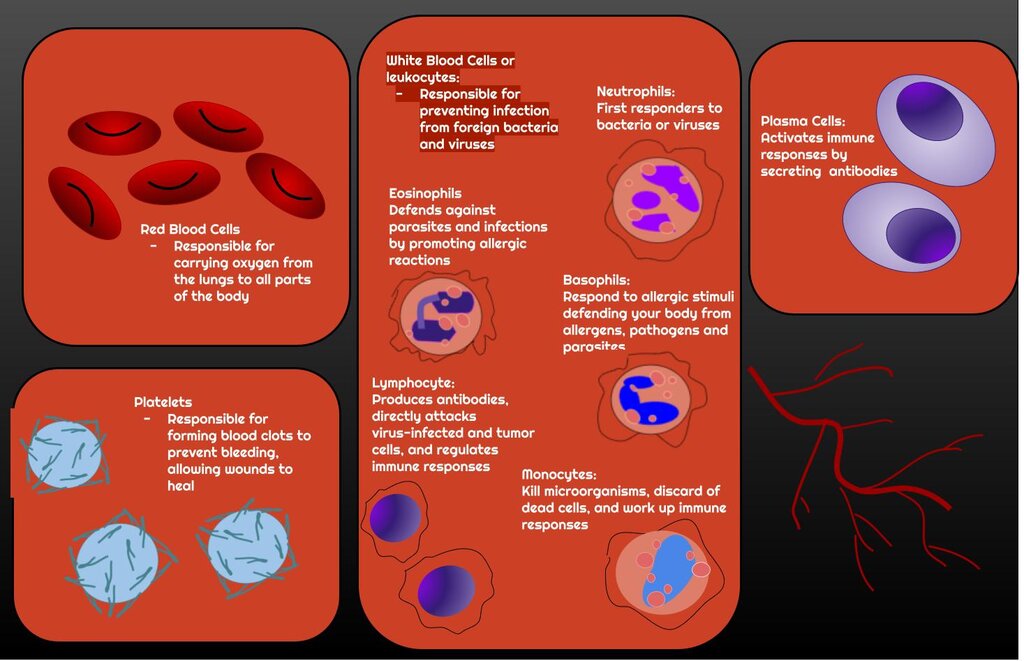
The immune system relies on a diverse team of cells, each with a specific job. Here are some of the key players you should know:
-
B cells (or B lymphocytes) are part of the adaptive immune system. Their main job is to produce proteins called antibodies. Antibodies are like custom-made tags that lock onto a specific pathogen, marking it for destruction by other immune cells.
-
T cells (or T lymphocytes) are another crucial part of the adaptive system. There are different types. Helper T cells act as generals, coordinating the immune response. Cytotoxic T cells (or killer T cells) are the soldiers, directly finding and destroying infected body cells.
-
Macrophages are part of the innate system. Their name means "big eaters," which is exactly what they do. They are phagocytes, meaning they engulf and digest pathogens, cellular debris, and other foreign materials. They also help activate the adaptive immune system by presenting bits of the invaders to T cells.
-
Dendritic cells are master communicators. They act as messengers between the innate and adaptive systems. They capture pathogens in the body's tissues and then travel to lymph nodes to present information about the invader to T cells, initiating a targeted adaptive response.
-
Natural Killer (NK) cells are part of the innate system. They are vigilante patrollers that can recognize and kill infected cells or tumor cells without prior instruction. They provide a rapid response to threats while the adaptive system is still gearing up.
Time to review the key terms from this section.
Ready to check your understanding?
Which statement best describes a key difference between the innate and adaptive immune systems?
In which primary lymphoid organ do T cells mature and learn to distinguish between the body's own cells and foreign invaders?
Together, these organs and cells form a dynamic and powerful defense system, constantly working to keep you healthy.