Immigration Debates and the Rise of the Far-Right
Introduction to Immigration
What Is Immigration?
At its core, immigration is the act of moving to a new country to live there permanently. People who move are called immigrants in their new country and emigrants in the country they left. The term "migrant" is a broader label for anyone moving from one place to another, whether within their own country or internationally, for any length of time.
immigration
noun
The international movement of people to a destination country of which they are not natives or where they do not possess citizenship in order to settle as permanent residents or naturalized citizens.
While all immigrants are migrants, not all migrants are immigrants. Some people move temporarily for work or school. Others are forced to flee their homes due to danger. A refugee is someone who has been forced to leave their country to escape war, persecution, or natural disaster. An asylum seeker is a person who has left their home country for the same reasons but is seeking international protection and has not yet been legally recognized as a refugee.
A Brief History of Movement
Moving from place to place isn't a modern invention. It's a fundamental part of the human story. The earliest humans were nomadic, moving constantly to find food and resources. The first major migrations saw modern humans spread out of Africa to populate the rest of the world.
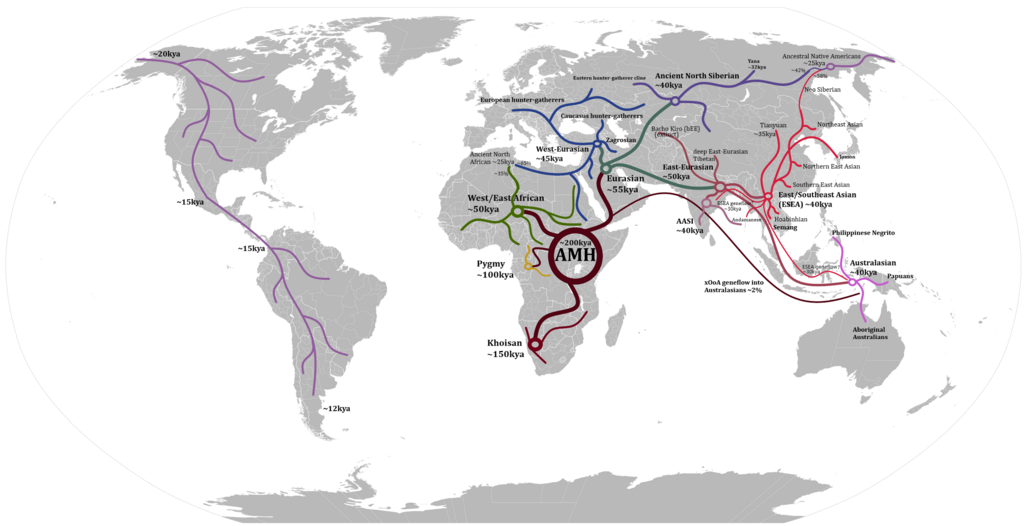
Throughout history, major events have triggered waves of migration. The fall of empires, the establishment of trade routes like the Silk Road, colonization, and industrial revolutions all spurred massive movements of people. This long history shows that societies have always been shaped by the arrival and departure of people.
Why People Move
What compels a person to leave their home and start over in a new place? The reasons are often complex and deeply personal. We can group these motivations into two categories: push factors and pull factors.
Each immigrant has their own set of push and pull factors that caused this migration.
Push factors are the reasons that drive people away from their home country. They are often negative circumstances that make staying difficult or dangerous. Pull factors, on the other hand, are the positive attributes of a destination country that attract people to it.
| Push Factors (Reasons to Leave) | Pull Factors (Reasons to Arrive) |
|---|---|
| War, conflict, or political instability | Safety and political stability |
| Lack of job opportunities or poverty | Better economic prospects |
| Famine or drought | Higher wages or better jobs |
| Persecution or discrimination | Religious or political freedom |
| Natural disasters | Better education or healthcare |
| Limited access to services | Family reunification |
Usually, a person’s decision to migrate is based on a combination of these factors. Someone might be pushed by a lack of jobs at home and pulled by the prospect of a better salary and educational opportunities for their children in a new country.
The Impact of Immigration
When people move, they create change in both the country they leave and the one they join. These effects can be seen in the economy, society, and politics.
Economically, immigrants often fill essential labor needs, from agriculture to technology. They start businesses at high rates, creating jobs and driving innovation. They also pay taxes, which contribute to public services like schools and infrastructure. For their home countries, the money immigrants send back, known as remittances, can be a vital source of income.
Socially, immigration enriches cultures. Newcomers bring their own traditions, food, music, and perspectives, leading to more diverse and dynamic societies. This cultural exchange can broaden horizons and foster new ideas. At the same time, it can present challenges as communities learn to adapt and integrate different populations.
Politically, immigration is one of the most debated topics globally. Governments create complex laws and policies to manage the flow of people across their borders. These policies affect everything from international relations and trade agreements to national budgets and security.
Ready to check your understanding?
Which statement best describes the relationship between the terms 'migrant' and 'immigrant'?
Which of the following is the best example of a 'pull factor' for migration?
Understanding these basic concepts provides a foundation for exploring the intricate and personal stories that make up the global phenomenon of immigration.