IMAT General Knowledge Mastery
Italian Political System
From Monarchy to Republic
After the turmoil of World War II and two decades of Fascist rule, Italy faced a monumental decision. On June 2, 1946, Italians voted in an institutional referendum to decide their country's future. The choice was between continuing the monarchy, led by the House of Savoy, or establishing a republic.
The people chose a republic. This vote marked the end of the Kingdom of Italy and the birth of the modern Italian Republic.
With this new foundation, the nation set out to create a new supreme law. A Constituent Assembly was elected to draft a constitution, a document designed to safeguard democratic principles and prevent the rise of another dictatorship. This process culminated in the Constitution of the Italian Republic, which came into force on January 1, 1948. It established the framework for the entire political system that exists today.
The Structure of Power
The Italian Constitution establishes a parliamentary republic with a clear separation of powers. At the top are two key figures: the President of the Republic and the President of the Council of Ministers. Though their titles sound similar, their roles are distinct.
| Role | President of the Republic | President of the Council of Ministers |
|---|---|---|
| Title | Head of State | Head of Government |
| Selection | Elected by Parliament in a joint session | Appointed by the President of the Republic |
| Key Power | Represents national unity; acts as a guarantor of the Constitution | Sets and directs government policy; holds executive power |
| Analogy | A constitutional referee | A team captain or CEO |
The President of the Republic is a figure of national unity, serving a seven-year term. They are meant to be above party politics, ensuring the political system functions according to the constitution. The President of the Council of Ministers, often called the Prime Minister, is the active head of the government, responsible for day-to-day administration and policy implementation. This figure needs the confidence and support of Parliament to govern.
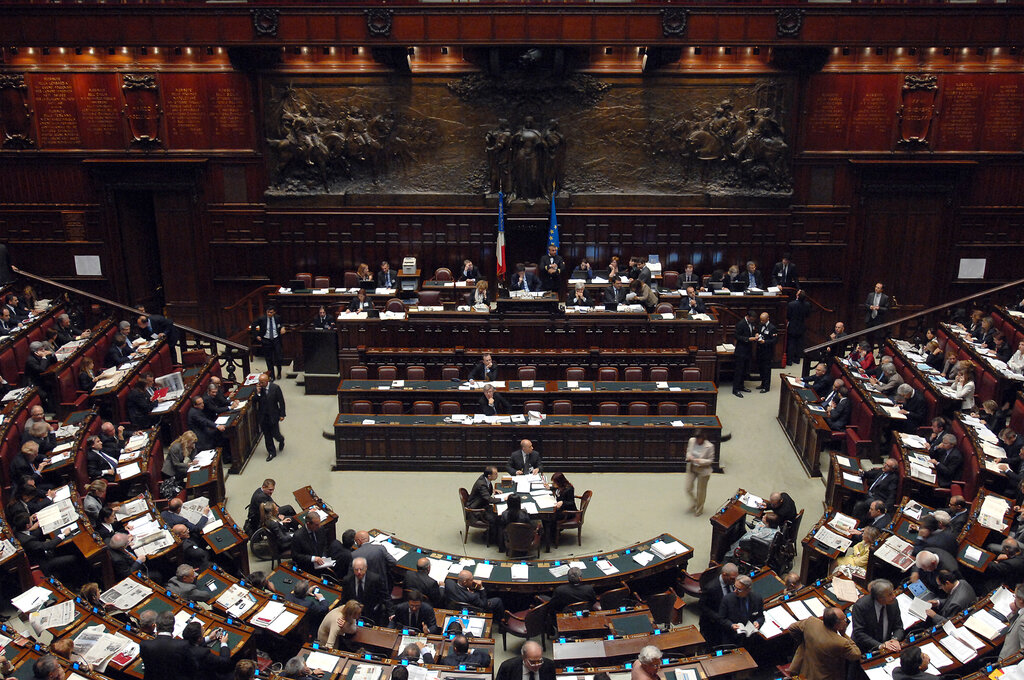
The heart of Italy's legislative system is its Parliament, which operates under a principle known as Bicameralismo Perfetto (Perfect Bicameralism). This means Parliament is composed of two houses with identical powers: the Chamber of Deputies and the Senate of the Republic. For a bill to become law, it must be approved in the exact same text by both chambers. This system was designed to ensure careful deliberation and prevent the hasty passage of laws.
How a Law is Made
The legislative process in Italy, or , reflects the country's commitment to checks and balances. The journey of a bill is a multi-step process that requires agreement across the political landscape.
However, the government can use two special instruments to legislate more quickly, though these are subject to parliamentary oversight.
Decreto Legge
noun
A Law-Decree is an emergency measure issued directly by the government in cases of necessity and urgency. It takes effect immediately but must be converted into law by Parliament within 60 days, or it expires.
Decreto Legislativo
noun
A Legislative Decree is created when Parliament delegates its legislative power to the government for a specific subject, setting out principles and criteria. The government then drafts the detailed law, which does not require a subsequent conversion vote.
The final piece of the puzzle is the Constitutional Court. This body acts as the ultimate guardian of the constitution. Its fifteen judges have the power to declare a law unconstitutional, effectively nullifying it. The Court ensures that all legislation passed by Parliament or the government complies with the fundamental principles of the Republic.
What was the main outcome of the institutional referendum held in Italy on June 2, 1946?
In the Italian political system, what is the core principle of "Perfect Bicameralism" (Bicameralismo Perfetto)?
Understanding these structures and processes is key to grasping the specific nature of the Italian political system.