IGCSE Physics Essentials
General Physics
The Language of Physics
Physics begins with looking at the world and trying to measure it. To do that, we need a common language. This language is built on physical quantities—measurable properties like length, mass, and time. To make sense of our measurements, we need units.
Imagine telling someone a box is "10 heavy." It doesn't mean much. But if you say it's "10 kilograms," the meaning is clear. Scientists use a standard system called the International System of Units (SI). It ensures that a meter in one lab is the same length as a meter in any other lab around the world.
| Quantity | SI Unit | Symbol |
|---|---|---|
| Length | meter | m |
| Mass | kilogram | kg |
| Time | second | s |
| Electric Current | ampere | A |
| Temperature | kelvin | K |
| Amount of Substance | mole | mol |
| Luminous Intensity | candela | cd |
These are the seven base units from which all other units are derived. For example, the unit for speed, meters per second (m/s), is derived from the base units for length and time.
Describing Motion
Once we can measure things, we can start describing how they move. The simplest way is to talk about speed, which is just how fast something is going. A car traveling at 60 miles per hour has a certain speed.
But in physics, direction matters. When we include direction with speed, we get velocity. A car moving at 60 miles per hour north has a specific velocity. If it turns and heads east, its speed might be the same, but its velocity has changed because its direction changed.
velocity
noun
The rate at which an object changes its position in a specific direction.
Any change in velocity is called acceleration. You experience it every day. When your car speeds up, it's accelerating. When it slows down, that's also acceleration (sometimes called deceleration). And when you turn a corner, even at a constant speed, you are accelerating because your direction—and therefore your velocity—is changing.
Acceleration isn't just about getting faster. It's any change in an object's velocity, whether in speed or direction.
Why Things Move
Objects don't just start, stop, or turn on their own. They need a push or a pull. In physics, we call this a force. The relationship between force and motion was brilliantly described by Isaac Newton in his three laws of motion.
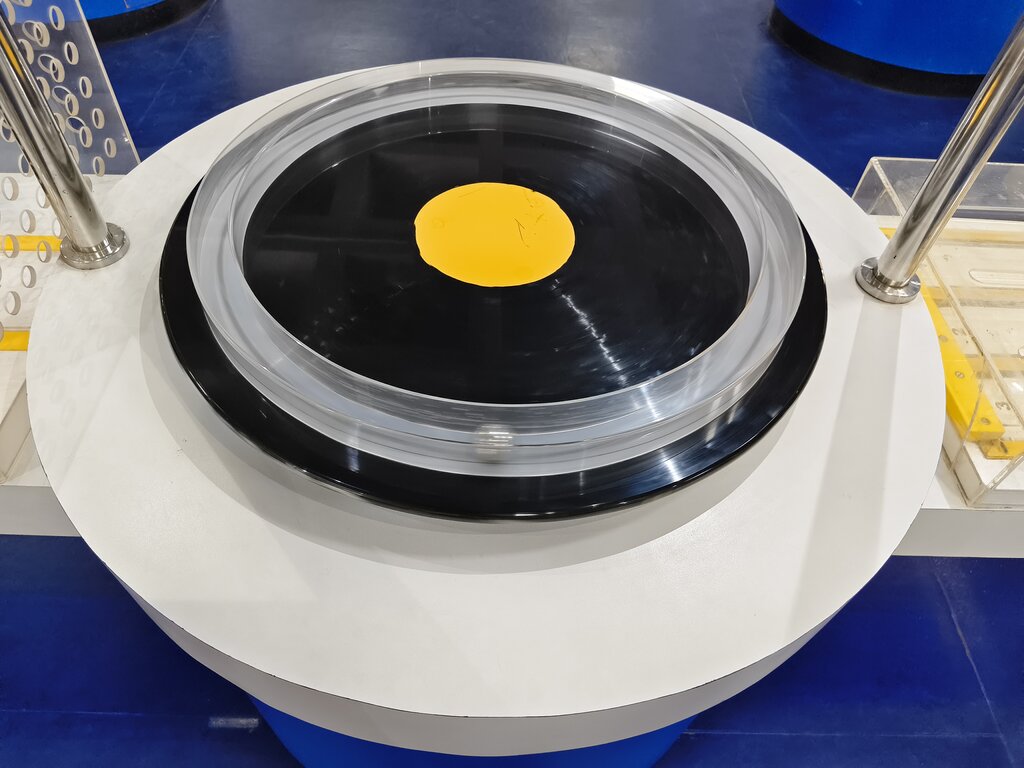
Newton's First Law says that an object will keep doing what it's doing unless a force interferes. A soccer ball sitting on the grass will stay there forever until someone kicks it. A satellite in space will keep moving in a straight line at a constant speed unless a planet's gravity pulls on it.
The Second Law tells us what happens when a force does act on an object. It states that the acceleration of an object is directly proportional to the force applied and inversely proportional to its mass. In simpler terms, a bigger force produces more acceleration, while a bigger mass resists acceleration more. It's easier to get a bicycle moving than a truck.
Newton's Third Law is famous: for every action, there is an equal and opposite reaction. When you push on a wall, the wall pushes back on you with the same amount of force. This is how rockets work. They push hot gas out the back (the action), and the gas pushes the rocket forward (the reaction).
Energy, Work, and Power
Forces can do more than just change motion; they can transfer energy. In physics, when a force causes an object to move a certain distance, we say that work has been done on the object. If you push a box across the floor, you've done work. But if you push on a wall and it doesn't budge, you've done no work, no matter how tired you feel.
Work is a way of transferring energy. The energy an object has because of its motion is called kinetic energy. The energy it has stored due to its position, like a book held high above the ground, is called potential energy.
Power is simply how quickly work is done. Lifting a heavy box quickly requires more power than lifting it slowly, even though the total work done is the same in both cases.
power
noun
The rate at which work is done or energy is transferred.
Understanding Pressure
Finally, let's look at pressure. Pressure is about how concentrated a force is. A force spread over a large area creates low pressure, while the same force on a tiny area creates high pressure. This is why a sharp knife cuts better than a dull one—the force from your hand is concentrated onto a very small area.
Pressure isn't just for solids. Liquids and gases exert pressure too. The deeper you swim in a pool, the more pressure you feel from the water above you. This is because the weight of all that water is pushing down on you. Similarly, we live at the bottom of an 'ocean' of air, and the weight of that air creates atmospheric pressure all around us.
In a fluid (a liquid or gas), pressure is exerted equally in all directions. It pushes on every surface it touches, whether it's the bottom of a container or the side.
Now, let's check your understanding of these core concepts.
A car is driving on a circular racetrack at a constant speed of 100 km/h. Which of the following statements is true?
According to Newton's Second Law of Motion, if you apply the same force to two objects, the object with the greater mass will experience...
These ideas—measurement, motion, forces, energy, and pressure—form the bedrock of physics. Mastering them opens the door to understanding everything from the flight of a baseball to the orbit of the planets.