IGCSE Mathematics Fundamentals
Number Concepts
The Building Blocks of Numbers
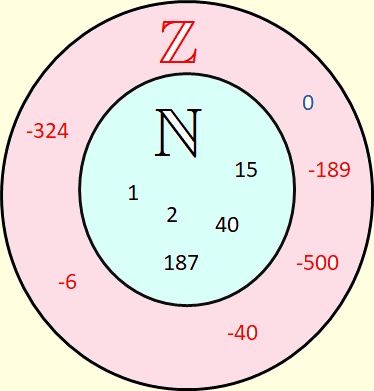
Let's start with the basics. The first numbers you ever learned were likely the counting numbers: 1, 2, 3, and so on. These are called natural numbers.
Natural Number
noun
A positive whole number used for counting and ordering.
If we add zero and all the negative whole numbers to this set, we get the integers. Integers include numbers like -5, -1, 0, 8, and 42. They don't have any fractional or decimal parts.
Within the natural numbers, there's a special group called prime numbers. A prime number is a natural number greater than 1 that has only two factors: 1 and itself. The first few prime numbers are 2, 3, 5, 7, 11, and 13. The number 2 is the only even prime number.
Any natural number that isn't prime is called a composite number. It can be formed by multiplying two smaller natural numbers. For example, 12 is composite because it can be formed by or .
Prime Number
noun
A natural number greater than 1 that cannot be formed by multiplying two smaller natural numbers.
Understanding numbers also means understanding their relationships. This brings us to factors and multiples.
A factor is a number that divides into another number exactly, with no remainder. The factors of 12 are 1, 2, 3, 4, 6, and 12.
A multiple is the result of multiplying a number by an integer. The multiples of 3 are 3, 6, 9, 12, and so on.
Think of it this way: 3 is a factor of 12, and 12 is a multiple of 3.
We can use factors to find the Greatest Common Factor (GCF) of two or more numbers. This is the largest number that is a factor of all the numbers.
Let's find the GCF of 18 and 24. Factors of 18: 1, 2, 3, 6, 9, 18 Factors of 24: 1, 2, 3, 4, 6, 8, 12, 24 The common factors are 1, 2, 3, and 6. The greatest of these is 6, so the GCF is 6.
Similarly, we can use multiples to find the Least Common Multiple (LCM). This is the smallest number that is a multiple of all the numbers.
Let's find the LCM of 4 and 6. Multiples of 4: 4, 8, 12, 16, 20, 24... Multiples of 6: 6, 12, 18, 24... The first multiple they share is 12, so the LCM is 12.
Expanding the Number Line
Beyond integers, we have numbers that can be written as fractions. These are called rational numbers. A rational number is any number that can be expressed as a ratio of two integers, , where is not zero.
This includes all integers (since 5 can be written as ), terminating decimals (like 0.75, which is ), and repeating decimals (like , which is ).
But what about numbers that can't be written as a simple fraction? These are irrational numbers. Their decimal representations go on forever without repeating. The most famous examples are (pi) and the square roots of non-square numbers, like .
When you combine all the rational and irrational numbers, you get the set of real numbers. Essentially, any number you can place on a number line is a real number.
Putting Numbers to Work
Now that we know the types of numbers, let's look at how to work with them.
When adding, subtracting, multiplying, and dividing integers, the main thing to remember is the rules for positive and negative signs. Adding a negative number is the same as subtracting, and subtracting a negative is the same as adding ($5 - (-2) = 5 + 2 = 7$).
For multiplication and division, the rules are straightforward:
| Operation | Result |
|---|---|
| Positive × Positive | Positive |
| Negative × Negative | Positive |
| Positive × Negative | Negative |
Operations with fractions require finding a common denominator for addition and subtraction. For multiplication, you simply multiply the numerators together and the denominators together. For division, you invert the second fraction and multiply.
Decimals are handled just like whole numbers, as long as you keep track of the decimal point.
Ratios and proportions are used to compare quantities. A ratio compares two values, like the ratio of students to teachers in a school might be 15 to 1 (written as 15:1 or ). A proportion is an equation stating that two ratios are equal, like . Proportions are useful for solving problems where you need to scale things up or down.
For example, if a recipe for 12 cookies calls for 2 cups of flour, how much flour do you need for 18 cookies? Using a proportion: . Solving for gives you 3 cups.
A percentage is just a special type of ratio where a number is expressed as a fraction of 100. The word "percent" means "per hundred." So, 50% is the same as or 0.5. Percentages are common in everyday life, from store discounts to interest rates.
Finally, let's look at exponents. An exponent tells you how many times to multiply a number by itself. In , the base is 5 and the exponent is 3. It means , which equals 125.
Exponents are a powerful shorthand, especially for very large or very small numbers. This leads to scientific notation, a way to write numbers as a product of a number between 1 and 10 and a power of 10. For instance, the distance from the Earth to the Sun is about 150,000,000,000 meters. In scientific notation, this is written as m. It's much easier to read and work with.
Time to check your understanding of these fundamental concepts.
Which of the following sets contains only integers?
Which of these is a prime number?
Mastering these concepts is the first step toward success in more advanced mathematics. They are the foundation upon which everything else is built.