IGCSE Chemistry Mastery
Atomic Structure
The Building Blocks of Matter
Everything you see, touch, and breathe is made of tiny particles called atoms. They are the fundamental units of matter. For a long time, people thought atoms were the smallest things possible, like indivisible little spheres. But we now know they are made of even smaller, or subatomic, particles.
An atom has a central core called the nucleus, which is packed with two types of particles: protons and neutrons. Whizzing around this nucleus are the third type of particle: electrons.
Protons have a positive electrical charge, electrons have a negative charge, and neutrons have no charge at all. An atom in its neutral state has an equal number of protons and electrons, so their charges cancel each other out.
The number of protons determines what an element is. An atom with 6 protons is always carbon. An atom with 7 protons is always nitrogen. This number is called the atomic number.
| Particle | Charge | Location in Atom | Relative Mass |
|---|---|---|---|
| Proton | +1 | Nucleus | ~1 |
| Neutron | 0 | Nucleus | ~1 |
| Electron | -1 | Outside Nucleus | ~1/1836 (very small) |
Where Electrons Live
While protons and neutrons are held tightly in the nucleus, electrons are in constant motion in the space surrounding it. They don't just fly around randomly, though. They occupy specific regions called energy levels, or shells. You can think of these shells like floors in a building. Electrons on the first floor (the shell closest to the nucleus) have the lowest energy, and those on higher floors have more energy.
Each shell can only hold a certain number of electrons. The first shell can hold up to 2, the second can hold up to 8, the third can hold 18, and so on. Electrons will always fill the lowest energy shells first before moving to higher ones. The way electrons are arranged in these shells is called an atom's electron configuration.
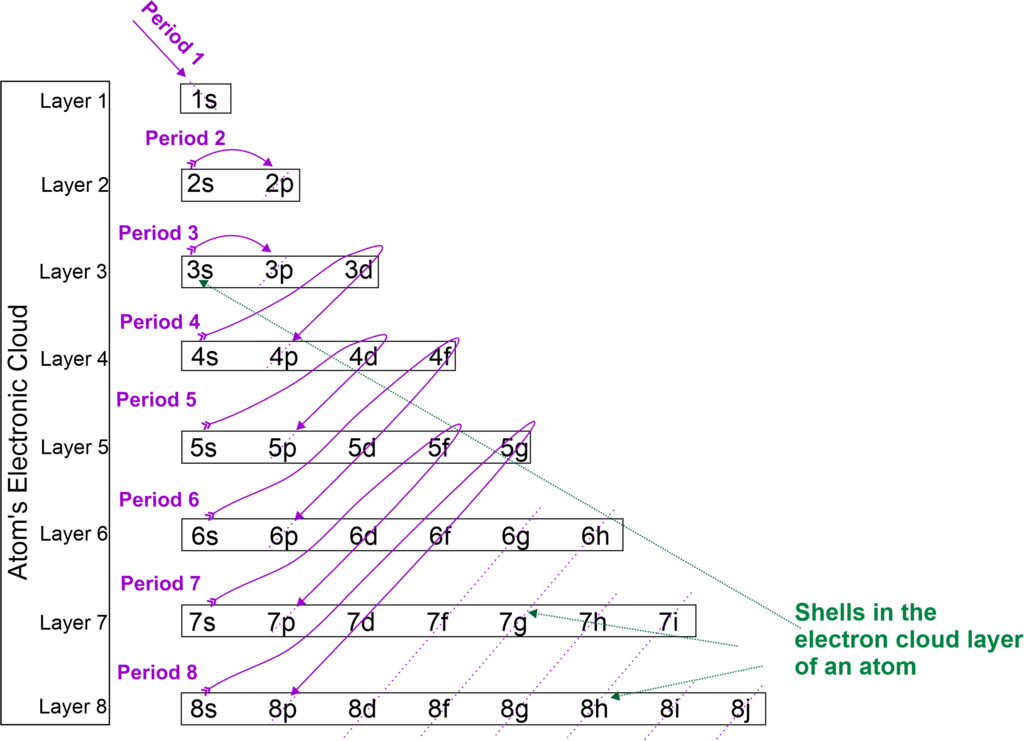
Let's take a sodium (Na) atom. It has 11 protons, so it also has 11 electrons. Here's how they're arranged:
- The first shell fills up with 2 electrons.
- The second shell fills up with 8 electrons.
- The final electron goes into the third shell.
This arrangement is key to understanding how an element behaves chemically. The electrons in the outermost shell are especially important and are called valence electrons.
Organizing the Elements
The Periodic Table is chemistry's most important chart. It organizes all the known elements based on their atomic number and properties. Think of it as a master list that reveals patterns and relationships between different types of atoms.
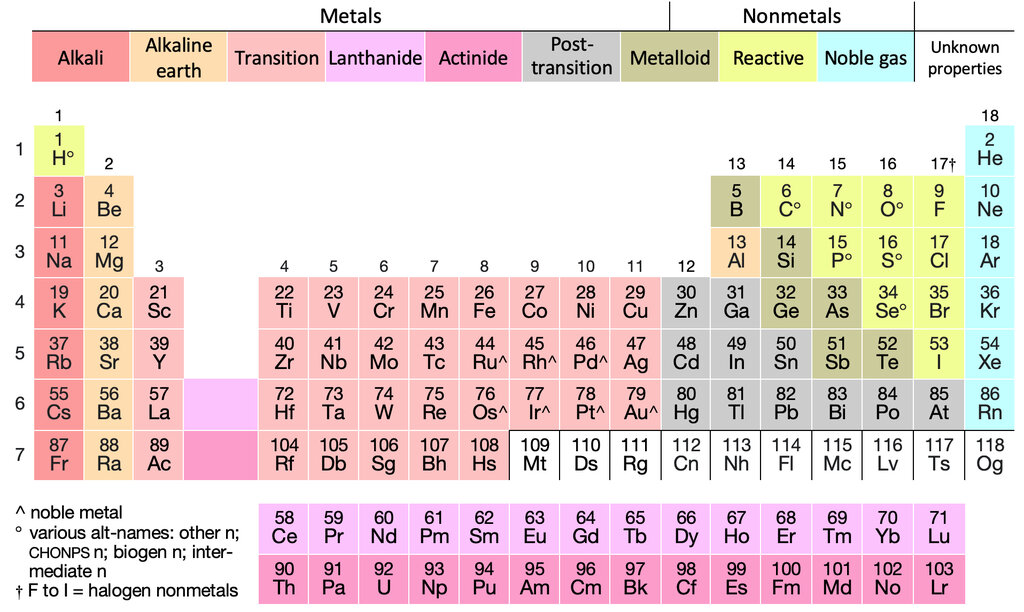
The table is arranged in rows and columns.
Periods: The horizontal rows are called periods. Elements in the same period have the same number of electron shells.
Groups: The vertical columns are called groups. Elements in the same group have the same number of valence electrons, which gives them very similar chemical properties.
For example, all elements in Group 1 (like lithium, sodium, and potassium) have just one valence electron. This makes them all highly reactive in similar ways.
Atomic Variations
While the number of protons for an element is fixed, the number of neutrons can vary. Atoms of the same element that have different numbers of neutrons are called isotopes.
isotope
noun
One of two or more species of atoms of a chemical element with the same atomic number and position in the periodic table and nearly identical chemical behavior but with different atomic masses and physical properties.
For instance, every carbon atom has 6 protons. Most carbon atoms also have 6 neutrons, giving them a total mass number (protons + neutrons) of 12. This is called Carbon-12. However, some carbon atoms have 7 neutrons (Carbon-13) or even 8 neutrons (Carbon-14).
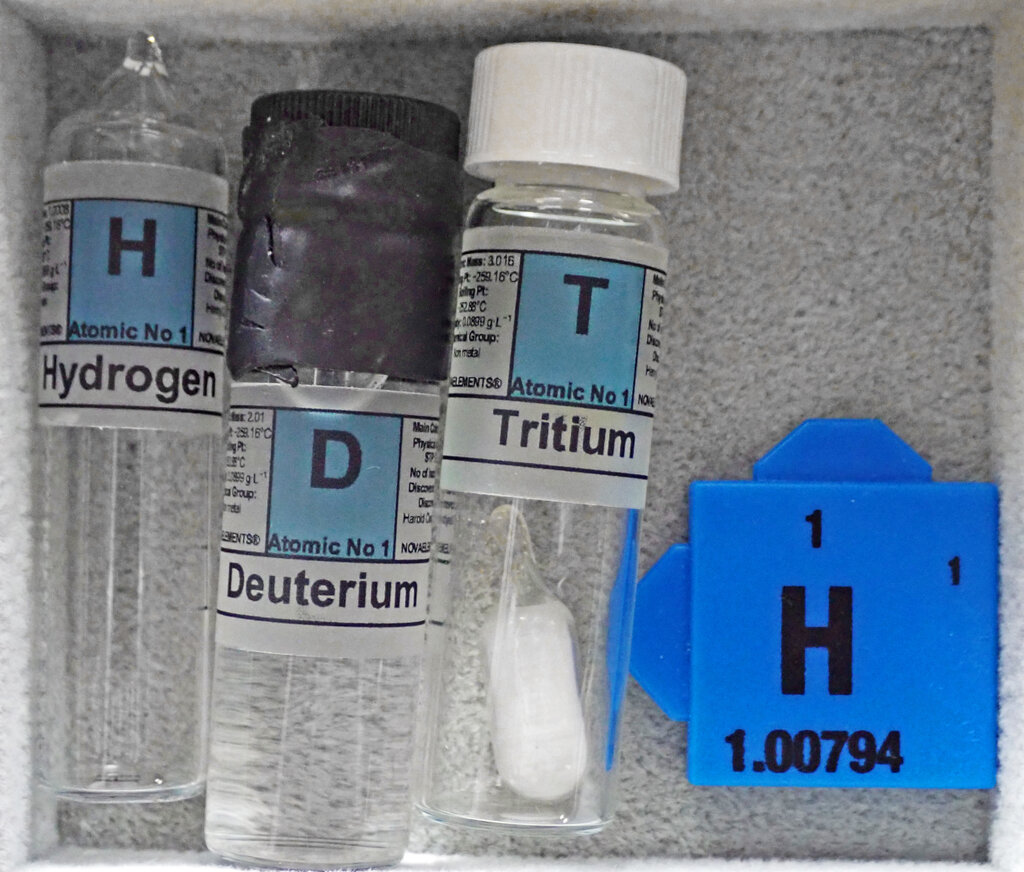
Since they have the same number of protons and electrons, isotopes of an element behave almost identically in chemical reactions. Their difference in mass, however, gives them unique physical properties. Some isotopes are unstable, or radioactive, meaning their nucleus breaks down over time. This property is useful in many fields, from medicine (in PET scans) to archaeology (for dating ancient artifacts).
Which of the following correctly describes the electrical charges of the subatomic particles found in an atom?
An atom has 13 electrons. What is its electron configuration, starting from the shell closest to the nucleus?