Ideal Diode Fundamentals for Applied Electronics
Introduction to Diodes
The One-Way Street for Electricity
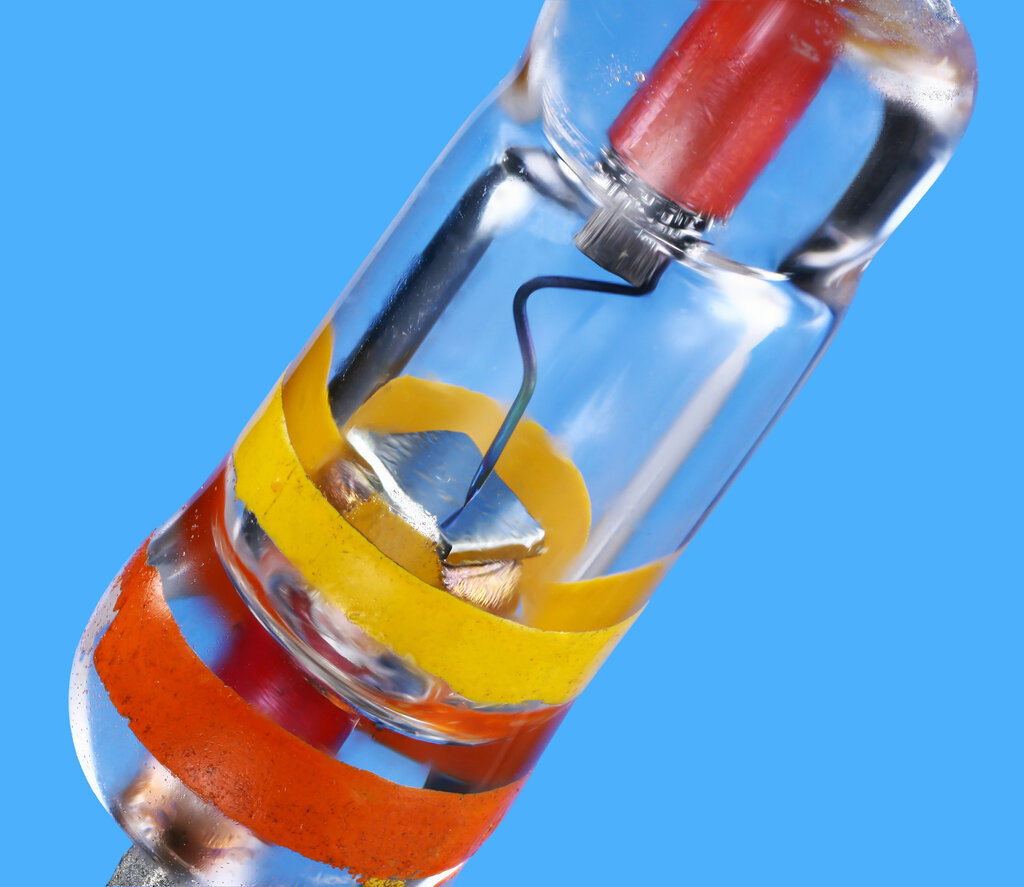
Think of a diode as a one-way valve for electricity. It allows electric current to flow through it in one direction but blocks it from flowing in the opposite direction. This simple but powerful function is fundamental to modern electronics.
diode
noun
A semiconductor device with two terminals, typically allowing the flow of current in one direction only.
Almost every electronic device you own, from your phone charger to your television, relies on diodes. They are tiny gatekeepers that direct the flow of electrical traffic, making complex circuits possible.
How a Diode Works
So how does this tiny component enforce its one-way rule? The magic lies in how it's built. A diode is made by joining two different types of semiconductor materials together. One is called P-type material, and the other is N-type.
The N-type material has a surplus of electrons, which are negatively charged. The P-type material has a deficit of electrons, creating positively charged "holes." Where these two materials meet, they form what's known as a P-N junction.
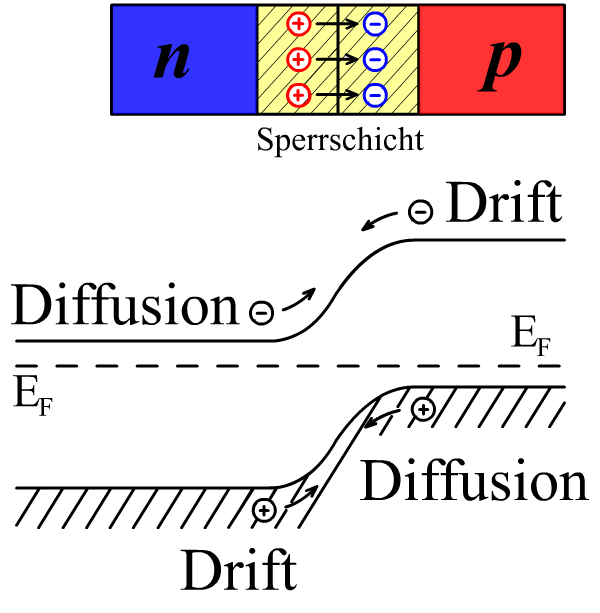
This junction creates a natural barrier. If you apply a voltage that pushes the electrons and holes toward the junction, they can cross the barrier, and current flows. This is called forward bias.
But if you reverse the voltage, it pulls the electrons and holes away from the junction, widening the barrier and stopping the current. This is called reverse bias. This forward and reverse bias behavior is what gives the diode its one-way characteristic.
Common Uses for Diodes
Because they control the direction of current, diodes are found in countless applications. Here are a few of the most common ones.
Converting AC to DC Power
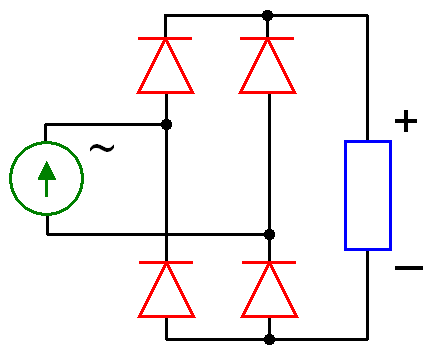
The power from a wall outlet is alternating current (AC), meaning it rapidly switches direction. Most electronics, however, need direct current (DC), which flows in a steady, single direction. Diodes are the key components used to convert AC to DC.
A circuit called a bridge rectifier uses four diodes to redirect the AC flow, turning its back-and-forth motion into a one-way flow of DC.
Protecting Circuits
Plugging a battery or power supply in backward can send current flowing in the wrong direction, potentially destroying sensitive electronic components. A diode can be placed in the circuit as a failsafe. If the power is connected correctly, current flows normally. If it's connected backward, the diode blocks the current and protects the circuit from damage.
Demodulating Radio Signals
In early AM radios, diodes played a crucial role in extracting the audio information from the radio wave. The radio wave carries the audio signal by varying its amplitude. A diode was used to chop off the negative half of the wave, leaving only the positive peaks. This process, called demodulation, allowed the circuit to recover the original audio signal and send it to a speaker.
Let's review what we've covered.
What is the fundamental function of a diode in an electronic circuit?
A diode is created by joining which two types of materials?
From power supplies to radios, the diode's simple one-way gate is a cornerstone of electronics.