ICT in the Modern World 2025
Agentic AI Transformation
From Tools to Teammates
For the past few years, we've interacted with AI as a creative but passive partner. We give Generative AI a prompt, and it gives us text, images, or code. It's a powerful tool, like a sophisticated calculator that understands language. But a major shift is happening. We're moving from AI as a tool to AI as a teammate.
Enter Agentic AI. Instead of just responding to commands, agentic systems are given goals, and they autonomously figure out how to achieve them. They can plan, execute multi-step tasks, use other software, and learn from the results without constant human supervision. The difference is between asking a calculator to multiply two numbers and asking an accountant to manage your company's finances. One responds; the other acts.
Agentic AI represents a fundamental paradigm shift in artificial intelligence, moving from passive, prompt-driven systems to autonomous, goal-oriented agents that can plan, learn, and execute complex tasks with minimal human intervention.
The Anatomy of an Agent
What gives an AI agent its ability to act independently? It comes down to three core characteristics: goal-orientation, tool use, and continuous learning.
First, an agent operates based on a high-level goal, not a series of micromanaged instructions. You don't tell it how to do something; you tell it what you want to accomplish. For example, instead of asking "What are the best-rated hotels in Paris?" followed by "What are flights to Paris on Tuesday?", you would simply tell the agent: "Book a 5-day trip to Paris for next month, staying in a highly-rated hotel near the Louvre, for under $3,000."
Second, to execute this plan, the agent needs tools. This is where APIs come in. Agents use Application Programming Interfaces to connect to and control other software. The travel agent AI could access a flight booking API, a hotel reservation API, and a payment processing API. It interacts with the digital world much like a person uses different apps and websites to get something done. This ability to use external tools is what separates it from a standard chatbot, which is confined within its own model.
Finally, the agent learns. If a chosen flight gets canceled or a hotel is fully booked, the agent doesn't just report an error. It adapts its plan. It searches for a new flight or an alternative hotel, learning from the real-time feedback and continuing to work toward the original goal. In more complex scenarios, multiple agents might work together in a process called to solve problems that are too large for a single agent.
For example, Walmart uses AI agents in its supply chain. An agent can monitor inventory levels for a specific product, analyze sales data, check weather forecasts that might impact demand (e.g., more ice cream sold during a heatwave), and autonomously place a new order with a supplier. If the usual supplier can't fulfill the order, the agent can automatically contact the next one on its list, all without human intervention.
The AI Transformation
This shift from passive tools to proactive agents is driving a change much deeper than just new software. Companies are moving from 'Digital Transformation'—the process of converting analog processes to digital ones—to 'AI Transformation.' This new paradigm doesn't just digitize old workflows; it completely reimagines them with AI at the core. AI is no longer just a system to be used, but a digital team member that actively participates in and optimizes business operations.
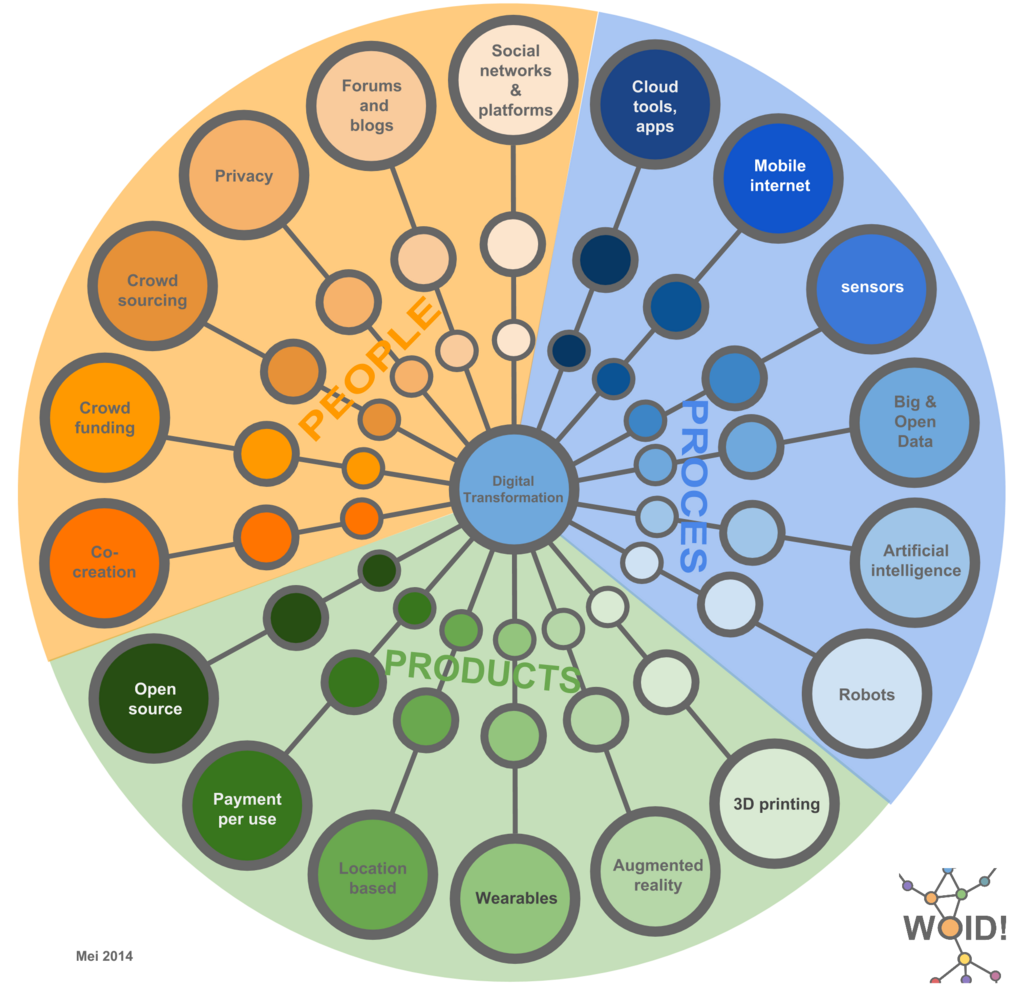
Instead of employees manually analyzing data to make decisions, goal-oriented AI workflows can now plan, execute, and adapt in real time. For instance, an AI agent like can be embedded within enterprise software to help with everything from drafting job descriptions to identifying slow-moving supply chains.
In finance, agents can execute complex trading strategies based on market signals, operating 24/7. In retail, they can create a truly personal shopping experience, not just recommending products but actively helping customers by finding deals, managing returns, and coordinating delivery. By handing off complex, multi-step tasks to autonomous agents, organizations can dramatically reduce operational friction and unlock entirely new business models.
The move to agentic AI is not just an upgrade; it's a new way of thinking about the relationship between humans and machines. As these systems become more capable, our role will shift from being operators to being strategists, setting the goals and letting our AI teammates handle the execution.
What is the primary difference between a standard Generative AI model and an Agentic AI system?
How does an AI agent use tools to accomplish its goals?