ICSE Class 7 Biology Excellence
Plant Tissues
The Building Blocks of Plants
You already know that plants have organs like roots, stems, and leaves. But what are those organs made of? If you zoomed in, you'd find they are built from groups of similar cells working together. These specialised groups are called tissues.
Think of it like a house. The house is the plant. The rooms, like the kitchen or bedroom, are the organs. And the bricks, wood, and plaster used to build those rooms are the tissues. Each tissue has a specific job that helps the whole plant survive and grow.
The Growth Engines
Where does a plant's growth happen? It happens in specific zones packed with cells that are constantly dividing. This actively dividing tissue is called meristematic tissue. These cells are small, have thin walls, and are always busy creating new cells for the plant.
There are two main types of meristems, based on where they're located and how they help the plant grow.
Apical Meristems are found at the very tips of roots and shoots. They are responsible for making the plant longer. This is called primary growth.
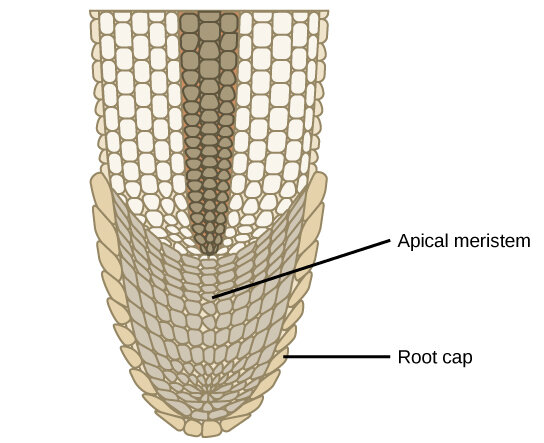
Lateral Meristems are found along the sides of stems and roots. They are responsible for increasing the plant's girth, or thickness. This is called secondary growth, and it's what makes tree trunks get wider over the years.
Specialised and Settled Tissues
Once cells are formed by the meristem, they mature and take on specific roles. They stop dividing and become permanent tissues. These tissues are classified based on their structure and function.
First, we have Simple Permanent Tissues, which are made up of only one type of cell.
| Tissue Type | Key Feature | Primary Function |
|---|---|---|
| Parenchyma | Thin cell walls, large vacuoles | Food storage, photosynthesis |
| Collenchyma | Unevenly thickened cell walls | Flexible support for growing parts |
| Sclerenchyma | Very thick, lignified walls | Rigid strength and support |
Parenchyma cells are the most common and act as the plant's general-purpose cells. Collenchyma provides strength without being rigid, which is why a young stem can bend in the wind. cells, on the other hand, are often dead at maturity and form the hard, woody parts of a plant, like the gritty bits in a pear or the shell of a nut. Their main job is to provide rock-solid support.
The Plant's Plumbing System
Next are the Complex Permanent Tissues, which consist of more than one type of cell working together as a unit. These are the transport tissues, forming the plant's vascular system.
Xylem is the tissue that transports water and dissolved minerals from the roots up to the rest of the plant. It's like a set of drinking straws running through the plant. It's made of several cell types, including vessels and tracheids, which are hollow, dead tubes that form a continuous pipeline.
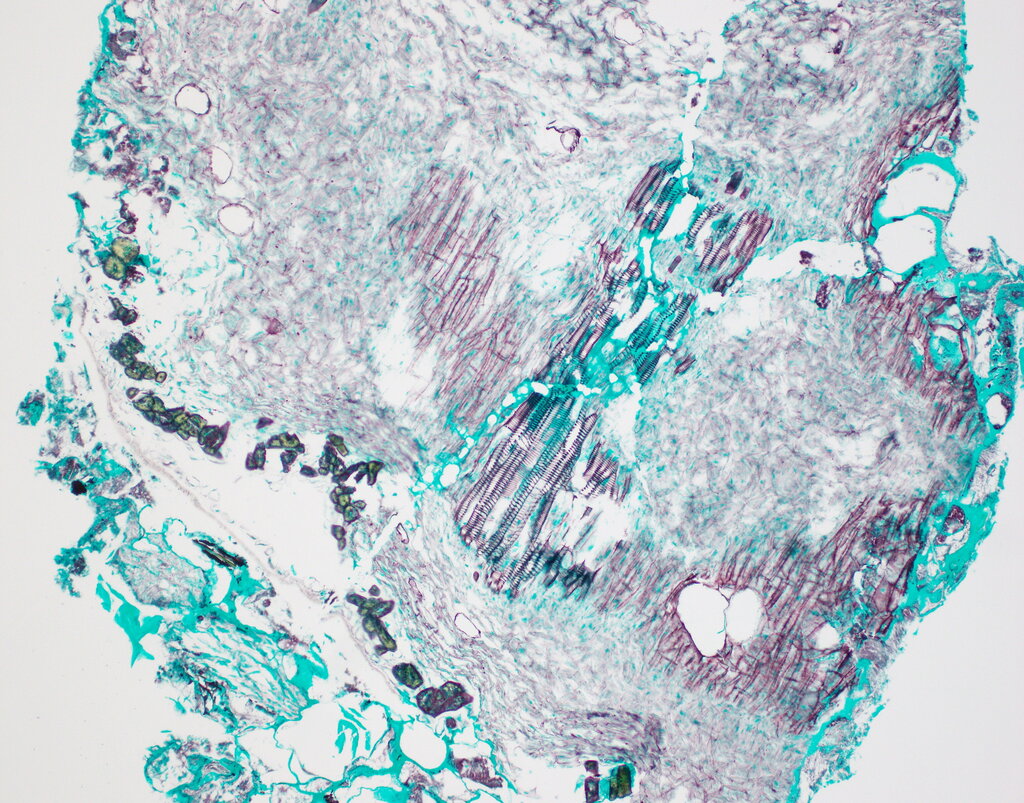
Phloem is the tissue that transports food, mainly sugars made during photosynthesis, from the leaves to other parts of the plant where it's needed for energy or storage. Unlike xylem, phloem tissue consists of living cells. The main conducting cells are sieve tubes, which are supported by companion cells.
Finally, plants have Protective Tissues that cover their surfaces.
The Epidermis is a single layer of cells that forms the outer skin of leaves, young stems, and roots. It protects the plant from water loss and injury. On older stems and roots, the epidermis is replaced by Cork, a tough, waterproof outer layer.
What is the primary function of meristematic tissue in a plant?
Which tissue is responsible for transporting sugars (food) from the leaves to the rest of the plant?
Understanding these tissues helps us see how a plant is a highly organised and efficient organism, with every cell playing a part in its survival.