Iconography of Inversion in Late Medieval Marginalia
Defining Monde Renversé
The Inverted World
The marginalia of late 14th-century manuscripts are more than mere decoration; they are a complex semiotic field. Central to understanding them is the concept of 'le monde renversé', or the world upside down. This was not simply random humor but a structured topos, a rhetorical and artistic framework used for sharp sociopolitical and theological critique. Within the margins, artists could dismantle and reassemble the world, questioning its established hierarchies and norms.
Adynaton
noun
A figure of speech in the form of a hyperbole taken to such extreme lengths as to insinuate a complete impossibility. Plural: adynata.
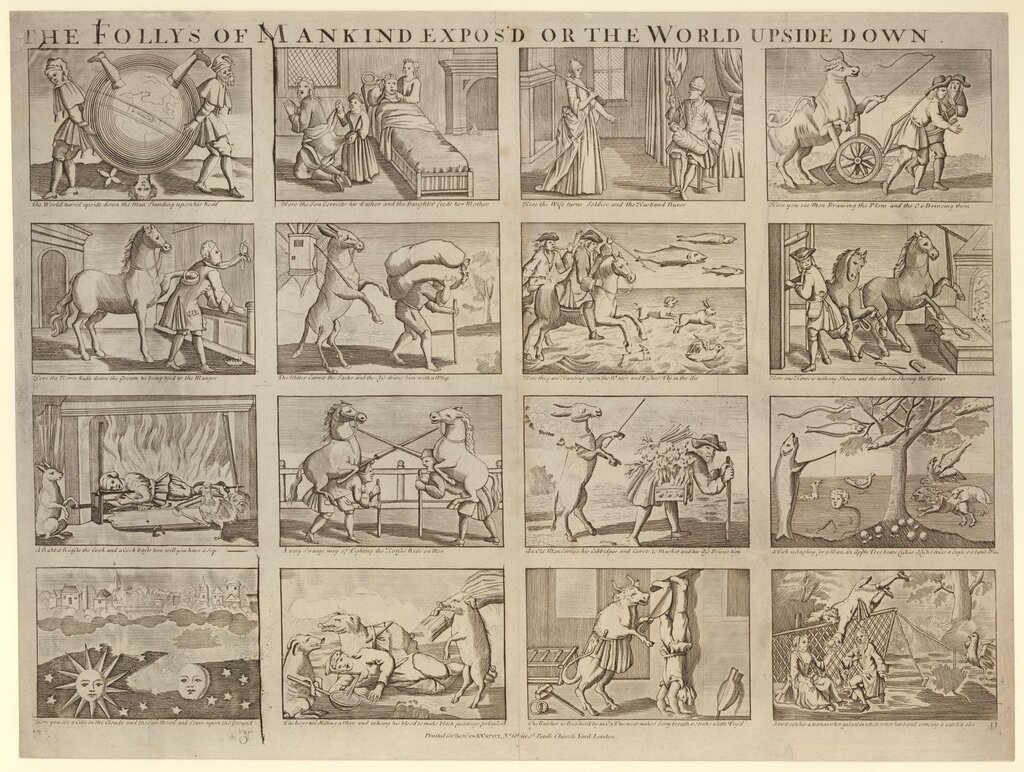
Artists utilized 'adynata'—a stringing together of impossibilities—to visualize this inverted world. These impossibilia served to mirror or subvert the perceived natural and social orders of the late Middle Ages. Rabbits, normally prey, are depicted as armed hunters chasing down men. The cart is placed before the horse, and the poor give alms to the rich. These inversions are not just whimsical fantasies; they are pointed commentaries on power, justice, and the precariousness of the medieval social structure.
Theology and Chaos
The disorder depicted in the margins has deep theological underpinnings. This visual chaos can be interpreted as a reflection of a primeval state before divine order was imposed, or as a representation of the world fallen into sin, where natural hierarchies are perverted. For a society grappling with the Black Death, the Papal Schism, and the Hundred Years' War, these images of a world turned on its head were potent reflections of widespread cultural anxiety. The instability in the margins mirrored the instability of their reality.
This reflects a significant shift from the marginalia of the 13th and early 14th centuries. Earlier Gothic manuscripts featured marginalia that was often more purely decorative—geometric patterns, vine work, and simple grotesques. By the period between 1360 and 1400, these spaces evolved to host complex, narrative drolleries. The margin became a liminal space for exploring the 'other'—the foreign, the monstrous, the socially outcast—and for enacting symbolic reversals of power.
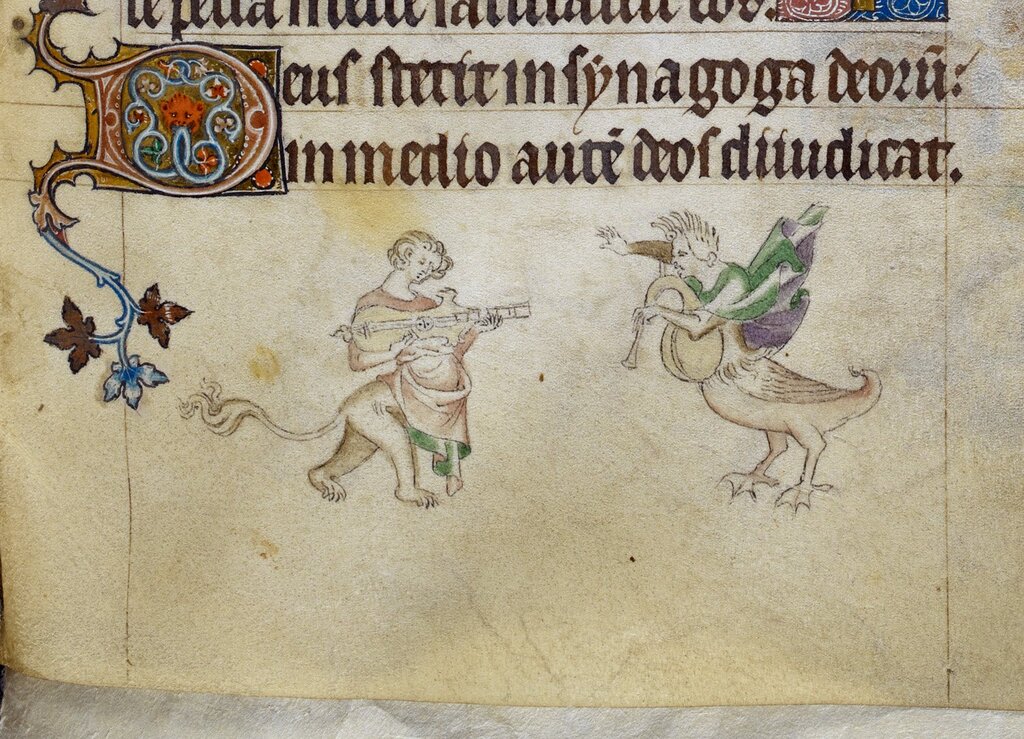
Understanding this semiotic framework of inversion is the ideological foundation for any iconographic analysis of the period. It explains why animals act as humans, why the weak dominate the strong, and how the marginal became central to critique.
Let's review the key concepts before moving on.
What is the primary function of the 'le monde renversé' (the world upside down) topos in late 14th-century manuscript marginalia?
The artistic device of depicting a series of impossibilities, such as carts pulling horses or the poor giving alms to the rich, is known as:
This framework provides the necessary context for the advanced iconographic analysis to follow.