ICON IPF Payment Framework Explained
Introduction to Blockchain Payments
The Digital Ledger
At its core, a blockchain is a digital ledger. Think of it like a shared notebook that's distributed across countless computers. Whenever a new transaction happens, a new entry is made in the notebook. But here’s the clever part: this notebook isn't owned by any single person or company. It's decentralized.
Every entry, or "block," is cryptographically linked to the one before it, forming a "chain." This link makes the ledger incredibly secure. Once a block is added to the chain, it can't be altered or removed without changing every block that comes after it, which is practically impossible. This feature is called immutability. Because everyone on the network has a copy of the ledger, it's also transparent. All participants can see the transactions that have taken place.
Sending Money on a Blockchain
So how does this work for payments? Imagine you want to send money to a friend. In a traditional system, you'd go through a bank. The bank acts as a trusted middleman, verifying you have the funds and then moving them to your friend's account. This process can take time and involve fees.
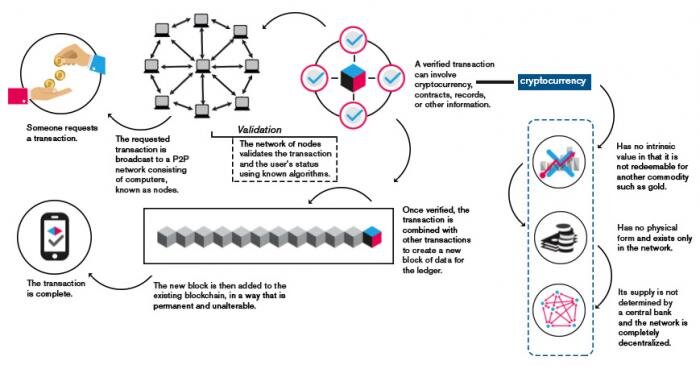
With blockchain, the network is the middleman. When you send money, you broadcast the transaction to the network. Computers on the network, often called "nodes," work to validate that your transaction is legitimate. Once verified, your transaction is bundled with others into a new block, which is then added to the chain. Your friend receives the money directly from you, without a bank taking a cut or slowing things down.
Why It's a Better Way to Pay
Traditional payment systems have challenges. International transfers can be slow and expensive, involving multiple banks and currency conversions. There's also a reliance on central institutions, which can be a single point of failure or control. Blockchain technology was designed to address these issues.
By removing intermediaries, blockchain payments can be faster, cheaper, and more secure. They operate 24/7, across borders, with the same efficiency.
This table breaks down some of the key differences:
| Feature | Traditional Payments | Blockchain Payments |
|---|---|---|
| Speed | 1-5 business days, especially for international | Minutes to hours, regardless of location |
| Cost | High fees for intermediaries & currency exchange | Typically lower, based on network traffic |
| Intermediaries | Multiple (banks, clearing houses) | Few or none |
| Security | Centralized; vulnerable to single-point attacks | Decentralized; highly resistant to fraud |
| Availability | Business hours, with delays on weekends | 24/7/365 |
Because every transaction is recorded on an immutable ledger, there's a permanent, verifiable trail. This transparency reduces the risk of fraud and makes auditing simpler.
Ready to test your knowledge?
What is the fundamental nature of a blockchain?
The feature that makes it nearly impossible to alter or remove a block once it's added to the blockchain is called...
Understanding these fundamentals is the first step. Next, we'll explore how different blockchain networks can be made to work together.