Hypopressive Exercises for Back Pain Relief
Introduction to Hypopressive Exercises
A Different Kind of Core Workout
When you think of core exercises, crunches and planks probably come to mind. These exercises work by creating tension and increasing pressure inside your abdomen. Hypopressive exercises do the opposite. They use posture and a unique breathing technique to reduce internal pressure, creating a vacuum effect that tones your deepest core muscles from the inside out.
Hypopressive
adjective
A combination of 'hypo' (meaning low or under) and 'pressive' (meaning pressure). The term literally means low pressure.
Instead of actively squeezing your abs, you learn to perform a special kind of breath-hold after a full exhale. This action, combined with specific poses, triggers an involuntary, reflexive activation of your pelvic floor and the transverse abdominis, your body's natural corset. It’s a subtle but powerful way to build functional core strength.
From Therapy to Fitness
Hypopressives weren't born in a gym. They were developed in the 1980s by Dr. Marcel Caufriez, a Belgian physical therapist. He was searching for a safer way to help postpartum women restore their core and pelvic floor strength. He noticed that traditional high-pressure abdominal exercises often made problems like incontinence or organ prolapse worse.
His solution was a technique that strengthened the core without bearing down on the pelvic floor. What started as a specialized therapy for new mothers gradually gained recognition for its wider benefits. Athletes, people with back pain, and anyone looking to improve their posture and core stability soon began adopting the practice.
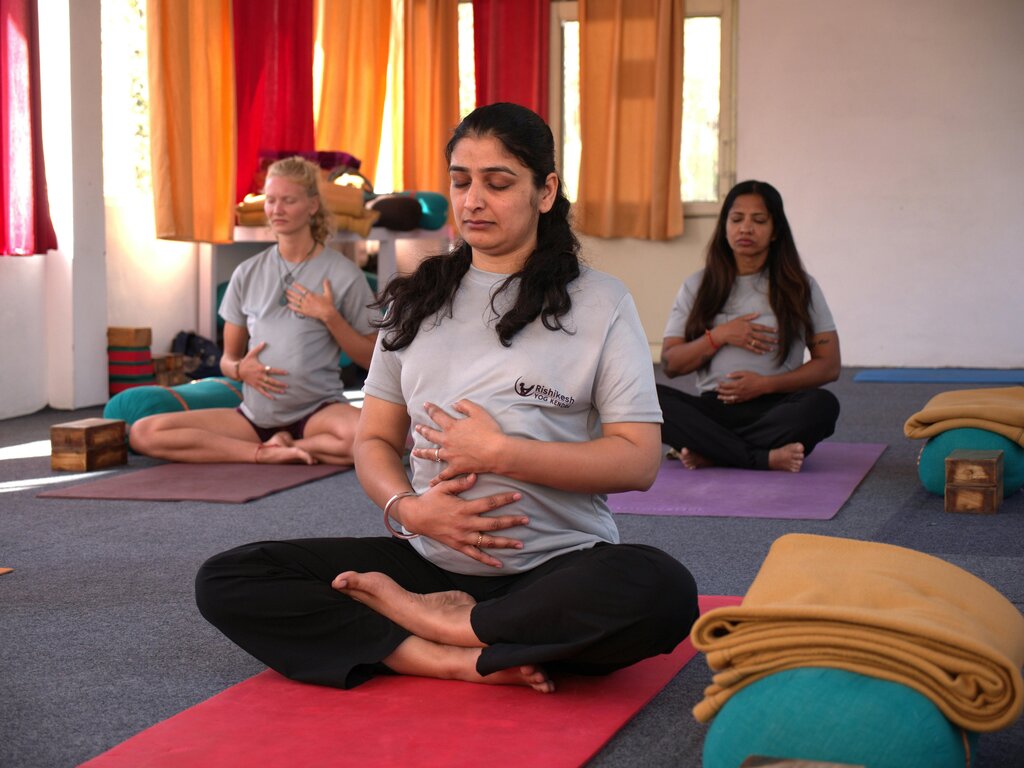
How It Works
The magic of hypopressives lies in a technique called the "apnea" or false inhale. Here's the basic idea: you breathe all the air out of your lungs, and then, without inhaling, you expand your rib cage as if you were taking a deep breath.
This creates a vacuum in your abdominal cavity. Your diaphragm, the dome-shaped muscle at the base of your lungs, gets suctioned upward. This upward pull gently lifts the pelvic floor and draws in the abdominal wall, activating those deep stabilizing muscles automatically. It’s a workout that happens almost by reflex.
By repeatedly practicing this maneuver, you are essentially re-training your core muscles to maintain a higher resting tone. They become stronger and more supportive without you having to consciously think about it all the time.
Benefits for Core and Back
This unique approach to core training yields some significant benefits, especially for core strength and back pain.
First, it strengthens your entire core canister, including the deep transverse abdominis and the often-neglected pelvic floor. These muscles stabilize your spine and pelvis. A stronger, more coordinated core provides better support for your back, which can dramatically reduce or prevent lower back pain.
Second, unlike exercises that compress the spine, hypopressives decompress it. The upward lift created during the apnea gently stretches the spine and relieves pressure on the vertebral discs. Over time, this can lead to better posture, as your body learns to hold itself upright with less effort.
Learning to properly utilize the pelvic floor and deep core muscles will help eliminate and manage your symptoms.
Many people also notice a visual change: a reduction in waist circumference. This isn't from fat loss, but from toning the transverse abdominis, which acts like a girdle, cinching in your waistline.
It's a foundational practice. By improving the baseline function of your core, hypopressives set the stage for safer, more effective movement in all other activities, from lifting groceries to high-intensity sports.