Hyperscaler Network Engineering Fundamentals
Introduction to Hyperscaler Networks
What Makes a Hyperscaler?
When you stream a movie, join a video call, or use a cloud application, you're plugging into a network of unimaginable scale. At the heart of this global infrastructure are the hyperscalers: companies like Amazon, Google, and Microsoft that operate enormous, globally distributed data centers.
A hyperscaler isn't just a company with a big data center. The term refers to the architecture and approach required to elastically scale computing resources to meet massive demand. They are the landlords of the modern internet, providing the foundational compute, storage, and networking that powers a huge portion of online services.
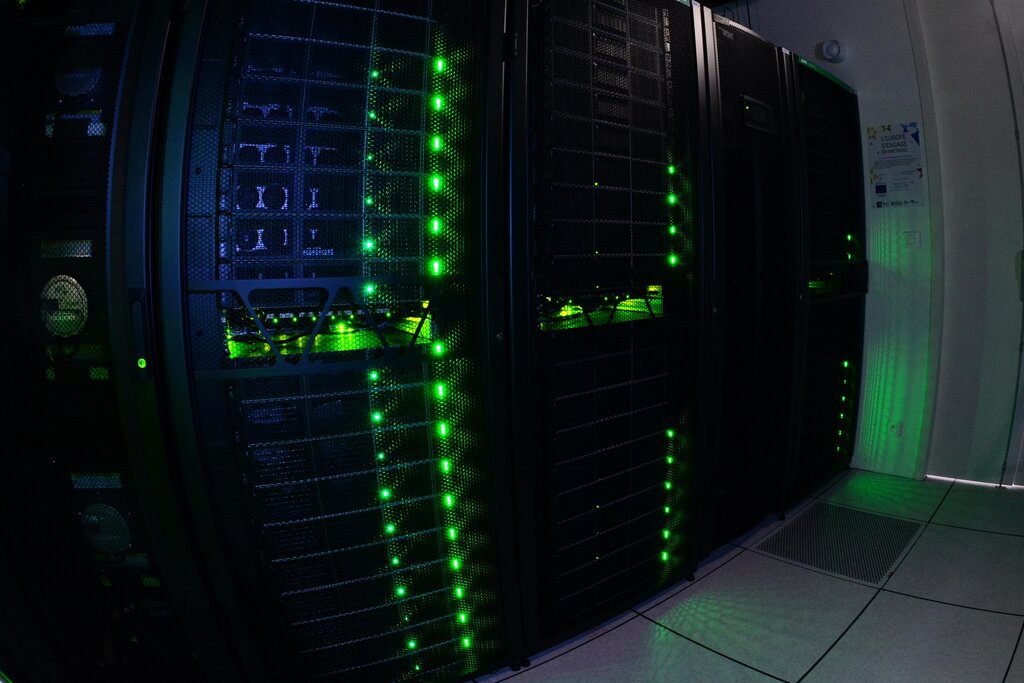
Unlike a traditional enterprise data center, which might grow by adding a few servers at a time, a hyperscaler's network is designed to add thousands of servers and petabytes of storage seamlessly. Their primary role is to provide a reliable, high-performance, and scalable platform that other businesses can build upon without having to invest in their own physical infrastructure.
Guiding Network Principles
Building a network that spans the globe and serves billions of users requires a unique set of architectural principles. These aren't about specific technologies but rather a philosophy of design that prioritizes simplicity, resilience, and automation.
Simplicity at Scale: Hyperscalers build their networks from a massive number of simple, identical components. Instead of using a few large, complex, and expensive routers, they use thousands of smaller, commodity switches. This uniformity makes the network easier to manage, automate, and repair. When a part fails, it's simply replaced like a lightbulb.
Another core principle is designing for failure. In a network with millions of components, something is always breaking. Hyperscaler networks are built with this expectation in mind. There is no single point of failure; every component and link has multiple redundant paths. If one path goes down, traffic is automatically and instantly rerouted without any noticeable disruption to the user.
Finally, these networks are heavily software-defined. Instead of manually configuring thousands of individual devices, hyperscalers use software to manage and automate the entire network. This software-centric approach allows them to deploy new services, reroute traffic, and respond to issues at a speed and scale that would be impossible with traditional, manual network management.
Challenges of Scale
Operating at this level introduces challenges that are fundamentally different from those in smaller networks. The sheer scale changes the nature of the problems.
A primary concern is maintaining consistent performance. With data flowing between millions of servers, avoiding network congestion is critical. A single bottleneck can degrade the performance of countless applications. Hyperscaler networks are designed to provide high-bandwidth, low-latency paths between any two points in the data center, ensuring that applications have the resources they need, when they need them.
Reliability is another major hurdle. As mentioned, failures are constant. The challenge isn't preventing failures, but ensuring the network as a whole remains stable and available despite them. This requires sophisticated monitoring to detect issues instantly and automated systems that can isolate faults and heal the network without human intervention.
Ultimately, the goal is to create a network fabric that acts like a single, powerful, and resilient computer, capable of supporting the next wave of global applications.
Let's review the key concepts we've covered.
What is the primary characteristic that defines a hyperscaler's architecture?
The principle of 'designing for failure' in a hyperscaler network means that the network is built to...