Hydro Vac Business Operations
Introduction to Hydro-Vac Services
A Safer Way to Dig
Excavating underground is a tricky business. A dense network of pipes, cables, and conduits for water, gas, electricity, and telecommunications lies just beneath our feet. Accidentally hitting one of these lines with a backhoe or shovel can cause service outages, costly repairs, or even dangerous accidents.
Hydro-vac excavation offers a smart solution. It's a method of non-destructive digging that uses water and a vacuum to safely uncover underground infrastructure. Think of it as industrial-strength surgery for the ground, allowing operators to carefully remove soil without harming the vital arteries buried within.
How It Works
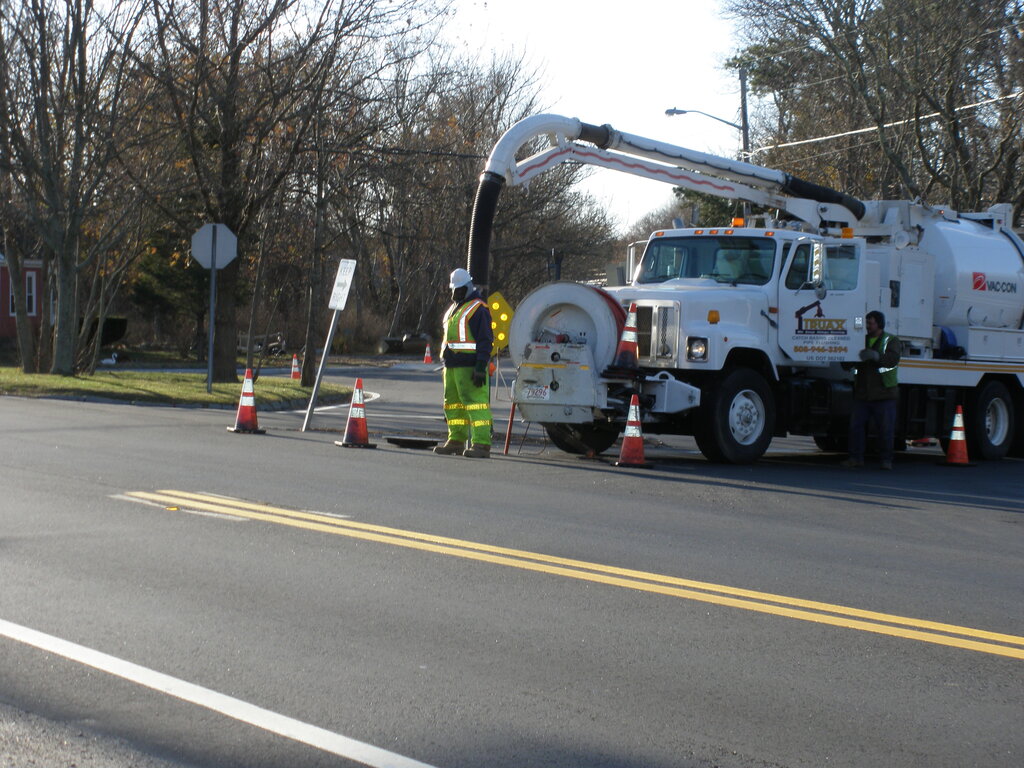
The technology behind hydro-vac services is straightforward but powerful. A specialized truck combines two key functions: blasting soil with high-pressure water and sucking up the resulting slurry with a giant vacuum.
The process unfolds in a few simple steps:
- An operator uses a handheld wand to spray a precise stream of high-pressure water (either heated or cold) onto the ground.
- The water jet breaks up the soil, turning it into a semi-liquid mixture called a slurry.
- A large, powerful vacuum hose positioned over the area sucks the slurry up and into a holding tank on the truck.
This continues until the underground utilities are fully exposed, or 'daylighted'. The soil can be transported off-site or stored for backfilling the hole later.
This method avoids the brute force of mechanical equipment, making it the preferred choice for digging in sensitive areas.
Advantages Over Traditional Digging
Compared to traditional excavation methods that use backhoes or shovels, hydro-vac services offer significant benefits. The most critical advantage is safety. By gently removing soil, there is a drastically reduced risk of damaging buried utilities, which prevents service disruptions and dangerous situations like gas leaks or electrocution.
It's also far more precise. An operator can excavate small, exact holes, minimizing the environmental footprint and reducing the need for extensive backfilling and restoration. This makes it ideal for tight spaces or areas with a high density of underground lines.
| Feature | Hydro-Vac Excavation | Traditional Excavation |
|---|---|---|
| Safety | High (low risk of utility strikes) | Lower (high risk of utility strikes) |
| Precision | Very precise, minimal disturbance | Less precise, larger excavation area |
| Speed | Faster for small, deep holes | Faster for large, open areas |
| Debris | Contained and easily removed | Creates piles of soil on-site |
| Access | Good for tight or remote spaces | Limited by equipment size |
While hydro-vac can be slower for bulk excavation over large, clear areas, its safety and precision make it indispensable for any work near existing infrastructure.
Common Applications
The versatility of hydro-vac technology allows it to be used across many industries. In Canada, particularly in the oil and gas fields of Western Canada, it's essential for safely exposing pipelines for maintenance and inspection.
Other common uses include:
- Daylighting: Exposing utilities to confirm their exact depth and location before construction begins.
- Slot Trenching: Digging narrow trenches to install new pipes, cables, or conduits.
- Debris Removal: Cleaning out culverts, manholes, and catch basins without needing to send workers into confined spaces.
- Piling and Pole Holes: Excavating precise holes for installing fence posts, signs, poles, and foundation pilings.
- Cold Weather Digging: Using heated water to excavate frozen ground, a major advantage during Canadian winters.
From major construction projects in downtown Toronto to pipeline work in rural Alberta, hydro-vac services are a key part of modern, safe infrastructure management.
A related technology, air excavation, uses compressed air instead of water. While both methods use a vacuum to remove the loosened material, hydro-vac is generally faster and more effective, especially in hard or frozen soils.
This process involves using high-pressure air to loosen soil around a buried utility, which is then removed with a powerful vacuum system.
Whether with air or water, the principle of non-destructive digging has transformed how we work around buried infrastructure.
Ready to check your understanding?
What is the most critical advantage of hydro-vac excavation compared to traditional methods like using a backhoe?
The process of hydro-vac excavation turns soil into a semi-liquid mixture that is then removed. What is this mixture called?
By combining the power of pressurized water with a strong vacuum, hydro-vac technology provides a safe, precise, and efficient way to excavate underground.