Hybrid LLM NLU Conversation Design
Introduction to Conversational AI
Talking with Machines
Conversational AI is what allows us to talk with computers in a natural, human-like way. Think of the voice assistant on your phone or the chatbot that pops up on a website. These systems are designed to understand what you say, figure out what you mean, and respond in a way that makes sense. It’s a field of artificial intelligence focused entirely on dialogue.
The goal is to move beyond clunky commands and create smooth, helpful interactions. Instead of you having to learn the computer's language, the computer learns yours.
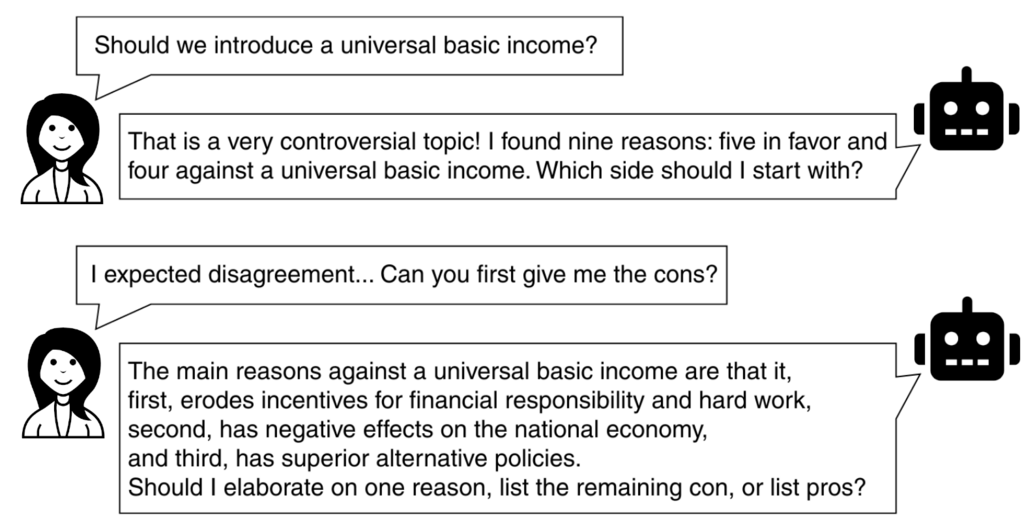
A Brief History
The idea of talking to machines isn't new. Early attempts in the 1960s, like a program named ELIZA, could mimic conversation by recognizing keywords and spitting back pre-written responses. If you typed "I'm feeling sad," ELIZA might reply, "Why are you feeling sad?" It was clever, but it didn't understand a thing. It was just a pattern-matching machine.
Early chatbots followed simple rules. Modern conversational AI aims for genuine understanding.
For decades, most chatbots were rule-based. Developers had to write out every possible conversation path, which was incredibly limiting. The real leap forward came with the rise of machine learning and two key technologies: Large Language Models (LLMs) and Natural Language Understanding (NLU).
The Core Components
Modern conversational AI has two brains working together. One is a creative writer, and the other is a meticulous interpreter.
Large language models (LLMs) are AI systems that understand and create human language, doing tasks like summarizing articles, answering questions, writing code, and more.
Large Language Models (LLMs) are the creative writers. They are trained on vast amounts of text from the internet, books, and articles. This allows them to generate incredibly human-like sentences. When a chatbot sounds natural, witty, or empathetic, that's usually an LLM at work. It excels at predicting the next logical word in a sentence, making conversations flow smoothly.
Natural Language Understanding (NLU) is the interpreter. Its job is to figure out the user's intent. When you say, "What's the weather like in London?", NLU doesn't just see a string of words. It deconstructs the sentence to grasp what you want to do.
NLU identifies two key things:
- Intent: The user's goal. In this case, the intent is
get_weather. - Entities: The specific pieces of information needed to fulfill the request. Here, the entity is
location: London.
| User Input | Intent | Entities |
|---|---|---|
| "Set an alarm for 7 AM" | set_alarm | time: 7 AM |
| "Find a pizza place near me" | find_restaurant | cuisine: pizza, location: near me |
| "How tall is Mount Everest?" | get_fact | topic: Mount Everest |
By breaking down your request into a structured format, NLU allows the AI to perform the correct action, whether that's querying a weather API or setting a timer on your device.
Challenges and Hybrid Solutions
Building a good conversational system is hard. Human language is full of ambiguity and context. If you say "Book a flight to New York," do you mean the city or the state? If you follow up with "What about Boston?", the AI needs to remember you're still talking about booking flights.
LLMs and NLU each have weaknesses. LLMs can be wonderfully creative, but they can also make up facts, a phenomenon known as "hallucination." NLU is great for structured tasks but struggles with open-ended conversation. Relying on just one is often not enough.
The solution is a hybrid architecture that combines the strengths of both. The system can use NLU to reliably identify a user's intent for specific tasks, like ordering a product or checking an account balance. Then, it can use an LLM to generate a friendly, natural-sounding response. This gives you the best of both worlds: the accuracy of a rule-based system and the fluency of a generative model.
This combined approach is pushing conversational AI forward, making our interactions with technology more efficient, intuitive, and ultimately, more human.
Ready to check your understanding?
What is the primary goal of conversational AI?
How did early conversational programs like ELIZA differ from modern AI?
By understanding these core ideas, you can see how complex technologies work together to create the simple experience of talking to a machine.