HVAC System Fundamentals
HVAC System Basics
What Your HVAC System Does
HVAC stands for Heating, Ventilation, and Air Conditioning. It's the system that keeps your home comfortable year-round. While we often think of it as just the furnace or the AC unit, it’s a complete system designed to manage your indoor environment.
An HVAC system has three main jobs: controlling temperature, managing humidity, and ensuring the air you breathe is clean.
Controlling temperature is straightforward—it heats your home in the winter and cools it in the summer. Ventilation is the process of replacing stale, indoor air with fresh, outdoor air. This helps remove pollutants and odors. Air conditioning not only cools the air but also removes excess moisture, which helps control humidity.
The Science of Comfort
To do its job, an HVAC system relies on a few fundamental principles of science. The most important is thermodynamics, which is the study of heat and energy.
A key concept is that heat naturally moves from a warmer place to a cooler place. Your house gets warm in the summer because heat from the hot outside air moves inside. In winter, the heat inside your home tries to escape to the cold outdoors.
HVAC systems work by controlling this flow of heat. A furnace adds heat to your home faster than it can escape. An air conditioner does the opposite, and it's a bit more clever. It doesn't create cold; it moves heat. Using a special fluid called a refrigerant, it absorbs heat from inside your home and transfers it outside.
Think of an air conditioner as a heat pump, pumping heat from a place you don't want it (your living room) to a place where it doesn't matter (the outdoors).
This movement of heat happens in three ways:
Conduction: Heat transfer through direct contact. A hot stove burner heats the bottom of a pot.
Convection: Heat transfer through the movement of a fluid (like air or water). The furnace heats air, and a fan blows that warm air through your house. This is the primary way HVAC systems heat and cool a space.
Radiation: Heat transfer through electromagnetic waves. You feel the sun's warmth on your skin through radiation.
Finally, the system also uses principles of fluid mechanics. Since air is technically a fluid, your HVAC system is designed to move it efficiently from one place to another through a series of ducts.
The Core Components
A typical residential HVAC system is made up of several key parts that work together.
Thermostat: This is the brain of the operation. You set your desired temperature, and the thermostat tells the rest of the system when to turn on and off to maintain that temperature.
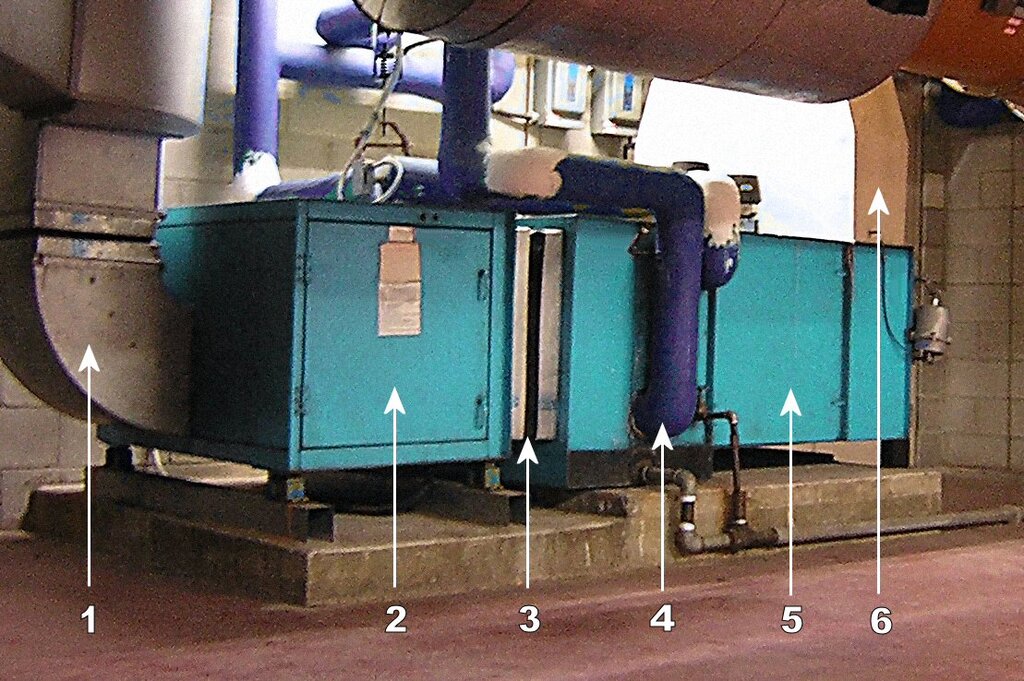
Furnace or Air Handler: The furnace is the component that creates heat, usually by burning natural gas or using electric resistance coils. The air handler is the indoor unit that contains a blower fan. This fan pushes the heated or cooled air through the ductwork. Many systems combine the furnace and air handler into one unit.
Air Conditioner or Heat Pump: This is the outdoor unit responsible for cooling. The AC contains a compressor, which pumps refrigerant through coils to absorb heat from inside and release it outside. A heat pump is a special type of unit that can reverse this process to provide heat in the winter.
Ductwork: This is the network of tubes or channels, often hidden in walls and ceilings, that acts like the system's circulatory system. It delivers conditioned air to rooms and returns stale air back to the air handler.
Filters: Located in the air handler or return air duct, the filter's job is to clean the air. It traps dust, pollen, pet dander, and other particles, which improves indoor air quality and protects the HVAC equipment from getting clogged.
What does the acronym HVAC stand for?
How does an air conditioner cool a room?