HVAC Fundamentals Explained
Introduction to HVAC
What Is HVAC?
HVAC stands for Heating, Ventilation, and Air Conditioning. It’s the technology of indoor and vehicular environmental comfort. Its goal is to provide thermal comfort and acceptable indoor air quality. Essentially, an HVAC system is the machinery that keeps your home, school, or office warm in the winter, cool in the summer, and comfortable all year round.
An HVAC system is a mechanical framework designed to regulate indoor environments by controlling temperature, humidity, and air quality.
Think of it as the lungs of a building. It takes in air from the outside, conditions it, circulates it through the space, and then exhausts stale air. This process does more than just control the temperature. It also removes moisture, odours, dust, airborne bacteria, and other potential irritants to keep the indoor environment pleasant and healthy.
Why It Matters Everywhere
HVAC systems are crucial in nearly every type of building. In our homes, they provide a comfortable space to live, work, and sleep. Proper temperature control isn't just about comfort; it can affect our sleep quality and overall well-being.
In commercial settings like offices, shops, and restaurants, HVAC systems are essential for keeping employees productive and customers comfortable. Imagine trying to work in a sweltering office or dine in a freezing restaurant. A well-functioning system is a key part of a successful business.
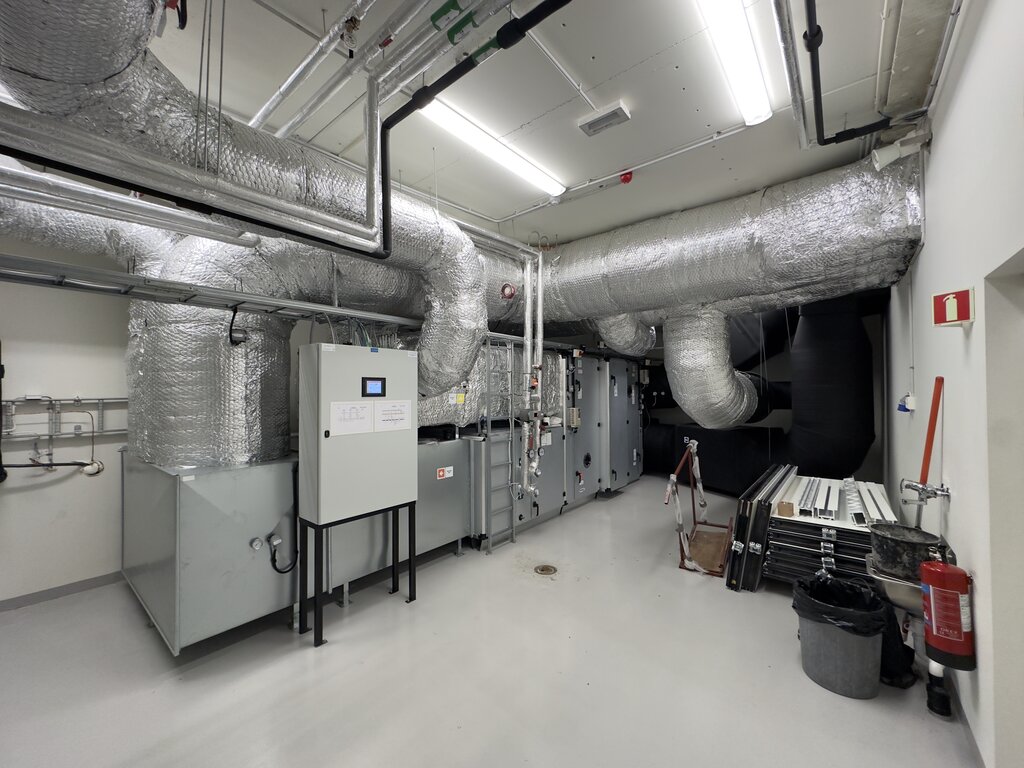
Industrial settings, such as factories, data centres, and hospitals, have even more critical needs. In a factory, certain processes might require strict temperature and humidity levels. In a hospital, precise air control and filtration are vital to prevent the spread of infection and protect sensitive medical equipment. Data centres, which house powerful computers, generate immense heat and require constant cooling to avoid overheating and failure.
The Basic Building Blocks
While HVAC systems can be incredibly complex, they all share a few core components that work together to manage the indoor environment. A typical system has a source for heating, a method for cooling, and a way to distribute the air.
- Heating: This is usually a furnace (which burns fuel like natural gas) or a boiler (which heats water). Some modern systems use heat pumps, which can both heat and cool a space.
- Ventilation: This is the 'V' in HVAC and it's all about air exchange. It can be as simple as an exhaust fan or as complex as a whole-building system with air filters that cleans the air as it circulates.
- Air Conditioning: The cooling component, often called an AC unit or condenser, removes heat and humidity from the indoor air.
- Distribution: A network of ducts and vents carries the conditioned air from the main unit to all the different rooms in a building. The thermostat acts as the brain, telling the system when to turn on and off to maintain the desired temperature.
This diagram shows a very basic setup. The furnace or air handler is the central hub. It heats or cools the air, which is then pushed through ducts to different rooms. Stale or used air is pulled back through return vents to be re-conditioned, creating a continuous cycle.
Thermostat
noun
A device that regulates temperature by controlling an HVAC system. It senses the current temperature and signals the system to turn on or off to reach a desired set point.
Understanding these fundamental parts is the first step. Each component plays a vital role in the system's overall function: to create a comfortable and healthy indoor space.
Ready to check your understanding? Let's see what you've learned about the basics of HVAC.
What is the primary goal of an HVAC system?
Which component acts as the 'brain' of the HVAC system, telling it when to turn on and off?
With these basics in mind, you're now ready to explore the more specific components and processes that make these systems work.