Hume and Kant Contrasted
Hume's Empiricism
The World Through Our Senses
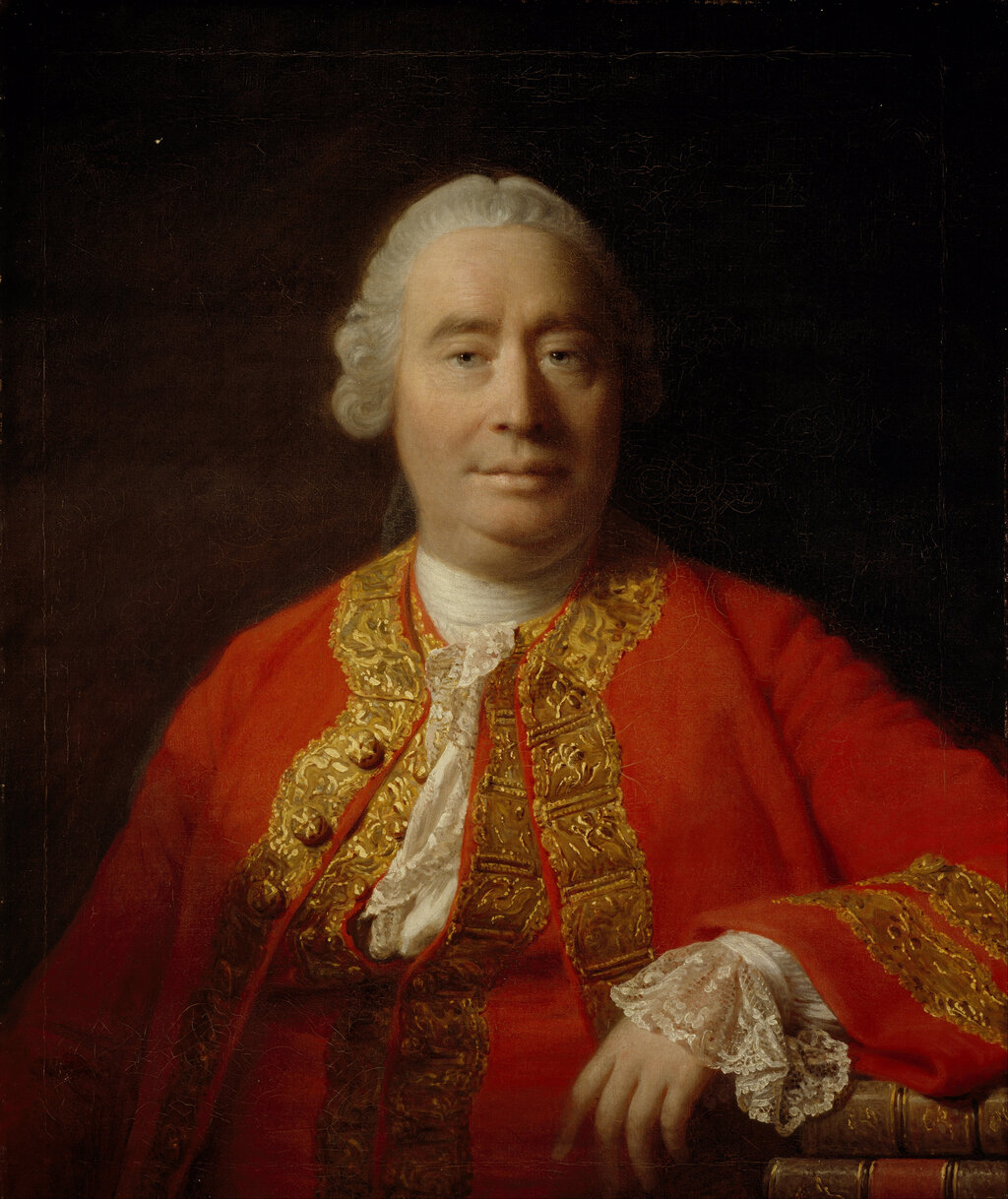
The Scottish philosopher David Hume had a simple but powerful idea: everything we know comes from experience. He argued that our minds start as blank slates. There are no pre-loaded ideas about God, justice, or the self. Instead, we build our understanding of the world piece by piece, through what we see, hear, taste, touch, and smell.
Hume believed that all the contents of our minds could be divided into two categories: impressions and ideas. The distinction is all about force and liveliness.
An impression is the direct, vivid sensation you get from experiencing something. It's the sharp pain of a papercut or the bright red of a fresh apple.
An idea is a faint copy of an impression, what you're left with when you think back on that experience. It's the memory of the pain or the mental image of the apple.
Every idea, Hume claimed, can be traced back to an initial impression. You can imagine a golden mountain because you have impressions of gold and impressions of mountains. Your mind simply combines these two ideas. But you can't have an idea of something you've never experienced in some form. This simple rule has big consequences, especially when we start talking about concepts that we can't directly sense.
The Problem with Cause and Effect
Think about a game of pool. You see the cue ball roll across the table and strike the 8-ball. The 8-ball then rolls into the pocket. It's a classic case of cause and effect. The first ball caused the second ball to move.
But Hume would ask: did you actually see the cause? You saw one event followed by another. You saw the two balls touch. But you never perceived a secret force or power transferring from one to the other. All you experienced was a sequence: Event A happened, then Event B happened.
You can't point to the impression of 'causation' itself. Because we never truly experience it, Hume argued that we can't be certain that one event must follow another. We only know that it has followed in the past.
A Matter of Habit
If we don't experience causation, why are we so sure the sun will rise tomorrow? Why do we expect bread to nourish us and fire to burn us? Hume's answer is simple: habit. Or as he called it, 'custom'.
custom
noun
A principle of the human mind that creates expectations about the future based on repeated past experiences.
After seeing two events constantly joined together, our minds create a powerful expectation. We've seen the sun rise every single day of our lives. This constant repetition creates a habit of mind, a feeling that connects the two events. Our belief in cause and effect isn't a law of logic; it's a feeling born from repeated experience. It's a useful instinct that helps us navigate the world, but it's not a guarantee.
This led Hume to a skeptical conclusion. Since our knowledge of the world is based on experience and habit, we can't have absolute certainty about anything beyond our immediate impressions. Things like God, the soul, or a permanent 'self' are metaphysical concepts. We have no sensory impression of them, so according to Hume, we can't have any real knowledge about them. They are beyond the limits of human understanding.
Ready to test your understanding of Hume's empiricism?
According to David Hume, all the contents of the human mind are derived from what source?
Hume divides the contents of the mind into two categories. What is the key difference between 'impressions' and 'ideas'?
Hume's philosophy challenges us to think critically about where our beliefs come from, grounding our understanding in the firm but limited soil of experience.