Humanoid Robots Explained
Introduction to Humanoid Robots
What Makes a Robot Humanoid?
A humanoid robot is a robot with a body plan that resembles a human. This typically means it has a head, a torso, two arms, and two legs. Some humanoids are just upper-torso models, designed to sit at a desk or operate machinery from a fixed position.
The key distinction from other robots, like an industrial robotic arm bolted to a factory floor or a wheeled delivery bot, is its human-like form. This design choice isn't just for looks; it serves very practical purposes.
Why Build Robots That Look Like Us?
One of the biggest reasons for the humanoid shape is that our world is built for humans. Think about your daily environment: stairs, door handles, tools, and car pedals are all designed to be used by human bodies. A robot shaped like a person can navigate and interact with these things without requiring expensive or impractical modifications to our homes, hospitals, and workplaces.
This makes them incredibly versatile. Instead of needing a specialized robot for every different task, one humanoid robot could potentially learn to do many things, from stocking shelves to assisting someone with mobility challenges.
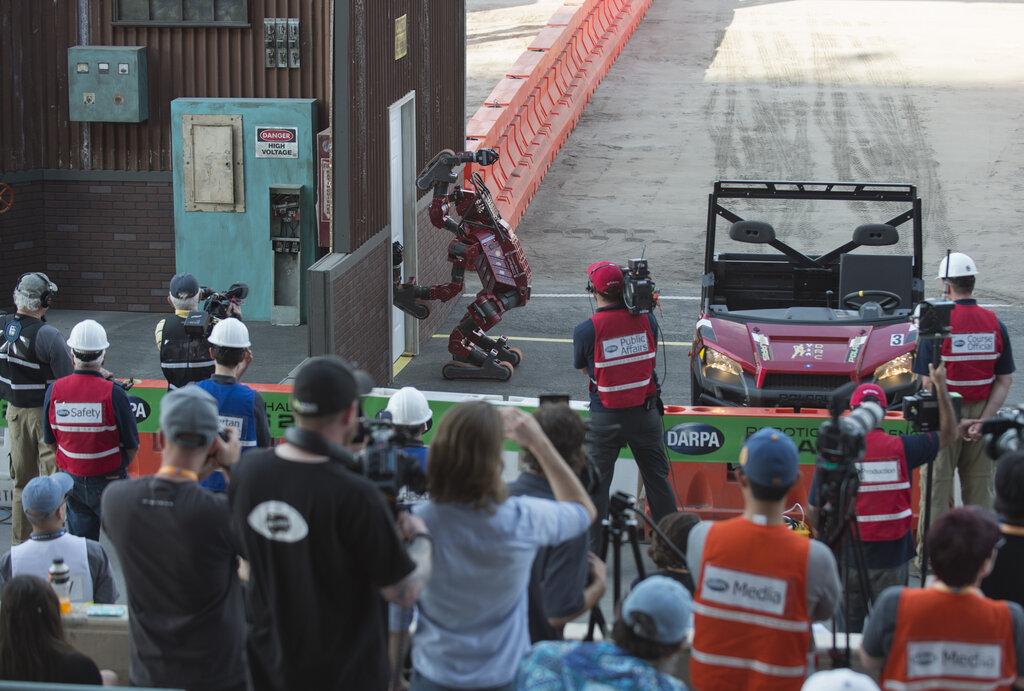
The human form also makes interaction more natural for us. We are hardwired to communicate with other people, using gestures, gaze, and body language. A humanoid robot can leverage these social cues. When a robot can point, nod, or turn its head to “look” at you, it makes communication feel more intuitive. This is especially important for robots designed to work alongside people in sectors like healthcare, education, or customer service.
The Building Blocks of a Humanoid
To mimic human form and function, these robots rely on three core types of components that work together.
Sensors are the robot's senses. Actuators are the robot's muscles. The control system is the robot's brain.
Sensors gather information about the robot itself and its environment. These include cameras for vision, microphones for hearing, and touch sensors in the hands and feet to feel pressure. They also use components like accelerometers and gyroscopes to maintain balance, much like our inner ear.
Actuators create movement. Think of them as the muscles of the robot. They are typically powerful but precise electric motors located at the joints, like the elbow, knee, or wrist. They convert electrical energy into physical motion, allowing the robot to walk, wave, or grip an object.
The Control System is the brain that processes all the information from the sensors and decides what to do. It runs complex software that calculates the exact sequence of movements the actuators need to perform to achieve a goal, like walking across a room without falling over. It’s what makes the robot more than just a collection of parts.
Time to check what you've learned.
What is the primary reason for designing robots with a human-like body plan?
Which component of a humanoid robot is most analogous to the human brain and central nervous system?
By combining a human-like body with these core components, engineers aim to create robots that can work effectively and safely in our world.