Humanity's Cosmic Scale
Cosmic Scale
Peering to the Edge
The universe is everything we can touch, feel, sense, measure, or detect. It includes living things, planets, stars, galaxies, dust clouds, light, and even time. But when we talk about its size, we're usually referring to the observable universe. This is the part of the cosmos that we can see. It's a sphere with Earth at its center, extending outwards in every direction for about 46.5 billion light-years.
Why is there a limit? Because the universe has a finite age—about 13.8 billion years. Light from objects farther away than 46.5 billion light-years hasn't had enough time to reach us. The size is larger than 13.8 billion light-years because the universe itself has been expanding the entire time that light has been traveling.
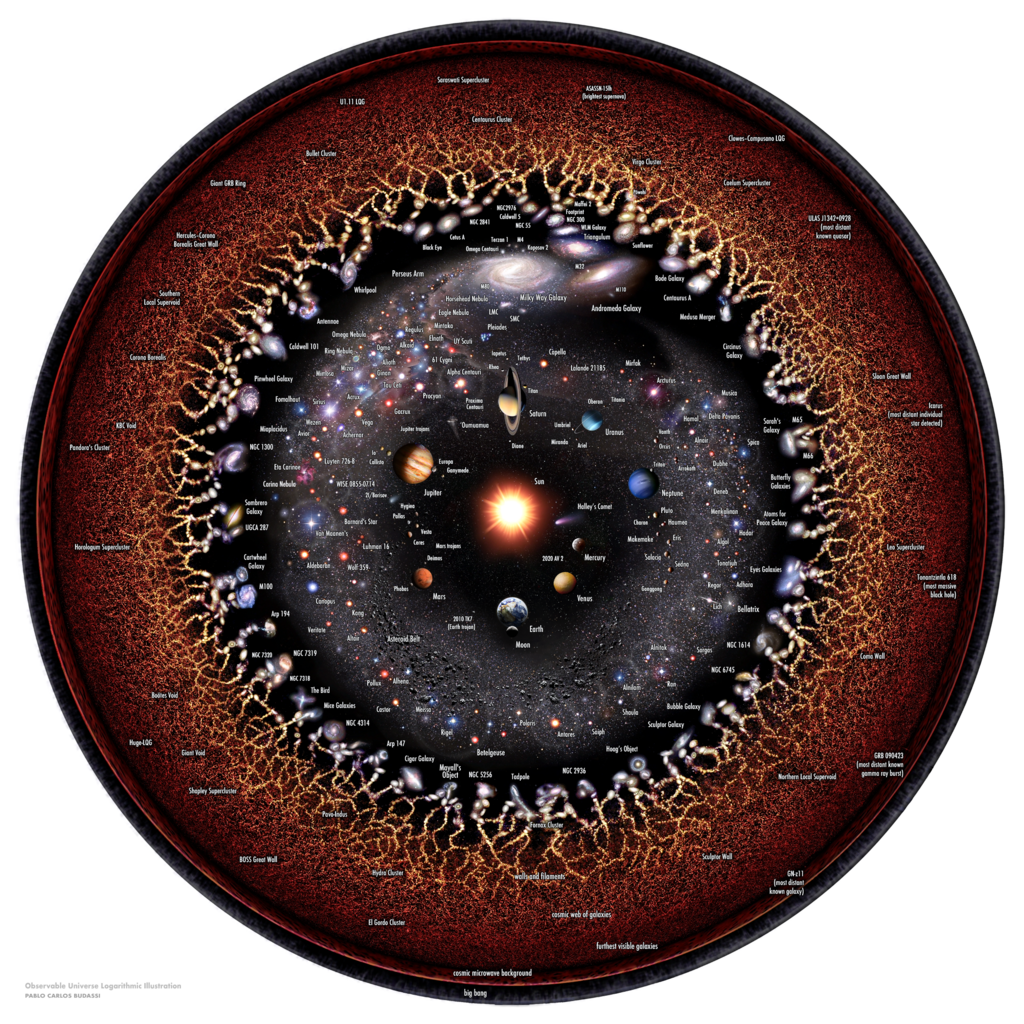
This vast sphere contains an almost unimaginable amount of... well, stuff. The most basic building blocks of this stuff are galaxies.
A Universe of Galaxies
Galaxies are sprawling systems of stars, gas, dust, and dark matter, all held together by gravity. Our own galaxy is the Milky Way. For a long time, we thought it was the only one. Now we know better.
Estimates suggest there are around 2 trillion galaxies in the observable universe. That number is hard to wrap your head around. It means for every single person currently living on Earth, there are about 250 galaxies out there.
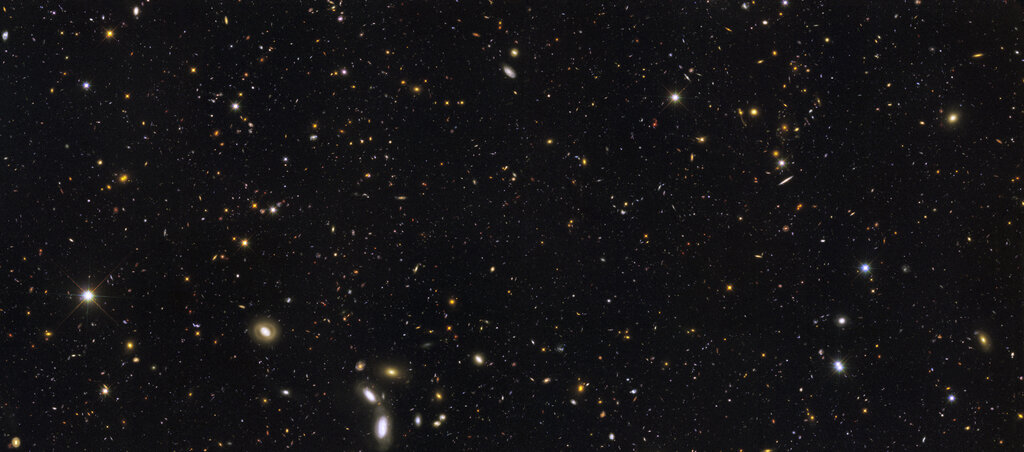
Each of those galaxies is a city of stars. Our Milky Way contains somewhere between 100 and 400 billion stars. Some galaxies are smaller, but many are much, much larger. If you multiply the average number of stars per galaxy by the number of galaxies, you arrive at a staggering figure.
There are likely more stars in the universe than there are grains of sand on all the beaches of Earth.
And the scale keeps growing. We now know that most of those stars host their own planets. The number of potential worlds in our universe is truly astronomical. But the scale of space is only half the story. There's also the scale of time.
Cosmic Time
The universe began about 13.8 billion years ago with the Big Bang. To put this immense span of time into perspective, astronomers sometimes use an analogy called the Cosmic Calendar. Imagine the entire history of the universe is compressed into a single calendar year.
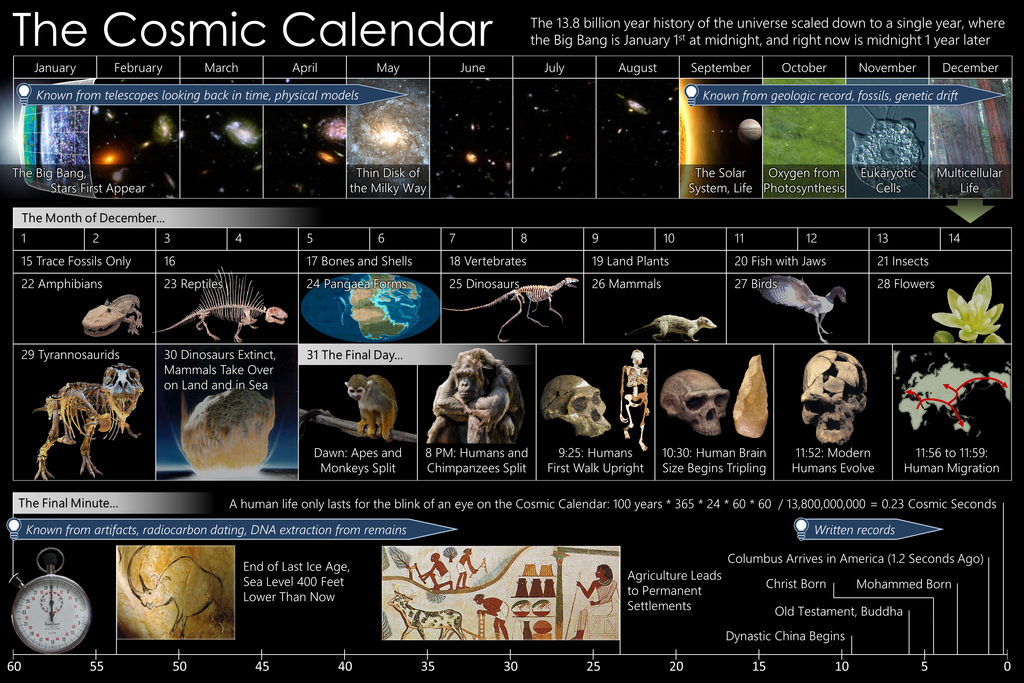
On this calendar, the Big Bang happens at the first instant of January 1st. Our Milky Way galaxy doesn't form until May. Our own solar system is a latecomer, appearing on September 2nd. The first life on Earth arises around September 21st.
And where is all of human history? Dinosaurs roamed the Earth from December 26th to December 30th. The first humans don't appear until around 10:30 PM on December 31st. All of recorded human history, from the ancient Egyptians to today, fits into the last 14 seconds before midnight.
What defines the 'observable universe'?
The universe is about 13.8 billion years old, but the observable universe has a radius of about 46.5 billion light-years. Why is there a discrepancy?
Understanding these immense scales of space and time provides a crucial context for our place in the cosmos.