Humanities Pedagogy in the Age of AI
Understanding AI
What Is Artificial Intelligence?
At its heart, artificial intelligence is about creating machines that can think or act like humans. This doesn't mean building a robot that looks and talks exactly like a person. Instead, it's about giving computers the ability to perform tasks that typically require human intelligence, such as learning, reasoning, problem-solving, and understanding language.
Think of AI as a broad field of computer science. The goal is to build systems that can perform tasks that, if done by a human, would be considered intelligent.
Artificial Intelligence
noun
The theory and development of computer systems able to perform tasks that normally require human intelligence, such as visual perception, speech recognition, decision-making, and translation between languages.
AI isn't a single technology. It's an umbrella term that covers a range of methods and tools. Some AI is designed for very specific tasks, like playing chess or identifying faces in photos. Other, more advanced forms are still largely theoretical, aiming for a more general, human-like intelligence.
A Brief History
The idea of intelligent machines has been around for centuries, but the formal field of AI research began in the mid-1950s. The journey has been a series of booms and busts, often called "AI summers" and "AI winters." Early excitement was driven by computers that could solve algebra problems and prove logical theorems. But progress was slow, and funding often dried up when researchers couldn't deliver on ambitious promises.
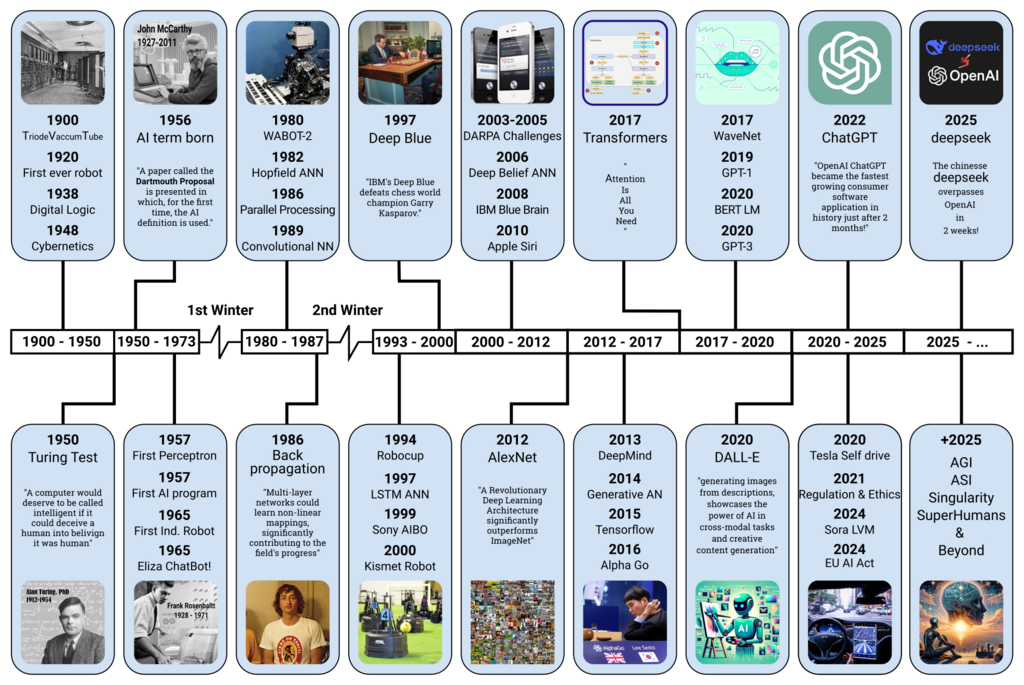
The last few decades have seen an explosion in AI progress. This recent surge is thanks to two main factors: the availability of massive amounts of data and the development of much more powerful computers. These ingredients have allowed core AI concepts, some of which are decades old, to finally flourish.
The Core Concepts
To understand AI, you need to know about a few key ideas that power most modern systems. These are not separate from AI; rather, they are specific approaches within the broader field.
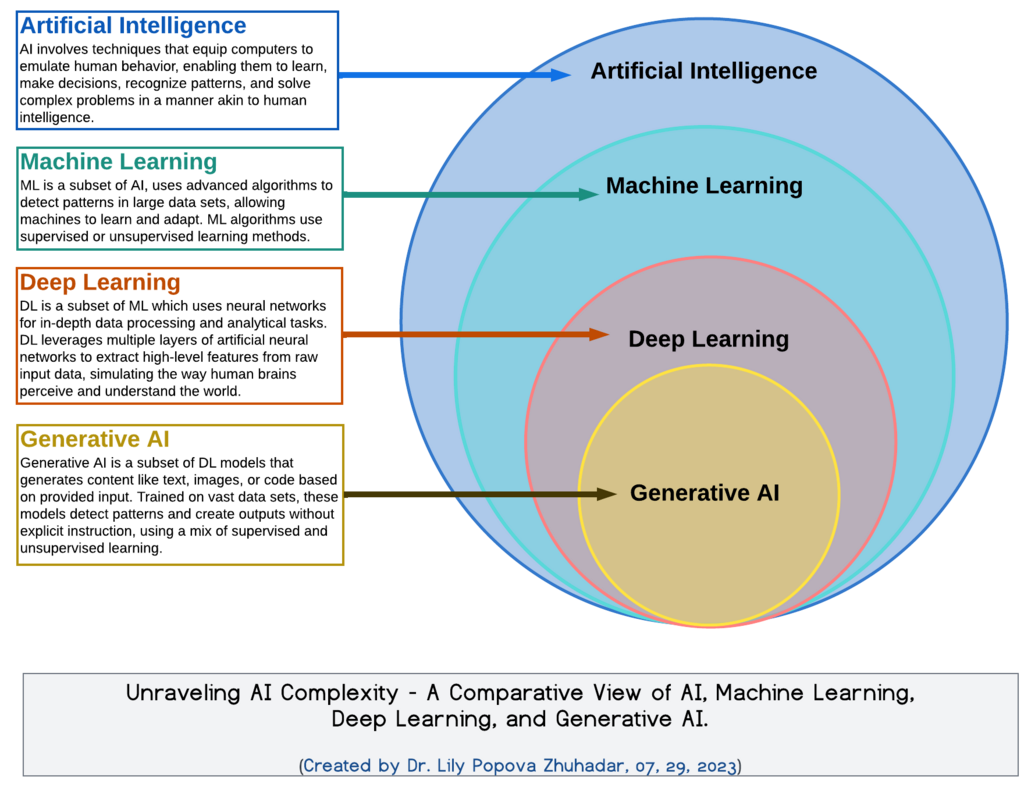
Machine Learning (ML) is the most common type of AI today. Instead of programming a computer with explicit rules for a task, you give it a large dataset and let it learn the patterns on its own. It’s like teaching a child to recognize a cat by showing them hundreds of pictures of cats, rather than by describing a cat's features in detail.
Neural Networks are a key part of machine learning, inspired by the structure of the human brain. They consist of layers of interconnected nodes, or "neurons." Each connection has a weight that gets adjusted as the network learns from data. When a neural network has many layers, it's called "deep learning." This depth allows it to learn very complex patterns, like the nuances of human speech or the visual information in a photograph.
Natural Language Processing (NLP) is a branch of AI focused on enabling computers to understand, interpret, and generate human language. This is what powers chatbots, translation services, and tools that can summarize long documents. NLP combines machine learning and linguistics to process text and speech.
Current Capabilities and Limits
Today's AI is powerful but narrow. It excels at specific tasks where there's a lot of data to learn from. It can analyze medical scans with incredible accuracy, compose music in the style of Bach, or beat the world's best Go players. These systems are highly optimized for one job.
However, AI lacks general intelligence. It doesn't have common sense, consciousness, or a true understanding of the world. An AI that can write a poem cannot understand the emotions it describes. A system that translates languages doesn't grasp the cultural context behind the words. They are sophisticated pattern-matching machines, not thinking beings.
| Strengths | Limitations |
|---|---|
| Processing massive datasets quickly | Lack of common sense or world knowledge |
| Finding complex patterns and correlations | Difficulty with tasks requiring creativity or nuance |
| Automating repetitive, data-driven tasks | Can inherit and amplify biases from training data |
| Performing specific tasks with high accuracy | Cannot understand context or intent like humans |
Understanding these core ideas provides a solid foundation for thinking about how AI works and what its role might be in any field, including the humanities.
What is the fundamental goal of artificial intelligence?
What are the two main factors that have driven the recent explosion in AI progress?
This basic grasp of AI's definition, history, and core concepts is the first step in navigating its growing presence in our world.