Human Nutrition Essentials
Macronutrient Basics
The Building Blocks of Your Food
Think of your body as a house that's constantly being built and maintained. To do that work, you need construction materials. In the world of nutrition, these materials are called macronutrients. It's a fancy word, but it just means nutrients your body needs in large amounts to function.
Macronutrients are the three main categories of nutrients that provide energy and support growth and maintenance of the body.
There are three of these essential building blocks: carbohydrates, proteins, and fats. Each one plays a unique and vital role in keeping you going every day. They provide the energy for everything you do, from breathing to running a marathon. Let's break them down.
Carbohydrates: Your Body's Favorite Fuel
If your body has a preferred fuel source, it’s carbohydrates. They are the easiest nutrient for your body to convert into energy. When you eat carbs, like a banana or a slice of bread, your digestive system breaks them down into a simple sugar called glucose, which then travels through your bloodstream and enters your cells to be used as immediate power.
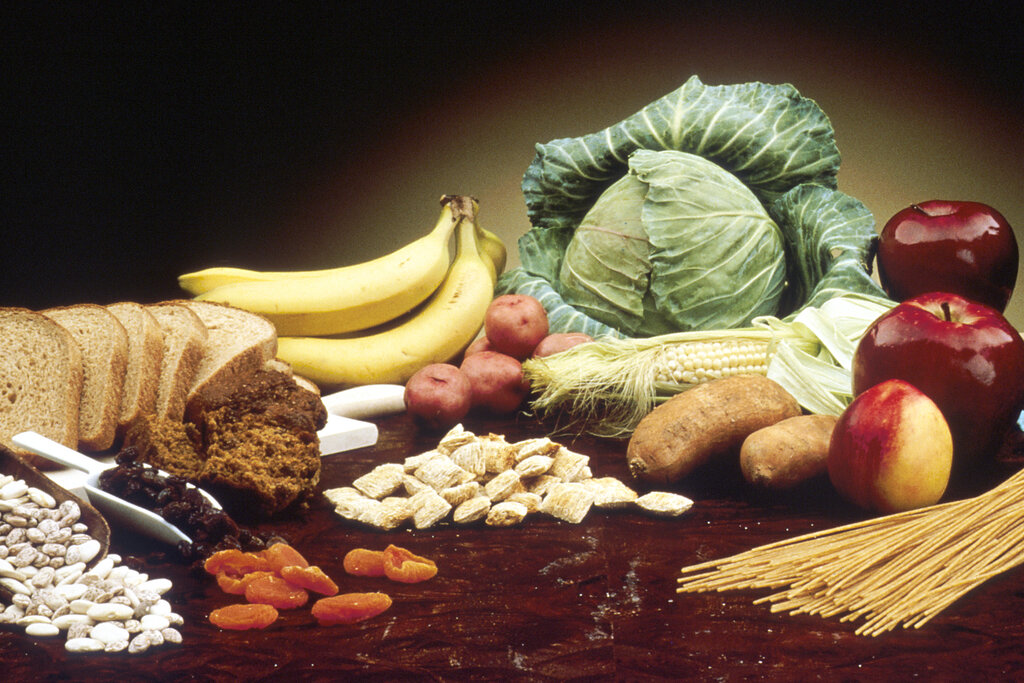
This is why you might crave pasta the night before a big race or feel a quick jolt of energy after eating a piece of fruit. Your body is stocking up on its most readily available fuel. Grains, fruits, and starchy vegetables like potatoes are all excellent sources of carbohydrates.
Proteins: The Master Builders
If carbohydrates are the fuel, proteins are the workers and the raw materials. They are essential for building, maintaining, and repairing tissues throughout your body. Your muscles, organs, skin, and even your hair are all made primarily of protein. They also play a role in making enzymes and hormones that regulate countless bodily functions.
Think of protein as the construction crew that fixes a wall or adds a new room to your house. Without it, things start to fall apart. You can find protein in a wide variety of foods, including meat, poultry, fish, eggs, dairy products, beans, lentils, and a popular plant-based option.
Fats: Energy Reserves and Bodyguards
Fats often get a bad rap, but they are absolutely essential for your health. They serve as a major source of stored energy, a backup fuel tank for when carbohydrates aren't available. But their job doesn't stop there.
Dietary fats also help insulate your body, cushion your vital organs, and are necessary for your body to absorb certain vitamins (specifically vitamins A, D, E, and K). They are also a key component of cell membranes and are used to produce important hormones. You can find healthy fats in foods like avocados, nuts, seeds, and olive oil.
So how do we measure the energy these macronutrients provide? We use calories. A calorie is simply a unit of energy. When you read that a food has 100 calories, it's a way of describing how much energy your body can get from eating it. All macronutrients provide calories, but not in equal amounts.
| Macronutrient | Calories per Gram |
|---|---|
| Carbohydrate | 4 |
| Protein | 4 |
| Fat | 9 |
As you can see, fat is the most energy-dense nutrient, providing more than twice the calories per gram compared to carbohydrates and protein. This is why it's such an efficient way for the body to store energy for the long term.
What are the three essential macronutrients your body needs in large amounts?
Which macronutrient is the body's preferred and most easily converted source of energy?