Human Genomics Unveiled
Introduction to Genetics
The Blueprint of Life
Every living thing, from a blade of grass to you, has a set of instructions that tells it how to grow, function, and reproduce. This master plan is stored in a remarkable molecule called DNA.
DNA
noun
Deoxyribonucleic acid, a molecule that carries the genetic instructions for the development, functioning, growth, and reproduction of all known organisms and many viruses.
Think of DNA as a twisted ladder, a shape scientists call a double helix. The two long sides of the ladder are made of sugar and phosphate molecules, forming a backbone. The rungs connecting the sides are what hold the actual code.
These rungs are made of four chemical bases: adenine (A), guanine (G), cytosine (C), and thymine (T). Each rung consists of two bases linked together, but they can only pair in a specific way: A always pairs with T, and C always pairs with G. This strict pairing rule is crucial for how DNA copies itself accurately.
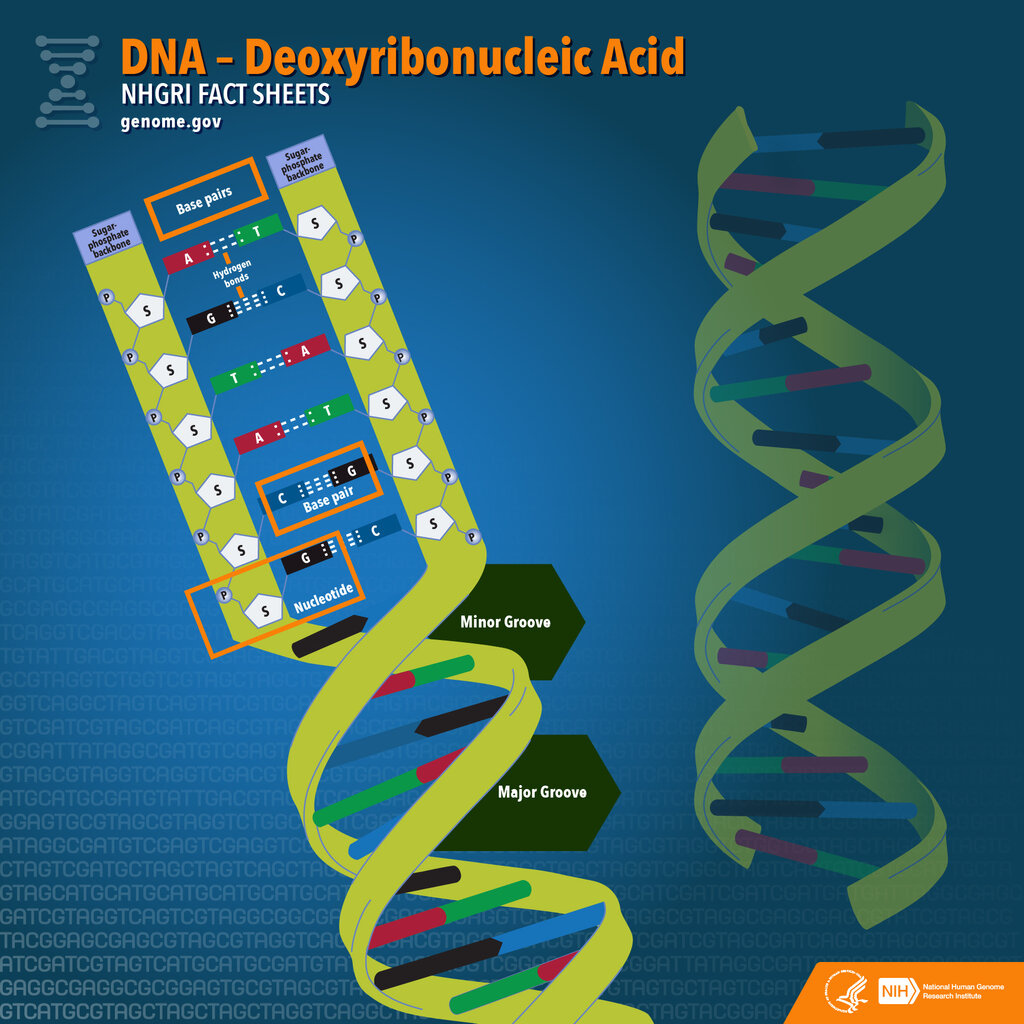
The sequence of these bases along the ladder forms the genetic code. It's a language with just four letters, but the specific order spells out the instructions for building and maintaining an entire organism. The primary function of DNA is to store this information, which directs the production of proteins—the tiny machines that do most of the work in our cells.
Organizing the Instructions
If you stretched out the DNA from a single human cell, it would be about two meters long. To fit all of that information inside a microscopic cell nucleus, it needs to be incredibly well-organized. Nature's solution is the chromosome.
A chromosome is a structure made of DNA tightly coiled many times around proteins. This packaging system keeps the genetic material compact and manageable. Humans typically have 46 chromosomes in each cell, arranged in 23 pairs. You inherit one chromosome from each pair from your mother, and the other from your father.
Not all parts of the DNA on a chromosome do the same thing. A specific, functional segment of DNA is called a gene. Each gene contains the instructions to make a single protein or a functional RNA molecule. You can think of a chromosome as a chapter in the instruction manual, and each gene as a single recipe within that chapter.
gene
noun
A specific sequence of nucleotides in DNA or RNA that is located usually on a chromosome and that is the functional unit of inheritance controlling the transmission and expression of one or more traits.
Passing On Traits
The study of how traits are passed from parents to children is called heredity. The basic principles were first worked out by Gregor Mendel in the 1800s, long before anyone knew about DNA or chromosomes.
Each gene can come in different versions, called alleles. For example, a gene for flower color might have a purple allele and a white allele. Because you have two copies of each chromosome (one from each parent), you have two alleles for every gene.
allele
noun
One of two or more alternative forms of a gene that arise by mutation and are found at the same place on a chromosome.
The combination of alleles an individual has is their genotype. The observable trait that results from this combination, like purple flowers or brown eyes, is the phenotype.
Some alleles are dominant, meaning you only need one copy for the trait to be expressed. Others are recessive, meaning you need two copies for the trait to show up. This explains why you might have different traits than your parents or siblings, even though you share much of the same DNA. It all depends on the specific mix of dominant and recessive alleles you inherit.
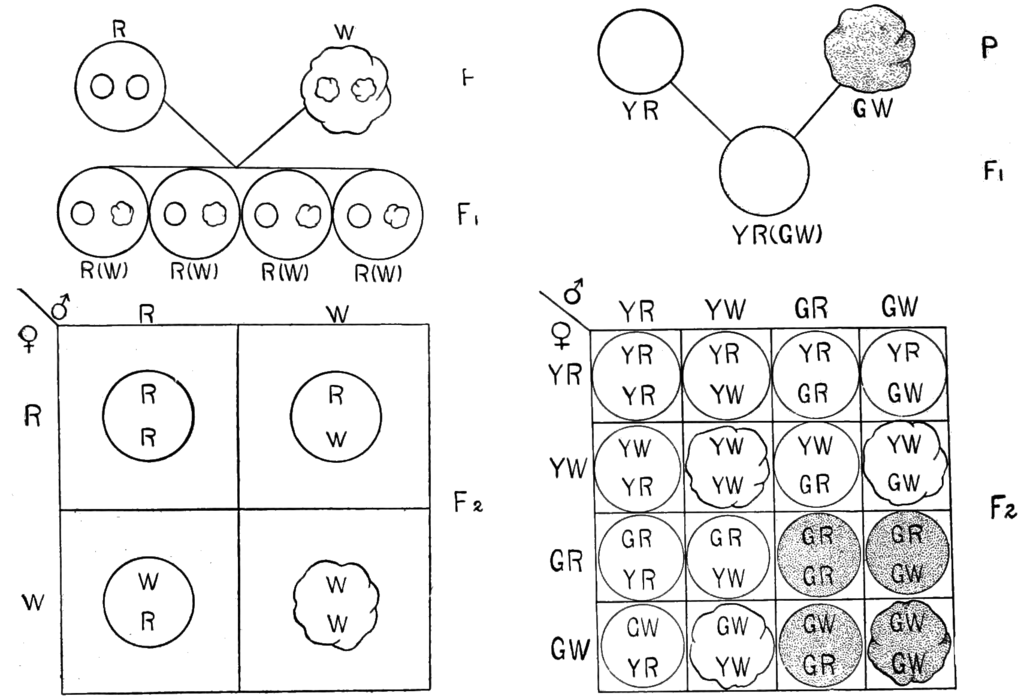
These fundamental concepts—the structure of DNA, its organization into genes and chromosomes, and the rules of inheritance—form the bedrock of genetics. They allow us to understand how life's instructions are written, stored, and passed down through generations.