Human Figure Drawing Fundamentals
Gesture Drawing
Capturing the Essence of Movement
Before you can draw a person, you need to see their energy. Gesture drawing is a way of quickly capturing the movement, action, and posture of a figure. It's less about drawing what you see and more about feeling the subject's rhythm.
Think of it as the foundation of a house. You don't start by painting the walls; you start by building a strong frame. Gesture drawings are the frame for your figure drawings. They are fast, loose, and full of life. Forget about details like fingers, faces, or clothing folds. Your only goal is to capture the core motion in a few quick lines.
Gesture drawing is about capturing the movement and flow of the subject rather than getting bogged down in details.
This approach trains your hand to work with your eyes, forcing you to identify the most important parts of a pose in seconds. It’s an exercise in seeing the big picture first.
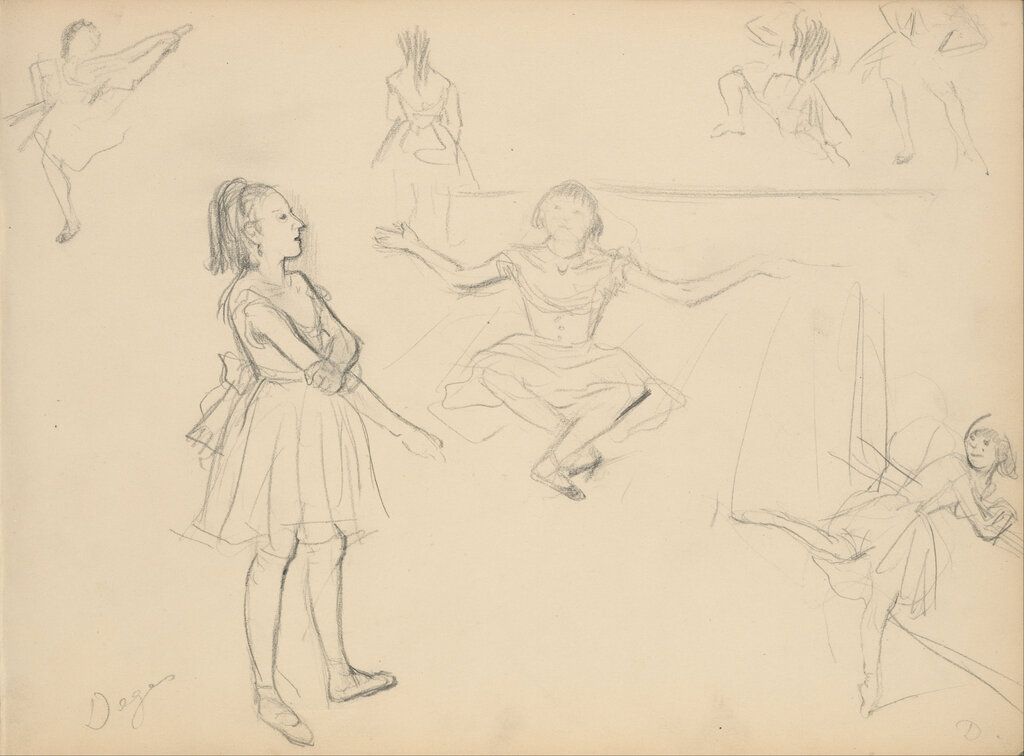
Finding the Line of Action
Every pose has a 'line of action.' This is a single, imaginary line that runs through the figure, summarizing its entire gesture. It often follows the curve of the spine through the torso and down through the legs, representing the main thrust of the movement.
To find it, look for the longest, most continuous curve in the pose. Is the figure leaning, twisting, or stretching? The line of action captures that primary force. Start your gesture drawing by putting this single, energetic line on the page. It will serve as the backbone for the rest of your sketch.
Once you have the line of action, you can build upon it with simple, loose shapes. Use ovals for the ribcage and pelvis, and simple lines or long ovals for the arms and legs. Don't worry about accuracy. Focus on connecting these forms along the flow of the line of action. The goal is a dynamic sketch, not a rigid anatomical chart.
Put It into Practice
The best way to learn gesture drawing is to do it. The key is to work fast. Timed exercises force you to ignore details and focus purely on movement.
Here’s a simple routine to get started:
- Find a subject. You can use photos of athletes or dancers online, or just watch people in a coffee shop.
- Set a timer. Start with 30-second poses.
- Draw. For each pose, try to capture the entire figure before the timer goes off. Start with the line of action, then add the main forms. Don’t stop moving your pencil.
- Repeat. Fill pages with these quick sketches. Don't erase or correct anything. Just move on to the next one.
After you've done a few 30-second drawings, try increasing the time to 1 minute, then 2 minutes. With a little more time, you can add slightly more information, like the angle of the shoulders or hips, but the core principle remains the same: capture the gesture first.
Don't judge your gesture drawings. Their purpose is practice, not perfection. Most of them will look like energetic scribbles, and that's a good thing.
Ready to test what you've learned about the purpose and technique of gesture drawing?
What is the primary goal of gesture drawing?
When beginning a gesture drawing, what is the very first line an artist should typically draw?
Gesture drawing is a fundamental skill that brings life to your art. It teaches you to see beyond static outlines and capture the dynamic energy of the human form.