Human Centric Game Design Mastery
Empathy in Mechanical Design
Beyond Personas
In traditional UX, we rely on personas to represent our users. A persona might be 'David, a 45-year-old project manager who needs an efficient way to track team progress'. This is useful, but for designing complex, interactive systems like games, it's only half the story. It tells us what a user does, but not how they feel or what drives them.
This is where Player Profiles come in. Instead of focusing on demographics, a Player Profile captures a person's intrinsic motivations and psychological state during play. We move from 'David, the manager' to 'The Strategist'. This profile isn't defined by age or job title, but by a desire for mastery, a love for long-term planning, and a frustration with random, unpredictable events. Another profile might be 'The Explorer', who is driven by curiosity and a need for autonomy.
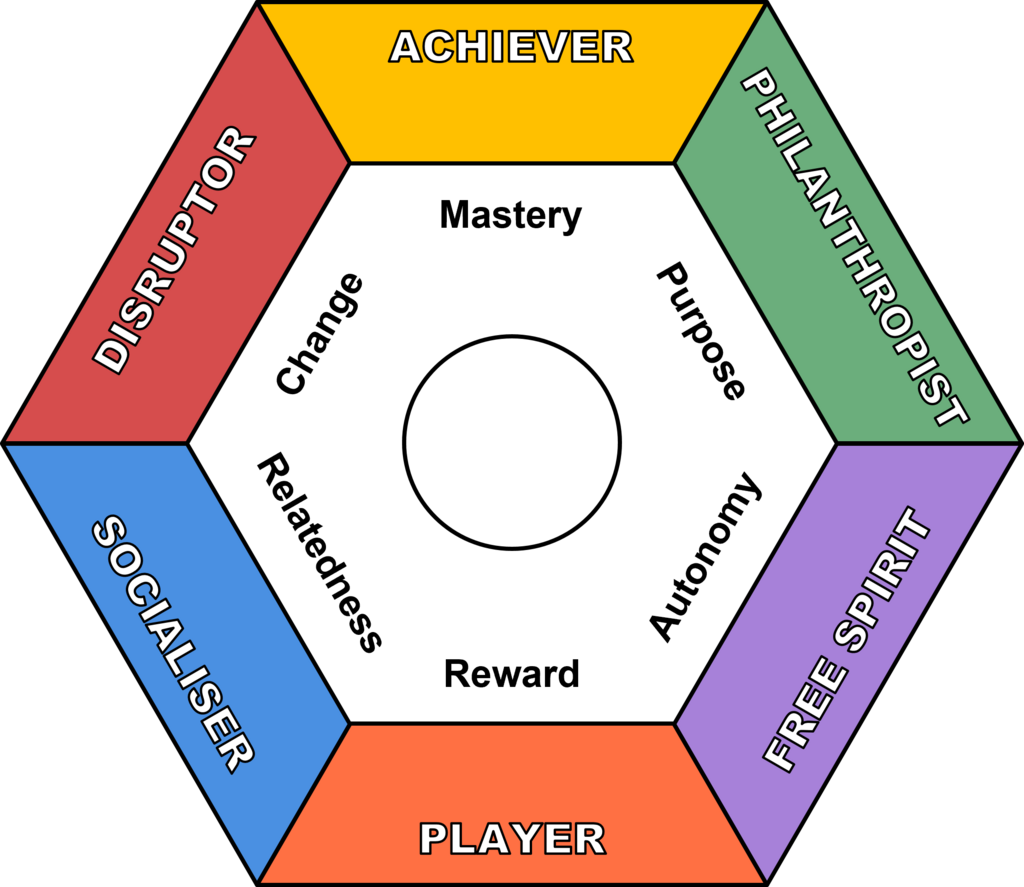
Creating these profiles requires a different kind of research. It's less about surveys asking 'What features do you want?' and more about observing behaviour and asking 'What made you feel powerful in that moment?' or 'When did you feel frustrated?'. This empathy-led approach allows us to design systems that resonate on a deeper, emotional level, moving beyond simple usability to create truly engaging experiences.
Designing for Feelings, Not Features
There's a significant shift happening in design, moving from a focus on features to a focus on feelings. It's a core principle of modern (HCD). A list of features—'AI-driven NPCs', 'adaptive difficulty', 'crafting system'—doesn't guarantee a good experience. The real question is, what emotions do these systems evoke?
An adaptive difficulty system isn't just a 'feature'; it's a tool for managing the emotional journey. It can create tension by increasing the challenge when a player is confident, or provide relief when they're struggling. This prevents boredom and frustration, keeping the player in a state of 'flow'. The goal is to map out an entire emotional arc for the experience, just like a film director or a novelist would.
Developers are responding by crafting emotional arcs (highs, lows, and catharsis) much like filmmakers do, ensuring that gameplay isn’t just a series of challenges but a journey with feels.
We design mechanics to serve this emotional arc. A tough boss battle isn't just a roadblock; it's a carefully constructed sequence designed to take the player from uncertainty and fear to determination, and finally to triumph and relief. Every mechanical choice should be able to answer the question: 'How do we want the player to feel right now?'
The MDA Framework Reimagined
To systematically connect mechanics to feelings, we can use the through an HCD lens. MDA stands for Mechanics, Dynamics, and Aesthetics.
From a traditional design perspective, you build the Mechanics (rules, code), which lead to Dynamics (player strategies and actions), which create the final Aesthetics (the fun, the challenge, the story). But with an empathetic, human-centric approach, we flip this on its head.
We start with Aesthetics. We decide on the desired emotional experience first. Do we want the player to feel powerful? Curious? Clever? Scared?
Once we define the target feeling, we work backwards. To make a player feel clever, what Dynamics do we need to encourage? Perhaps puzzle-solving, experimentation, or outsmarting an opponent. And to create those dynamics, what Mechanics do we need? Maybe a set of combinable tools, an environment with hidden rules, or an AI that has predictable but exploitable weaknesses.
Motivation is Everything
Ultimately, empathy in design is about understanding motivation. We need to know why a player is engaging with our system. This boils down to two types of motivation: .
| Motivation Type | Description | Example System |
|---|---|---|
| Extrinsic | Performing an action to earn an external reward or avoid punishment. | Earning points or a badge for completing a tutorial. |
| Intrinsic | Performing an action for the inherent satisfaction and enjoyment it brings. | Solving a difficult puzzle for the 'aha!' moment of discovery. |
Complex systems thrive on intrinsic motivation. While extrinsic rewards like achievements and leaderboards have their place, they are not enough to keep someone engaged in a deeply complex activity. True engagement comes from satisfying core psychological needs: autonomy (the freedom to make meaningful choices), competence (the feeling of mastery and skill), and relatedness (connecting with others).
When designing an AI companion, the goal isn't just to make it a 'feature' that helps in combat. It's to create a system that fosters a sense of relatedness. When designing a complex skill tree, the aim is to give the player a sense of autonomy in their choices and a feeling of competence as they master new abilities. By focusing on these intrinsic drivers, we create systems that are not just used, but loved.
What is the primary distinction between a traditional UX persona and a Player Profile?
According to the principles of Human-Centric Design described, what is the most important question to ask when designing a system?