Human Anatomy Essentials
Introduction to Human Anatomy
The Body’s Blueprint
Human anatomy is the study of the body's structures. Think of it like learning the blueprints of a complex building. Instead of walls, wires, and pipes, you're learning about bones, muscles, and nerves. By understanding what the parts are and where they are, we can begin to understand what they do.
anatomy
noun
The branch of science concerned with the bodily structure of humans, animals, and other living organisms, especially as revealed by dissection and the separation of parts.
The body isn’t just a random collection of parts. It’s organized in layers of increasing complexity, starting from the microscopic and building up to the entire person.
The human body is a marvel of organization, from tiny atoms to complex organ systems.
Levels of Organization
Everything in the body is built from the ground up, following a clear hierarchy. Each level is built from the one below it.
1. Cells: These are the smallest units of life. The human body is made of trillions of cells, from nerve cells that transmit signals to muscle cells that contract.
2. Tissues: Similar cells group together to perform a specific function. For example, many muscle cells form muscle tissue, which is responsible for movement. There are four basic types of tissue: epithelial, connective, muscle, and nervous tissue.
3. Organs: An organ is a structure made of at least two different types of tissue that work together to perform a specific job. The heart, for instance, is an organ made of muscle tissue, nervous tissue, and connective tissue. It works to pump blood throughout the body.
4. Organ Systems: This is the highest level of organization. An organ system is a group of organs that cooperate to accomplish a common purpose. The digestive system, for example, includes organs like the stomach, small intestine, and large intestine, all working to break down food.
The Major Organ Systems
The human body is composed of eleven major organ systems. Each has a distinct role, but they all work together to keep the body functioning. Think of them as different departments in a company, each with its own specialty but all contributing to the company's overall success.
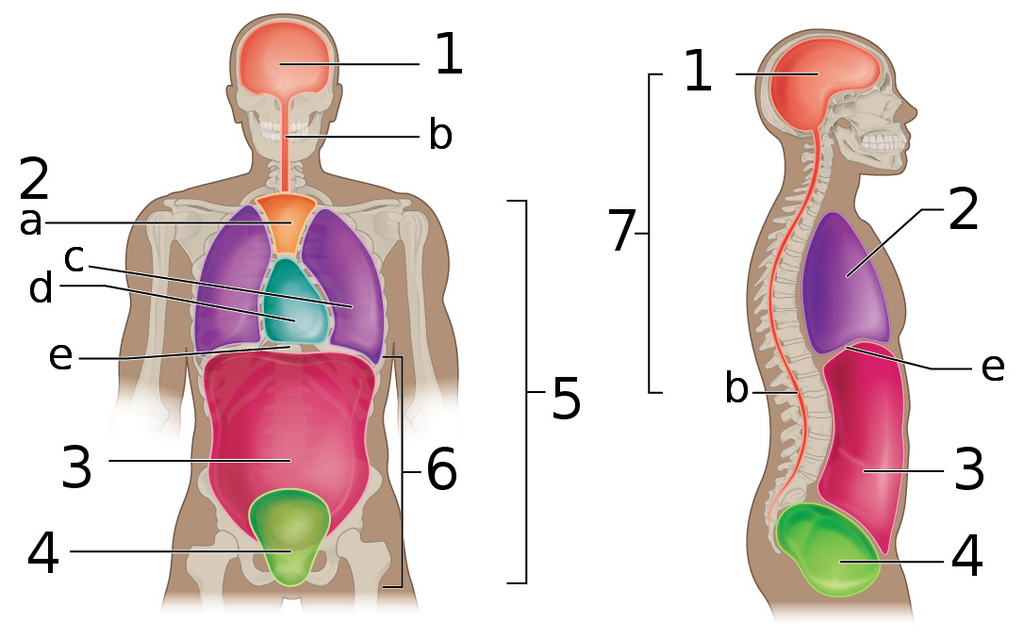
| System | Key Components | Primary Role |
|---|---|---|
| Integumentary | Skin, Hair, Nails | Forms the external body covering. |
| Skeletal | Bones, Joints | Protects and supports organs; provides a framework. |
| Muscular | Skeletal Muscles | Allows for movement and facial expression. |
| Nervous | Brain, Spinal Cord, Nerves | Fast-acting control system of the body. |
| Endocrine | Glands (e.g., Thyroid, Pituitary) | Secretes hormones that regulate processes. |
| Cardiovascular | Heart, Blood Vessels | Transports blood, oxygen, and nutrients. |
| Lymphatic | Lymph Nodes, Spleen | Picks up fluid leaked from blood vessels; houses white blood cells. |
| Respiratory | Lungs, Trachea, Bronchi | Keeps blood supplied with oxygen and removes carbon dioxide. |
| Digestive | Stomach, Intestines, Liver | Breaks down food into absorbable units. |
| Urinary | Kidneys, Bladder | Eliminates nitrogenous wastes from the body. |
| Reproductive | Testes, Ovaries | Production of offspring. |
Understanding this organization, from the tiniest cell to the complex interplay of organ systems, is the first step in mastering anatomy.
Which of the following lists the levels of organization in the human body from the simplest to the most complex?
A structure in the body composed of at least two different types of tissue that work together to perform a specific function is known as a(n) __________.