HTS Tape Technology at Commonwealth Fusion
Introduction to Superconductivity
Electricity Without Friction
Imagine pushing a box across a rough floor. Friction constantly works against you, slowing it down. In an electrical wire, electrons moving to create a current face a similar problem called resistance. This resistance is like an electrical friction that wastes energy, releasing it as heat.
But what if you could eliminate that friction entirely? That's the core idea behind superconductivity. When certain materials are cooled below a specific temperature, their electrical resistance suddenly drops to zero. Absolutely zero. This special temperature is called the critical temperature, or .
Superconductor
noun
A material that can conduct electricity with zero resistance when cooled below its critical temperature.
In a superconducting state, an electrical current can flow in a loop forever without any power source to keep it going. This isn't just a reduction in resistance; it's a complete disappearance.
The Meissner Effect
Having zero resistance is amazing, but it's only half the story. Superconductors also have a unique relationship with magnetic fields. When a material becomes superconducting, it actively expels all magnetic fields from its interior. This phenomenon is known as the Meissner effect.
This isn't just about blocking magnetic fields. The superconductor creates its own surface currents that generate a magnetic field perfectly canceling the one outside. The result is a powerful repulsive force that can be strong enough to levitate a magnet.
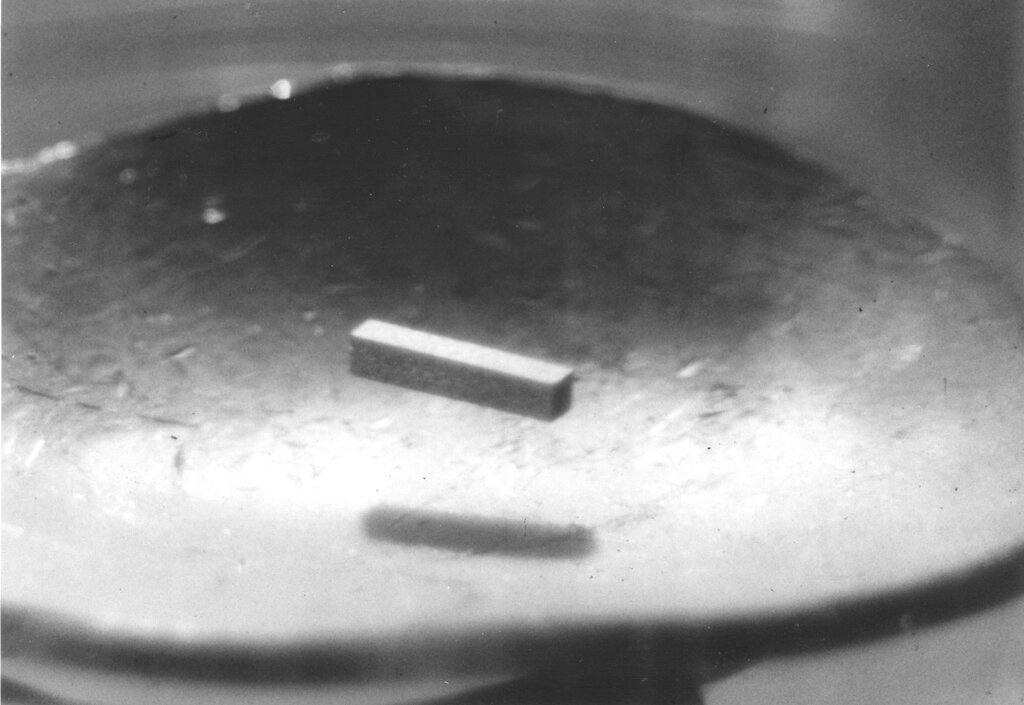
The Meissner effect is what truly defines a superconductor. A hypothetical "perfect conductor" would have zero resistance, but it wouldn't expel a magnetic field that was already present before it was cooled.
A Tale of Two Temperatures
Superconductivity was first discovered in 1911 by Heike Kamerlingh Onnes, who found that mercury's resistance vanished at about 4.2 Kelvin (–452°F). This discovery ushered in the era of low-temperature superconductors (LTS). For decades, all known superconductors were LTS materials, requiring expensive and difficult-to-handle liquid helium to reach their critical temperatures.
This limited their practical use. But in 1986, a breakthrough occurred with the discovery of materials that could superconduct at much warmer temperatures. These are known as high-temperature superconductors (HTS).
Now, "high-temperature" is a relative term. These materials still need to be very cold, but their critical temperatures are high enough that they can be cooled with liquid nitrogen, which is far more abundant and cheaper than liquid helium.
| Feature | Low-Temperature (LTS) | High-Temperature (HTS) |
|---|---|---|
| Discovery | 1911 | 1986 |
| Typical | Below 30 K (-405°F) | Above 30 K, some > 130 K (-225°F) |
| Coolant | Liquid Helium | Liquid Nitrogen |
| Material Type | Mostly pure metals and alloys | Complex ceramic oxides |
The development of HTS materials opened the door for a much wider range of real-world applications.
Putting Superconductors to Work
The ability to carry massive currents with no energy loss makes superconductors incredibly useful. One of their most common applications is in creating powerful electromagnets.
Because a superconducting wire has no resistance, you can run a huge current through it to generate an intense and stable magnetic field. This is the technology behind Magnetic Resonance Imaging (MRI) machines, which use superconducting magnets to see inside the human body. They are also essential for particle accelerators, where they steer beams of particles traveling near the speed of light.
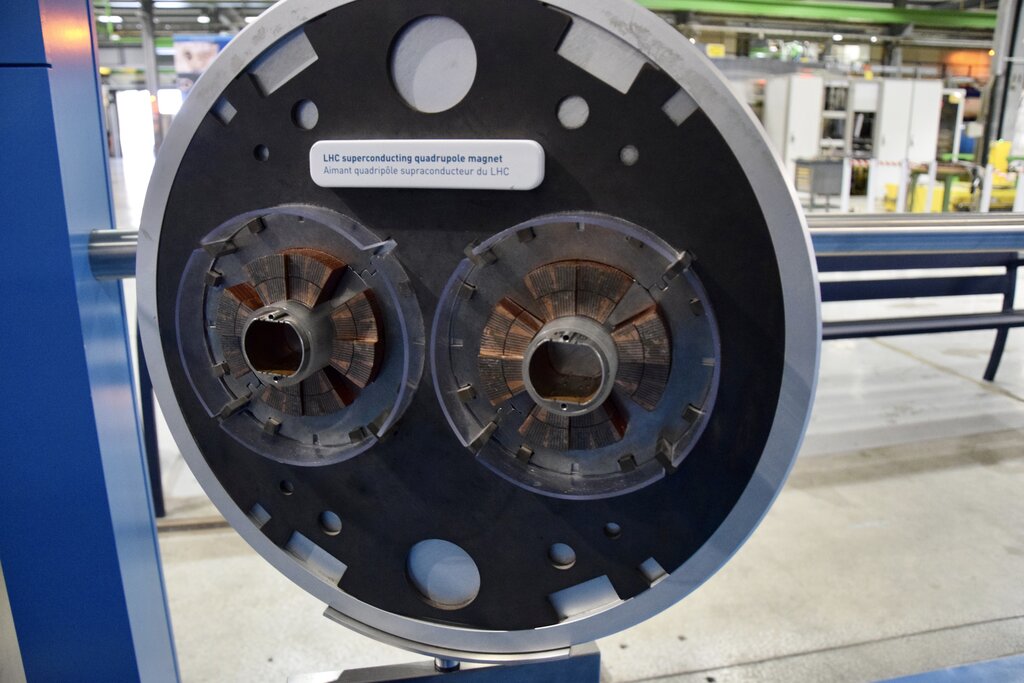
Engineers are also developing HTS technologies for a more efficient power grid. Superconducting power cables could transmit electricity over long distances with no energy lost to heat. Other potential uses include high-speed maglev trains, powerful electric motors, and advanced computing.
Now, let's review what you've learned about these amazing materials.
What happens to the electrical resistance of a material when it is cooled below its critical temperature ()?
The phenomenon responsible for a superconductor's ability to levitate a magnet is known as the:
Superconductivity transforms materials, giving them properties that defy our everyday experience with electricity and magnetism. From healthcare to high-energy physics, its impact is already profound, with even more exciting applications on the horizon.