How the AI Giants Build Their Brains
Data and Foundations
The Internet as a Library
Unlike traditional software that relies on hand-coded rules, modern AI models learn. Their education begins with a process called pre-training, which is like giving a student access to a giant digital library and telling them to read everything. This library is, for all practical purposes, a huge snapshot of the public internet.
Companies like Google and OpenAI crawl and collect a staggering amount of text and data. This includes websites, books, scientific articles, and code repositories. The AI isn't programmed with an understanding of what a dog is or how gravity works. Instead, it absorbs these concepts by analyzing the patterns in how humans have written about them across billions of documents.
The goal is not to memorize the library but to learn the rules of language and the relationships between ideas, just from seeing them used over and over.
Guess the Next Word
How does a model learn from all this text? The core mechanism is surprisingly simple: it plays a game of "guess the next word." This process is called next-token prediction and it's the engine of modern language AI.
The model is given a sequence of words, like "The cat sat on the..." and its only job is to predict the most likely next word. At first, its guesses are random. It might predict "bicycle" or "cloud."
But every time it guesses wrong, it adjusts its internal network slightly. It repeats this process billions, even trillions, of times. Over and over, it sees sequences and makes predictions.
"The sun rises in the..." (east) "To be or not to..." (be) "The capital of France is..." (Paris)
After countless rounds, the model gets incredibly good at this game. In learning to predict the next word accurately, it incidentally learns grammar, facts, context, and even some basic reasoning. It has built a complex statistical map of how human language works.
Base vs. Assistant Models
The result of pre-training is a base model. It's a powerful text-completion engine. If you give it a prompt like "The first person on the moon was," it will complete it with "Neil Armstrong." However, it's not a conversational assistant. It doesn't understand instructions or how to be helpful. It just completes patterns.
To create a helpful chatbot like ChatGPT, this base model goes through a second phase of training called alignment or fine-tuning. This phase uses smaller, higher-quality datasets to teach the model how to follow instructions, refuse harmful requests, and carry on a conversation. The result is an assistant model, which is built on the foundation of the base model but is much more useful for everyday tasks.
The Scale of It All
The resources required for pre-training are immense. The datasets are measured in petabytes—millions of gigabytes. That’s equivalent to reading the entire English Wikipedia thousands of times over.
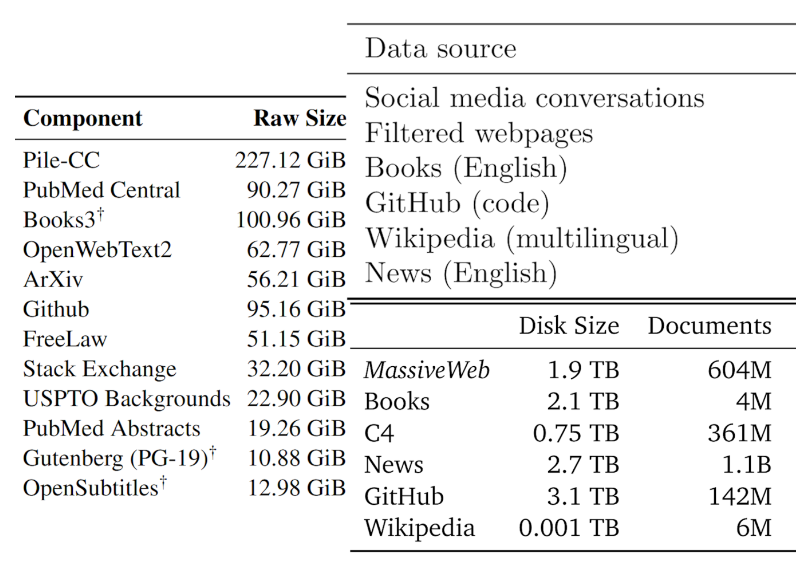
Processing this data requires enormous computing power. Training a single large model involves thousands of specialized computer chips, called GPUs (Graphics Processing Units), running nonstop for weeks or months. The cost can run into the hundreds of millions of dollars for a single training run. This is why only a handful of large tech companies can build these foundational models from scratch.
Now you have a sense of how these models are built. Let's test your knowledge.
What is the primary process used to create a "base model" in modern AI, where it learns from a massive dataset like a snapshot of the public internet?
The core learning mechanism during pre-training, where a model is given a sequence like "The sun rises in the..." and has to guess the next word, is called:
Understanding this foundational process is key to grasping how AI works. It's not magic; it's pattern recognition on an unbelievable scale.