How Payment Systems Work
Introduction to Payment Systems
The Flow of Money
At its core, a payment system is simply a set of rules and technologies that helps money move from one account to another. Think of it as the plumbing of our economy. It allows a customer in a coffee shop to buy a latte with a card, an employee to receive their paycheck via direct deposit, and a business to pay its suppliers.
Without these systems, commerce would grind to a halt. They provide a trusted, standardized way for us to exchange value, whether we're buying something online or paying a friend back for dinner. The goal is always the same: to get the right amount of money to the right place, safely and efficiently.
The Key Players
Every transaction involves a cast of characters, each playing a specific role to ensure money moves smoothly. Let's break down who they are.
Consumer: This is the person making the purchase. Also known as the cardholder.
Merchant: The business selling the goods or services. They need a way to accept non-cash payments.
Issuing Bank: The consumer’s bank. It issues the credit or debit card and is responsible for approving or declining the transaction based on the consumer's account status.
Acquiring Bank: The merchant’s bank. It receives the payment from the issuing bank and deposits it into the merchant's account. It's called the acquiring bank because it acquires the transaction from the merchant.
Payment Processor: This is the technology company that acts as a messenger. It securely routes the transaction information between the merchant, the acquiring bank, and the issuing bank. They are the technical backbone of the process.
A payment processor is primarily responsible for the technical side of the transaction—routing payment information securely and efficiently.
Payment Rails
Not all payments travel the same path. Different types of transactions run on different “rails,” each with its own speed, cost, and purpose.
Think of payment rails like different types of train tracks. Some are built for high-speed bullet trains, while others are for slow-moving freight.
Card Networks: These are the rails for debit and credit card transactions. When you swipe, dip, or tap your card, networks like Visa, Mastercard, and American Express carry the request from the merchant to your bank for approval. They are fast, reliable, and globally recognized.
ACH (Automated Clearing House): This network is used for direct bank-to-bank transfers in the U.S. It’s the system behind direct deposit paychecks and automatic bill payments. ACH transactions are typically processed in batches, making them slower and less expensive than card payments. They are ideal for recurring payments or large transfers.
Real-Time Payments (RTP): This is the newest and fastest rail. RTP systems, like The Clearing House's RTP network or FedNow, allow for the instant transfer and settlement of funds, 24/7. This means money can move from one account to another in seconds, not days.
A Transaction's Journey
Every time you make a purchase, a complex process unfolds in the background. While it feels instant, it actually happens in four distinct stages.
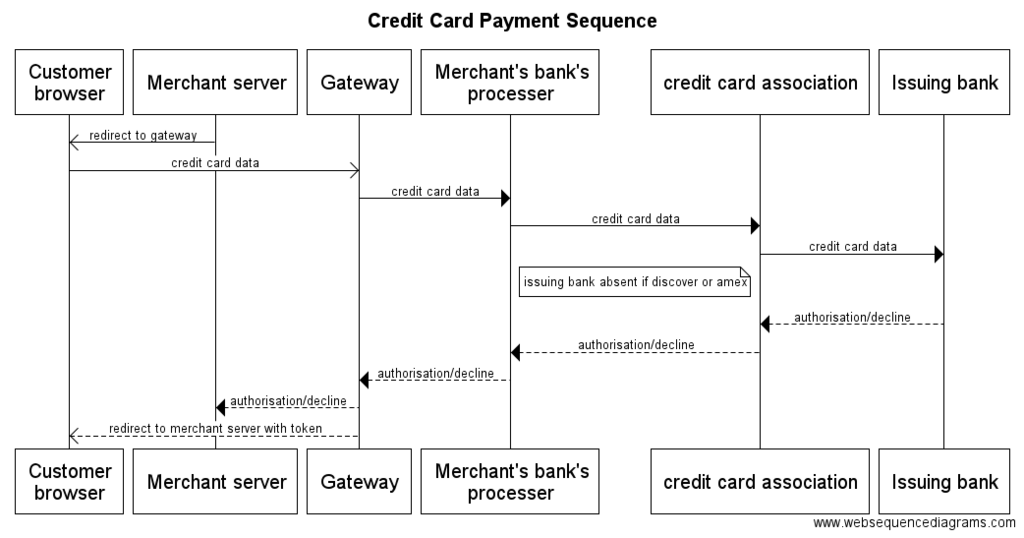
1. Initiation: This is the starting point. The consumer presents their payment information to the merchant, either by swiping a card, tapping a phone, or entering details online.
2. Authorization: The merchant's system sends a request through the payment processor to the issuing bank. The issuing bank checks if the consumer has enough funds or credit and verifies the transaction isn't fraudulent. It then sends back an approval or denial message. This all happens in about two seconds.
3. Clearing: At the end of the day, the merchant sends a batch of all its approved transactions to their acquiring bank. The acquiring bank then sorts these transactions and routes them through the card network to the correct issuing banks to request payment.
4. Settlement: This is when the actual money moves. The issuing bank transfers the funds for the approved transactions to the acquiring bank, which then deposits the money into the merchant's account. This step can take a few business days.
Finally, security and compliance are woven into every step. Technologies like encryption protect sensitive data as it travels across these networks. Rules like the Payment Card Industry Data Security Standard (PCI DSS) set strict requirements for how businesses must handle card information to prevent fraud and data breaches. This ensures that the entire system remains trustworthy for everyone involved.
Ready to check your understanding?
What is the primary function of a payment system?
In a typical card transaction, which entity is known as the merchant's bank?
That's the basic framework of how money moves in the digital age. Understanding these core pieces is the first step to seeing how modern finance really works.