How Large Language Models Work
Introduction to Large Language Models
What Are Large Language Models?
A Large Language Model, or LLM, is a type of artificial intelligence designed to understand and generate human-like text. Think of it as an extremely well-read student who has consumed a vast library of books, articles, and websites. By analyzing the patterns and relationships between words in this massive dataset, it learns grammar, facts, reasoning abilities, and even nuanced styles of writing.
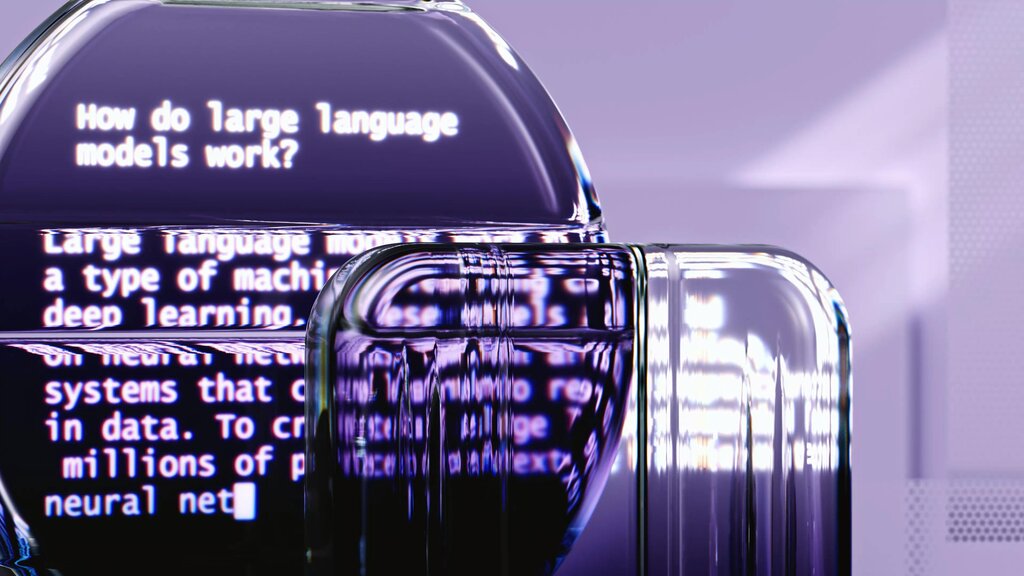
Large language models (LLMs) are AI systems that understand and create human language, doing tasks like summarizing articles, answering questions, writing code, and more.
This ability to process and produce language makes LLMs incredibly powerful. They are the engines behind chatbots that can hold coherent conversations, tools that can summarize long documents in seconds, and assistants that can help you write an email or code a website. Their impact is transforming industries by automating tasks that once required human understanding of language.
A Quick Trip Through Time
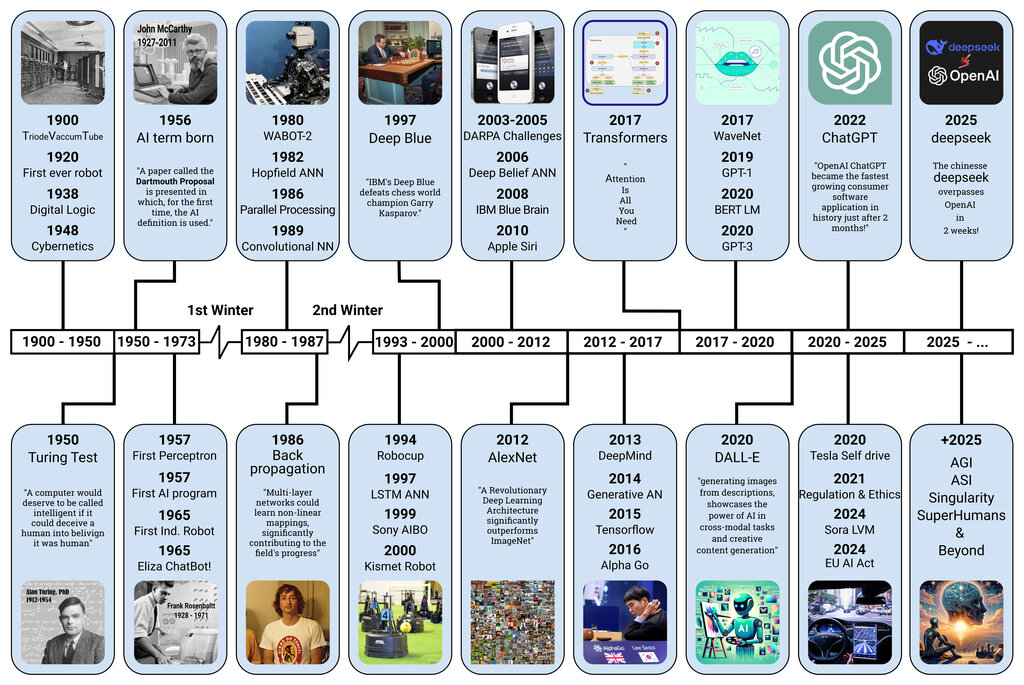
The idea of teaching machines language isn't new. Early language models were statistical. They looked at which words were most likely to follow each other in a sequence. For example, after seeing "the cat sat on the..." thousands of times, a model would predict "mat" as a likely next word. These models were useful but limited. They couldn't grasp the broader context of a paragraph or understand the subtle meanings of words.
Neural networks brought improvement, allowing models to learn more complex patterns. But a true revolution was just around the corner, one that would give models a much more sophisticated way of understanding context.
The Transformer Revolution
In 2017, a new architecture called the Transformer changed everything. Its key innovation is a mechanism called "attention." Instead of just looking at the immediately preceding words, the attention mechanism allows the model to weigh the importance of all words in the input text, no matter how far apart they are.
Imagine reading the sentence: "The robot picked up the heavy metal screw because it was magnetic." To understand what "it" refers to, you need to pay attention to "robot," "screw," and "magnetic." The Transformer architecture allows an LLM to do just that. It learns to focus on the most relevant parts of the text to make better predictions and generate more coherent responses.
The Transformer's 'attention' mechanism was a breakthrough, allowing models to handle long-range dependencies in text and understand context like never before.
This architecture is the foundation for most modern LLMs. It enabled models to be scaled up to unprecedented sizes, trained on more data, and achieve a much deeper understanding of language.
Meet the Models
Several prominent LLMs have been built using the Transformer architecture, each with its own strengths.
GPT (Generative Pre-trained Transformer): Developed by OpenAI, the GPT series is famous for its incredible text generation abilities. It excels at creating human-like prose, from articles and poems to code and conversations. It's what powers applications like ChatGPT.
BERT (Bidirectional Encoder Representations from Transformers): Developed by Google, BERT was a game-changer for understanding context. Unlike models that process text from left to right, BERT looks at the entire sentence at once (bidirectionally). This makes it exceptionally good at tasks that require deep understanding, such as search queries and sentiment analysis.
PaLM (Pathways Language Model): Another model from Google, PaLM is known for its massive scale and its ability to reason. It has shown remarkable performance on tasks that require logical steps, like solving math word problems and explaining jokes.
| Model | Key Feature | Common Use Case |
|---|---|---|
| GPT | Strong text generation | Content creation, chatbots |
| BERT | Deep context understanding | Search, text classification |
| PaLM | Advanced reasoning | Complex problem-solving |
Challenges and Ethics
While LLMs are powerful, they also come with significant challenges. Because they learn from vast amounts of internet text, they can inherit and amplify biases present in that data. This can lead to unfair or prejudiced outputs.
Another issue is the potential for generating misinformation. Since these models are designed to produce convincing text, they can create false narratives that look credible. Sometimes, they also "hallucinate," making up facts or sources with complete confidence.
Developing AI responsibly means actively working to address these problems. Researchers are focused on creating techniques to reduce bias, improve fact-checking, and make the models' reasoning more transparent. Ensuring that this technology is used ethically is one of the most critical challenges in the field of AI today.

Let's review what we've covered.
What is the primary function of a Large Language Model (LLM)?
What key innovation, introduced by the Transformer architecture, allows a model to weigh the importance of all words in an input text, regardless of their position?
These models represent a major leap forward in how machines process language, opening up new possibilities while also raising important questions about their responsible use.