How Large Language Models Learn
Introduction to Large Language Models
What Are Large Language Models?
At its core, a large language model (LLM) is a type of artificial intelligence designed to understand and generate human-like text. Think of it as a sophisticated pattern-recognition machine that has been trained on a colossal amount of text data from the internet, books, and other sources.
The goal of an LLM is to predict the next word in a sequence. By doing this over and over, it can write sentences, answer questions, summarize articles, and even create computer code.
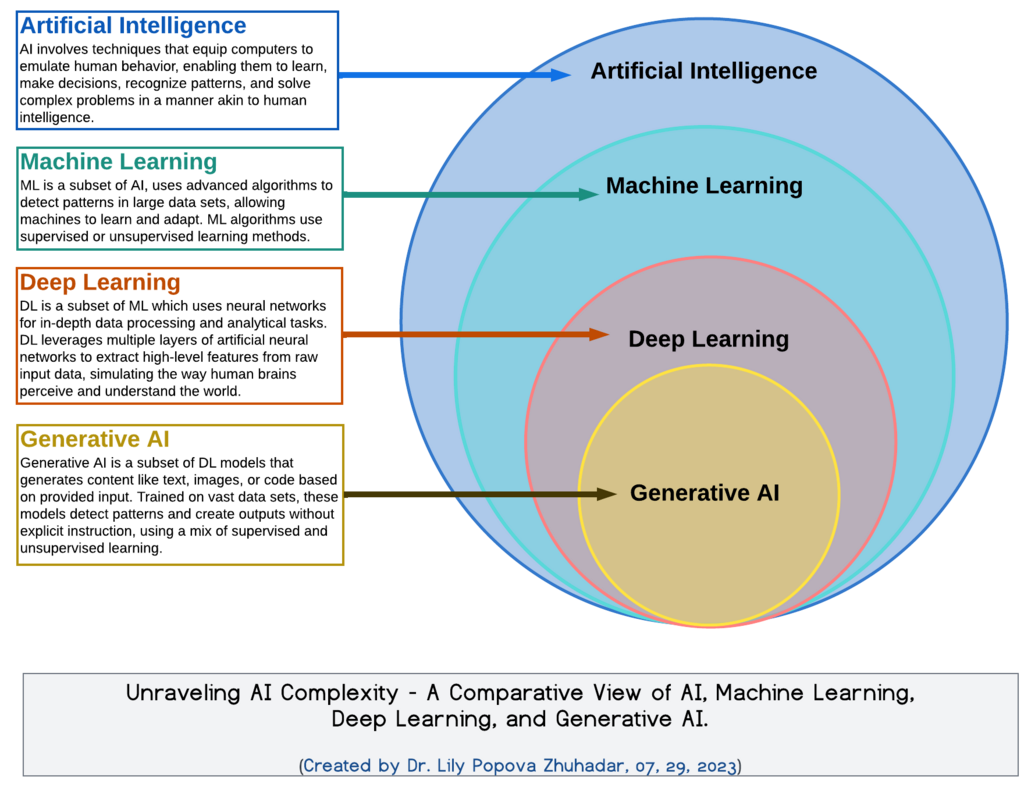
LLMs are a subfield of machine learning and deep learning. They have become incredibly significant in Natural Language Processing (NLP), the area of AI focused on the interaction between computers and human language. Their ability to handle a wide variety of language tasks without specific training for each one has revolutionized the field.
The Transformer Breakthrough
Early language models could only look at a few words at a time, which limited their understanding of context. The big leap forward came in 2017 with the invention of the Transformer architecture. This new model design was a game-changer.
The Transformer architecture has revolutionized the Natural Language Processing field and is the backbone of Large Language Models (LLMs).
The key innovation within the Transformer is the attention mechanism. Imagine you're reading a long sentence. As you read, your brain naturally pays more attention to certain words to understand the overall meaning. The attention mechanism allows an LLM to do something similar.
It weighs the importance of different words in the input text, no matter how far apart they are. This lets the model grasp complex relationships and long-range dependencies, leading to much more coherent and contextually aware outputs.
This ability to 'pay attention' means Transformers can process entire sentences or paragraphs at once, rather than word by word. This parallel processing is not only more effective but also much faster to train.
Why Size Matters
The 'large' in large language model isn't just a casual descriptor. It refers to two things: the immense size of the dataset the model is trained on, and the huge number of parameters it contains.
A model's parameters are the internal variables, like weights and biases in a neural network, that the model learns during training. You can think of them as the knobs and dials that the model tunes to make accurate predictions.
More parameters generally allow a model to capture more nuance and complexity from the training data, leading to better performance.
Early models had thousands or millions of parameters. Today's state-of-the-art LLMs can have hundreds of billions or even trillions. This massive scale is what enables their remarkable abilities. A larger model has a greater capacity to 'memorize' information and learn the intricate patterns of language, grammar, and reasoning found in its training data.
| Model Size | Parameters | General Capability |
|---|---|---|
| Small | Millions | Basic language tasks, simple classification |
| Medium | Billions | Good text generation, translation, summarization |
| Large | Hundreds of Billions+ | Complex reasoning, code generation, creative writing |
However, increasing model size comes with a cost. Larger models require more computational power and data to train, making them expensive to develop and run. Finding the right balance between size, performance, and efficiency is a key challenge in the field.
Let's check your understanding of these core concepts.
What is the primary function of a large language model (LLM)?
What key innovation within the Transformer architecture allows models to weigh the importance of different words, regardless of their position in the text?
Understanding these fundamentals is the first step. With this foundation, we can begin to explore how these powerful models are actually trained.