How Jet Engines Work
Introduction to Jet Engines
How Jets Defy Gravity
At its core, a jet engine is a powerful air-breathing machine. It pulls air in from the front, does some work on it, and then shoves it out the back at high speed. This powerful backward shove is what pushes the airplane forward.
This is a perfect example of Newton's third law of motion: for every action, there is an equal and opposite reaction. Think about letting go of an inflated balloon. The air rushes out the back (the action), and the balloon zips forward (the reaction). A jet engine works the same way, just on a much bigger and more controlled scale.
Inside the Engine
A basic jet engine has four main parts that work together in a continuous cycle. Let's walk through them in order, following the path of the air.
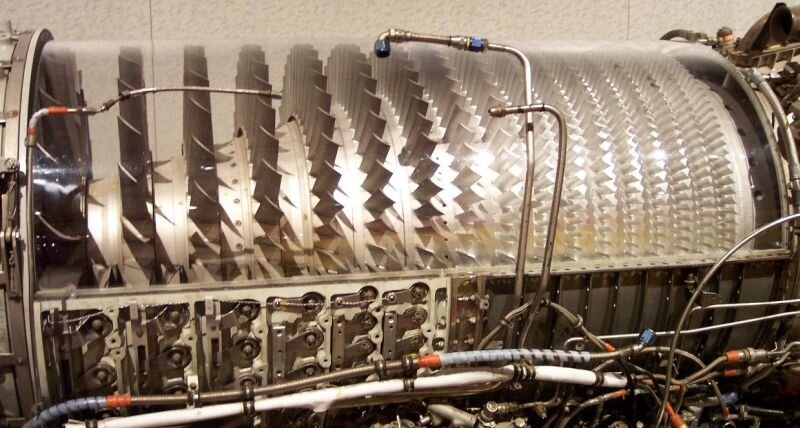
1. Compressor: The journey begins at the front of the engine, where large fan blades suck in huge volumes of air. The compressor is made of many stages of spinning blades and stationary vanes that squeeze, or compress, this air, dramatically increasing its pressure and temperature.
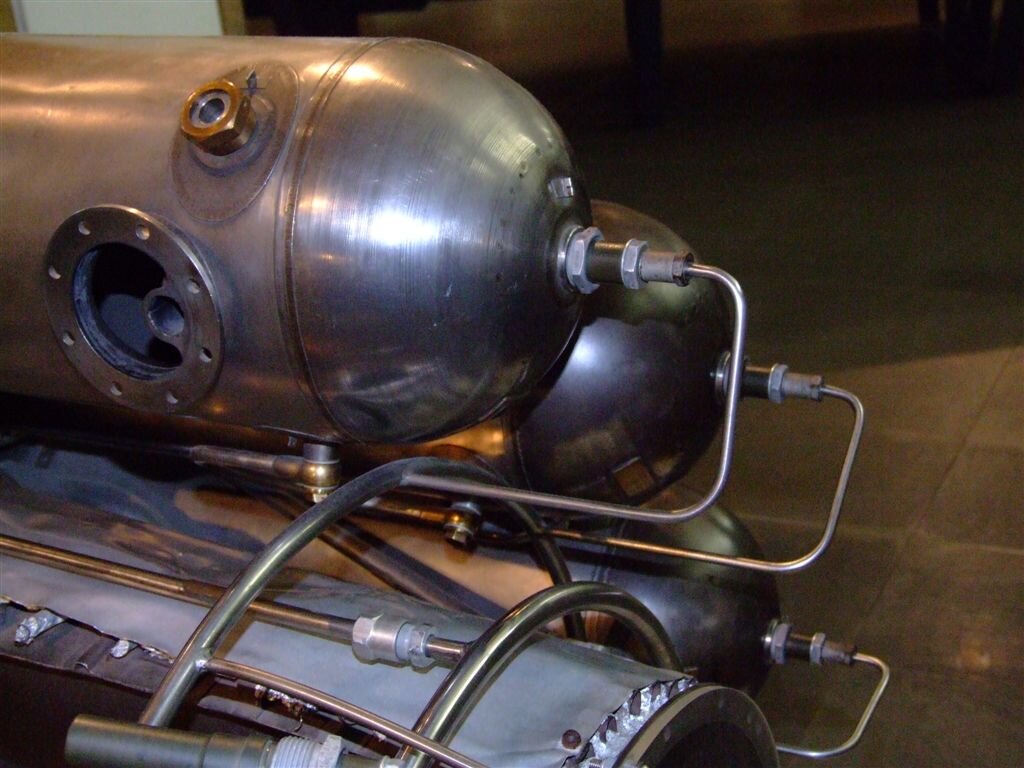
2. Combustor: The high-pressure air then flows into the combustor, or combustion chamber. Here, it's mixed with a fine spray of jet fuel and ignited. This is not a single explosion, but a continuous, controlled burn, similar to a giant blowtorch. The burning fuel mixture releases a massive amount of energy, causing the gases to heat up and expand rapidly.
3. Turbine: These hot, high-pressure gases need somewhere to go, so they blast toward the back of the engine. On their way, they pass through the turbine, which looks a bit like a windmill. The rushing gases spin the turbine's blades. The turbine is connected by a shaft back to the compressor at the front, so its spinning motion provides the power needed to keep the compressor turning and pulling in fresh air. It’s a self-sustaining cycle.
4. Nozzle: After passing through the turbine, the hot gases exit the engine through the nozzle. The nozzle is shaped to accelerate this flow to an extremely high velocity. This final, high-speed jet of exhaust gas is the "action" that produces the powerful forward "reaction," or thrust.
The Recipe for Thrust
Thrust depends on two key factors: how much stuff you're throwing out the back, and how fast you're throwing it.
In a jet engine, the "stuff" is the mass of the air flowing through the engine. This is called the mass flow rate. The "how fast" is the exhaust velocity of the gases leaving the nozzle.
The relationship is straightforward: to get more thrust, you can either increase the mass of air you're moving or increase the speed at which it exits. This principle is captured in the basic thrust equation.
So, a jet engine's job is to take in a large mass of air and accelerate it to a very high speed. The resulting force is what propels a multi-ton aircraft through the sky.
Which fundamental law of physics best describes how a jet engine generates thrust?
What is the correct order of the four main sections through which air flows in a basic jet engine?
By managing this continuous flow of air and energy, a jet engine turns a simple law of physics into the power of flight.