How Germs Make Us Sick
Tiny Germ Visitors
The Invisible Blueprint
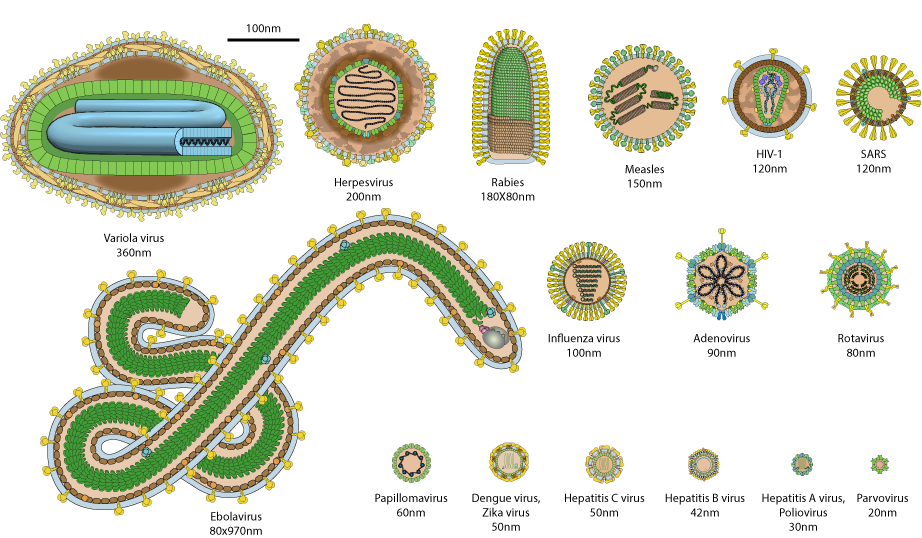
Viruses are masters of minimalism. They aren't truly alive—they can't eat, grow, or reproduce on their own. Think of a single virus particle, or virion as it's called, as a tiny, non-living package containing a set of instructions. Its only purpose is to find a living cell and hijack its machinery to carry out those instructions.
virus
noun
A submicroscopic infectious agent that replicates only inside the living cells of other organisms. Viruses can infect all types of life forms, from animals and plants to microorganisms, including bacteria and archaea.
The scale of a virus is difficult to comprehend. Hundreds of thousands of them could fit on the period at the end of this sentence. They are fundamentally different from bacteria, which are complete, single-celled organisms. A virus is a stripped-down entity, carrying only the bare essentials needed for replication.
Finding a Way In
Since a virus is inert on its own, it relies on passive transport to find a host. It might hitch a ride on tiny airborne droplets released when someone coughs or sneezes. It can also wait on a surface, like a doorknob or a phone screen, for an unsuspecting hand to pick it up. The main entry points into the body are the mucous membranes of the nose, mouth, and eyes. These tissues are thin, moist, and rich in the types of cells that many viruses are programmed to infect.
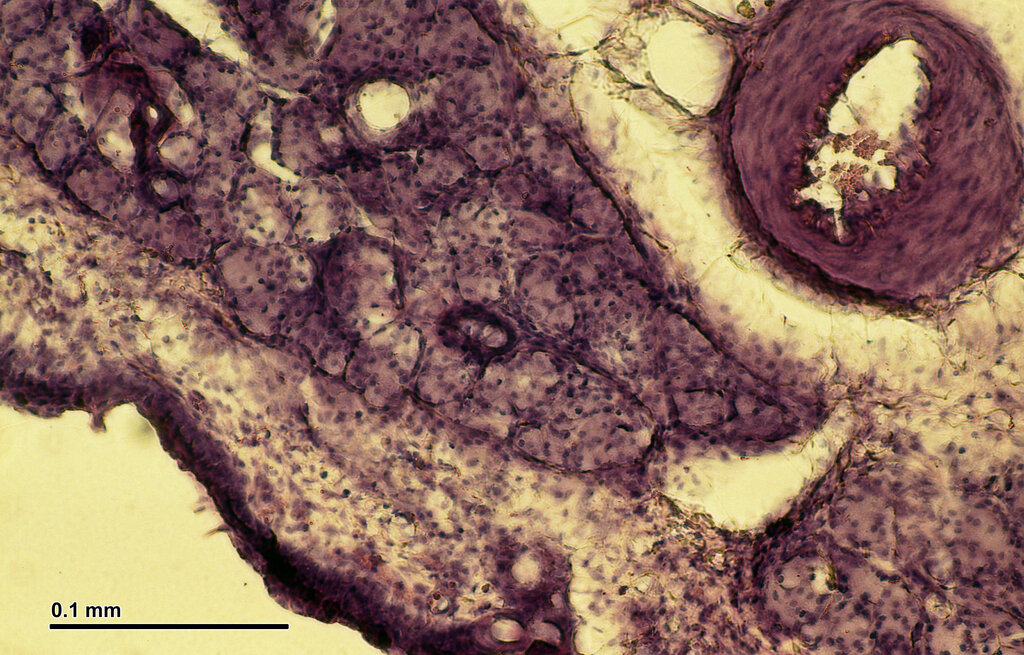
Once a virus lands on one of these surfaces, it must attach to a specific cell. Viral surface proteins are shaped to fit perfectly onto specific receptor proteins on the host cell's surface, like a key fitting into a lock. This specific pairing is why a particular virus can only infect certain types of cells or species. A tobacco mosaic virus can't infect a human, and the influenza virus can't infect a bacterium. This binding event is the critical first step that tricks the cell into letting the virus inside.
The Replication Mission
Once inside, the virus's mission begins: make more copies. It releases its genetic material, which is essentially a blueprint. The host cell, unable to distinguish the viral instructions from its own, starts following them. It begins producing viral proteins and copying the viral over and over.
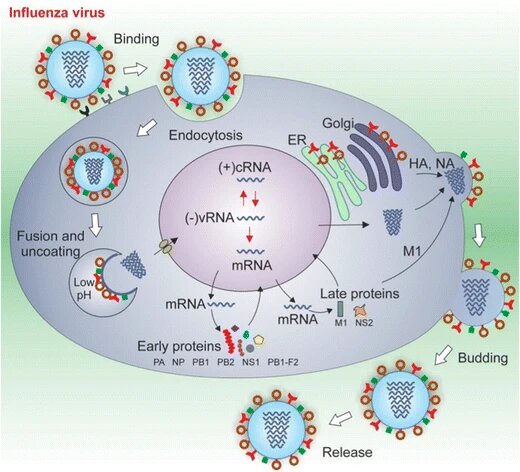
These newly made components then self-assemble into thousands of new virions. The process is a bit like an out-of-control factory assembly line. Once assembled, the new virus particles must escape to infect other cells. In many cases, this happens when the host cell becomes so full of new virions that it bursts, a process called lysis, destroying the cell and releasing the viral army to continue the cycle.
Let's check your understanding of these tiny invaders.
What is the fundamental difference between a virus and a bacterium?
The reason a specific virus, like the influenza virus, can infect human respiratory cells but not a plant cell is due to the interaction between the virus's surface proteins and the host cell's ______.
This process of entry, replication, and release is the fundamental life cycle of all viruses. Understanding this cycle is the first step in understanding how our bodies fight them off and how modern medicine works to stop them.