How Bitcoin Works
Introduction to Bitcoin
What Is Bitcoin?
Bitcoin is a new kind of money. It's completely digital, meaning you can't hold a physical bitcoin in your hand. Unlike dollars or euros, no central bank or government controls it. Instead, it's run by a global network of computers, making it the world's first decentralized currency.
Think of it as digital cash that you can send directly to anyone, anywhere in the world, without a bank acting as the middleman.
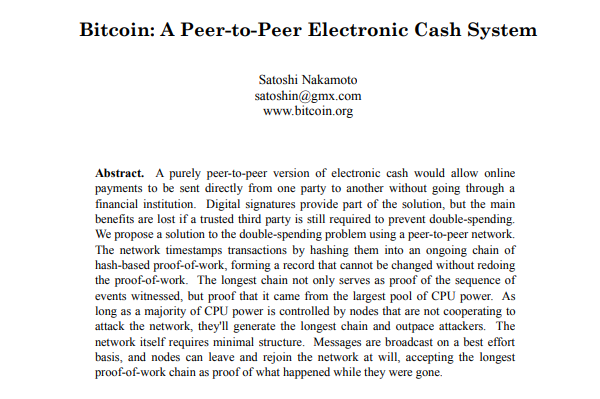
The idea for Bitcoin was published in 2008 in a paper titled "Bitcoin: A Peer-to-Peer Electronic Cash System." The author used the pseudonym Satoshi Nakamoto, and to this day, their true identity remains a mystery. The paper appeared just as a major global financial crisis was unfolding, a time when trust in traditional banks was at a low point. Bitcoin was proposed as an alternative, a financial system that didn't require trust in any single institution.
A New Way to Transact
Normally, when you send money to someone online, a bank or a payment company like PayPal sits in the middle. They verify the transaction, move the funds, and take a small fee. Your transaction relies on them completely.
Bitcoin works differently. It uses a peer-to-peer (P2P) network. This means users can transact directly with each other. It's like handing cash to a friend, but over the internet. The network itself, a community of participants, confirms that the transaction is valid.
This peer-to-peer model removes the need for a traditional financial gatekeeper. This can be especially powerful for people who don't have access to banking services or for sending money across borders without slow processing times and high fees.
Solving the Digital Money Puzzle
Before Bitcoin, creating purely digital cash was a huge challenge. The main obstacle was a problem called double-spending.
double-spending
noun
The risk that a digital currency can be spent more than once. Unlike physical cash, a digital token can be duplicated, potentially allowing someone to spend the same 'digital dollar' in multiple places.
Think about it: if you have a photo on your computer, you can email it to ten different friends. You've just made ten copies. If digital money worked the same way, you could spend the same $10 over and over again, making the currency worthless.
Traditionally, banks solve this. They keep a central ledger of all transactions. When you spend $10, they deduct it from your account, so you can't spend that same $10 again.
Bitcoin's breakthrough was solving the double-spending problem without a central authority. It uses a shared, public ledger called a blockchain. All transactions are recorded on this ledger, which is copied and spread across thousands of computers worldwide. This makes it practically impossible to cheat the system and spend the same bitcoin twice.
Bitcoin introduced a decentralized blockchain technology to secure transactions without the need for a central authority.
This innovation is what makes Bitcoin work. It’s a self-regulating system for creating and exchanging value, built on clever computer science instead of trust in institutions.
What is the core problem in digital cash that Bitcoin solved using the blockchain?
Who controls the Bitcoin network?
Bitcoin's creation marked a significant moment in the history of money, introducing a new way to think about value and trust in a digital world.