How AI Language Models Work
Introduction to NLP
Teaching Computers Our Language
Natural Language Processing, or NLP, is the field of artificial intelligence focused on enabling computers to understand, interpret, and generate human language. It's how we get a machine to read a book and grasp not just the words, but the story, the emotion, and the context behind them.
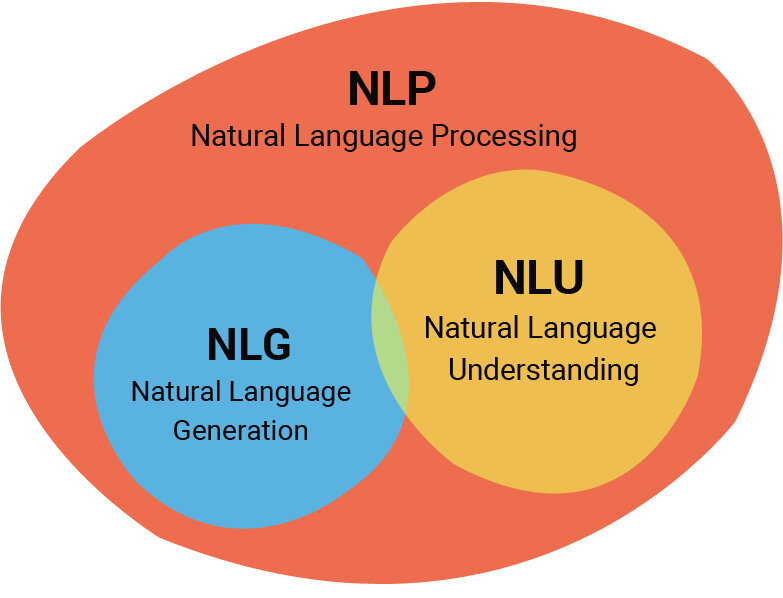
NLP is a subfield of artificial intelligence, and it is the ability of a computer to detect and understand human language, through speech and text just the way we humans can.
The goal is to bridge the gap between human communication and computer understanding. This technology powers many tools we use daily, from the spam filter in your email and the auto-correct on your phone to language translation apps and digital assistants like Siri or Alexa. It's a broad field that covers everything from simply processing text to understanding intent and generating new, human-like sentences.
From Rules to Patterns
NLP has evolved significantly over the decades. Early attempts in the 1950s and 60s were mostly rule-based. Experts would hand-craft complex sets of grammatical rules and dictionaries for a computer to follow. Imagine giving a computer a giant, exhaustive grammar book for every possible situation. This approach was incredibly laborious and brittle. It would fail as soon as it encountered a new phrase, slang, or a simple typo that wasn't in its rulebook.
By the late 1980s, a new approach took over: statistical NLP. Instead of relying on hand-written rules, systems began to learn from vast amounts of text and speech data. By analyzing millions of sentences, a machine could learn the probability that one word follows another. This made NLP models more robust and adaptable, as they learned patterns directly from real-world language rather than from a rigid set of rules.
More recently, the field has shifted again, this time toward models inspired by the structure of the human brain. These modern techniques allow computers to grasp even deeper and more subtle nuances of language, but they still build on the fundamental tasks developed during earlier eras.
The Basic Building Blocks
To make sense of a sentence, a computer must first break it down into manageable parts. This process involves several core tasks that act as the foundation for more complex understanding.
Tokenization
noun
The process of splitting a piece of text into smaller units, such as words or sentences, called tokens.
This is the very first step. A computer doesn't see sentences; it sees a string of characters. Tokenization chops that string into individual words and punctuation marks. The sentence "She sells seashells." might become the tokens: She, sells, seashells, ..
After tokenizing the text, the next step is to figure out what each word is.
This leads to part-of-speech (POS) tagging. Each token is labeled with its grammatical role, like noun, verb, or adjective. In the sentence "The quick brown fox jumps," the tags would look like this:
| Token | Part-of-Speech Tag |
|---|---|
| The | Determiner |
| quick | Adjective |
| brown | Adjective |
| fox | Noun |
| jumps | Verb |
Once the words are tagged, the computer needs to understand how they fit together. Syntactic parsing, or parsing, analyzes the grammatical structure of the sentence. It creates a tree-like structure that shows which words modify others, revealing the relationships between them. For example, it identifies "The quick brown fox" as the subject and "jumps" as the verb.
Why Language Is Hard
These basic tasks are harder than they seem because human language is messy. Several key challenges make NLP a difficult problem to solve.
Ambiguity is a major hurdle. Words can have multiple meanings, and sentences can be structured in ways that allow for multiple interpretations. Consider the sentence, "I saw a man on a hill with a telescope." Who has the telescope? You, or the man on the hill? The grammar is correct for both interpretations, but the meaning is completely different.
Context is everything. The meaning of a word or phrase often depends entirely on the surrounding text. The word "bank" means something different if you're talking about money versus a river. Without context, a computer has no way to distinguish between the two.
Finally, there's the sheer variability of language. People use slang, create new words, make spelling errors, and use sarcasm. We communicate with an endless variety of styles and dialects. A successful NLP system must be flexible enough to handle language as people actually use it, not just how it appears in a textbook.
Which of the following describes the earliest, rule-based approach to NLP from the 1950s and 60s?
In NLP, the process of breaking down a sentence like "NLP is fascinating!" into the pieces NLP, is, fascinating, ! is called __________.
These foundational concepts and challenges are what make NLP such a fascinating and dynamic field. By breaking language down and analyzing its patterns, we can teach machines to interact with the world in a more human way.