Horse Training Fundamentals
Understanding Horse Behavior
The Mind of a Horse
To understand a horse, you first need to understand its world. Horses are prey animals. For millions of years, their survival has depended on one core skill: spotting danger and running from it. This instinct is hardwired into their brains.
Every horse has a powerful "flight" response. When faced with something scary or unfamiliar, their first impulse is to bolt. A plastic bag rustling in the wind might seem harmless to us, but to a horse, it could be a predator hiding in the bushes. Their safety lies in assuming the worst and getting away fast. The "fight" response only comes out when running isn't an option.
Thinking like a prey animal means being constantly aware of your surroundings. It's not about being fearful; it's about being cautious and ready to move.
This fundamental instinct shapes every interaction you'll have. A horse that spooks isn't being disobedient; it's acting on a deep-seated survival mechanism. Recognizing this is the first step toward building a relationship based on understanding rather than force.
Life in the Herd
Horses are intensely social animals. In the wild, they live in groups called herds, and for good reason. There is safety in numbers. A herd provides more eyes and ears to watch for predators, giving everyone a better chance to escape danger.
Herds have a clear social structure, often called a pecking order. Every horse knows its place. This hierarchy isn't about bullying; it's about creating order and stability, which minimizes conflict and keeps the group safe. A clear leader makes decisions that benefit everyone.
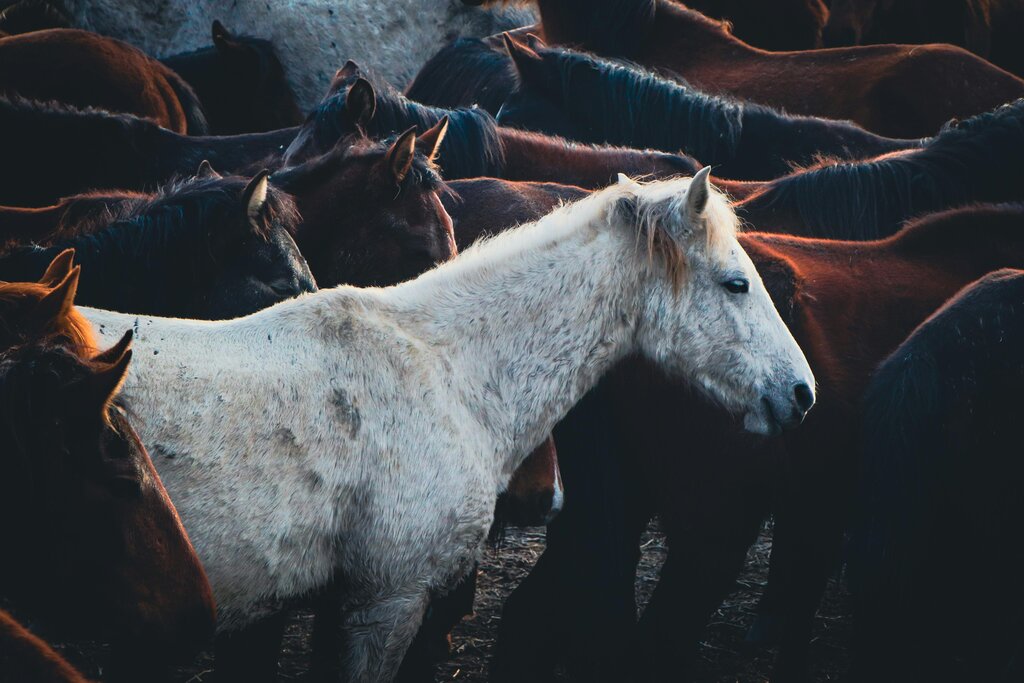
Interestingly, the herd is usually led by an older, experienced mare, not the stallion. She guides the group to the best grazing spots and watering holes. The stallion's role is primarily to watch for threats and protect the herd from the outside.
For a horse, leadership equals safety. They are constantly looking for a calm, confident leader they can trust. When you work with a horse, you are stepping into that herd dynamic. If you can prove that you are a reliable and decisive leader, the horse will look to you for guidance and feel secure in your presence.
Reading the Signs
Horses can't talk, but they are always communicating. They use their bodies to express how they're feeling, from their ears to their tails. Learning to read this body language is like learning a new language. It's essential for understanding what your horse is thinking and feeling.
| Body Part | What It's Telling You |
|---|---|
| Ears | Forward: Attentive, curious. Pinned back: Angry, annoyed, fearful. Relaxed/Sideways: Calm, dozing. |
| Eyes | Soft, relaxed eyelids: Calm, trusting. Wide, showing whites: Scared, startled, or highly alert. |
| Mouth | Licking and chewing: Thinking, processing, relaxing after stress. Tight jaw/lips: Anxious, worried, in pain. |
| Tail | Held high: Excited, alert. Swishing quickly: Irritated, annoyed. Tucked low: Afraid, submissive. |
No single sign tells the whole story. You have to look at the entire horse. Pinned ears with a swishing tail clearly signal irritation. But forward ears combined with a high tail might just mean the horse is excited to see a friend in a nearby pasture.
By paying close attention to these signals, you can understand your horse's mood and respond appropriately. This builds a two-way conversation where the horse feels heard and understood.
Becoming a Leader
Trust is the bedrock of any relationship with a horse. It's not something you can demand; it must be earned. And it's earned through consistency, fairness, and calm leadership.
Because horses are looking for a leader, they pay close attention to your body language and emotional state. Are you calm and confident, or are you nervous and uncertain? Your energy matters. A horse will not trust a leader who seems anxious or unpredictable, because an anxious leader can't be relied upon to keep them safe.
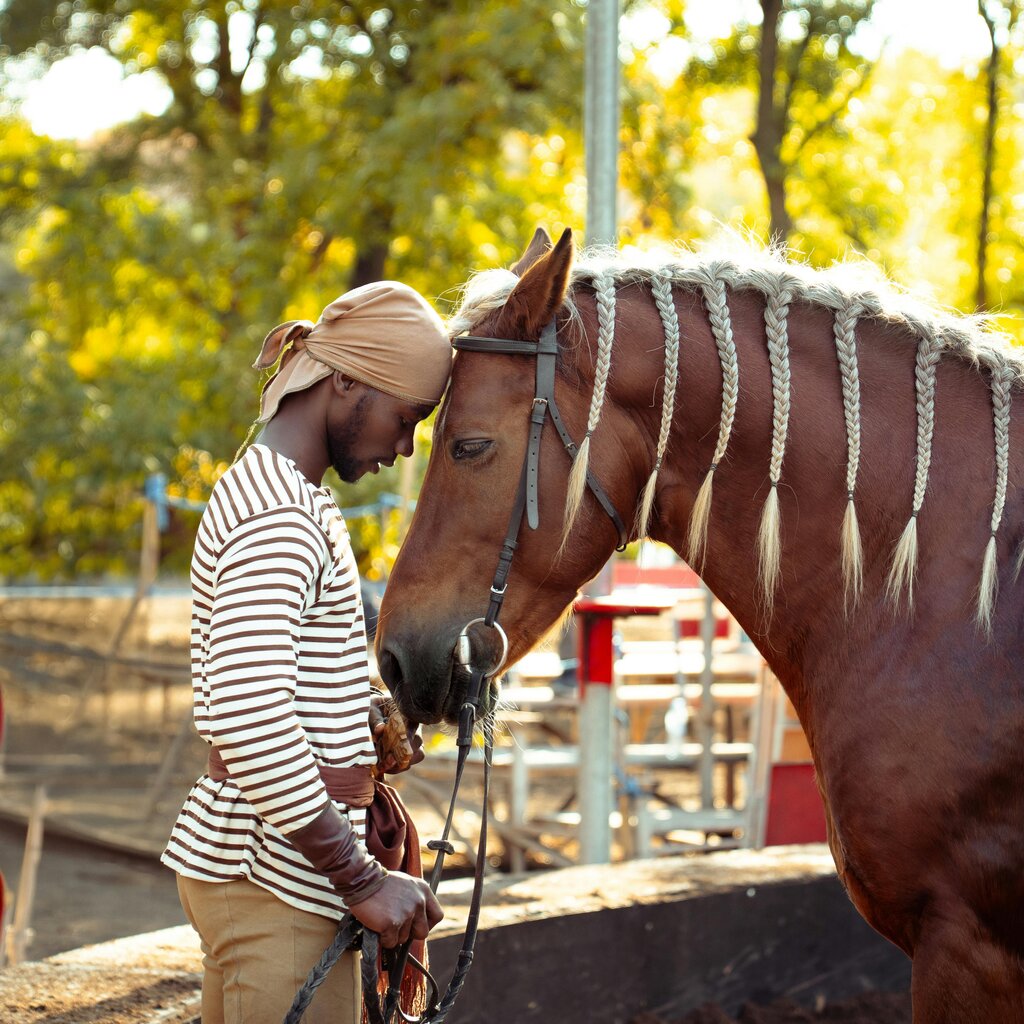
Establishing yourself as the leader means setting clear boundaries and being consistent with your requests. It’s not about being dominant, but about being a source of security. When a horse understands what you want and knows you will be fair, it can relax and trust your judgment.
Every time you handle a horse, you are either building or eroding that trust. By understanding their natural instincts, social needs, and language, you can become the confident, trustworthy leader they are instinctively looking for.
Now, let's test your understanding of these core principles.
When a horse spooks at a plastic bag, it is most likely demonstrating:
In a wild horse herd, the primary role of the lead stallion is to guide the group to the best grazing spots.