Home Network Security Assessment
Understanding Home Network Basics
Your Network's Building Blocks
Your home network is the system that connects your devices to each other and to the internet. It has a few key players that work together to make this happen. Let's start with the two most important pieces of hardware: the modem and the router.
Think of the modem as a translator. It takes the signal from your internet service provider (ISP) — which comes through a cable, fiber optic line, or phone line — and converts it into a digital signal your devices can understand. It's the gateway connecting your home to the vast network of the internet. Without a modem, you have no connection to the outside world.
The router is the traffic director for your home. It takes the single internet connection from your modem and creates a private network for your devices. It allows your laptop, phone, smart TV, and gaming console to all share that one connection. The router assigns a unique local address to each device, ensuring that data goes to the right place. Many ISPs now provide a single device that acts as both a modem and a router.
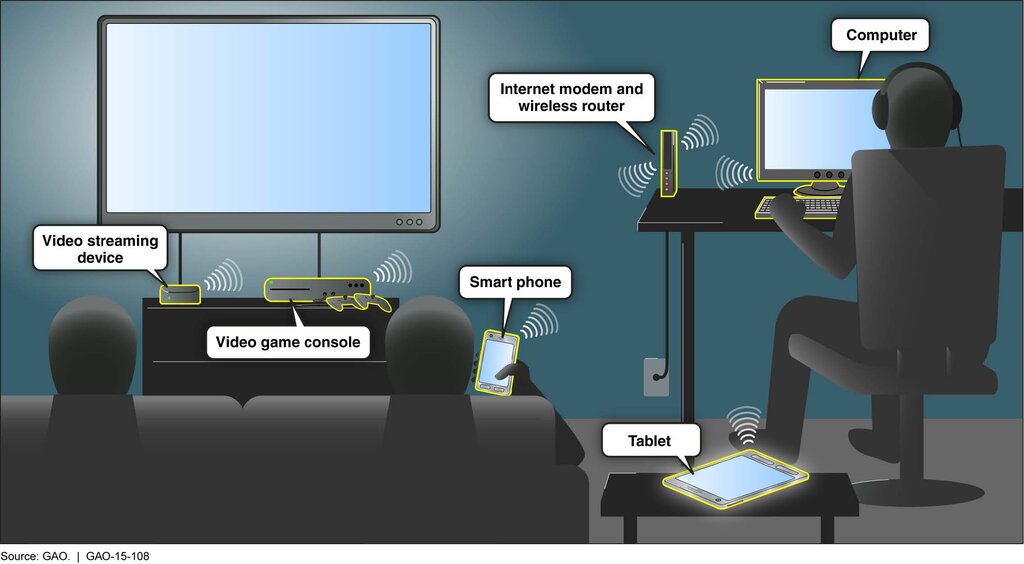
Finally, you have all your connected devices. These are the endpoints of your network. Laptops, tablets, smart speakers, security cameras—anything that connects via Wi-Fi or an Ethernet cable is part of your local network.
How Data Moves
So how does a request from your laptop for a website get out to the internet and back? It's a simple, two-step process.
First, your laptop sends the request to the router. The router, acting like a local post office, sees that the request is for an address outside the home network. It forwards the request to the modem.
Second, the modem takes the request, translates it for the ISP's network, and sends it out to the internet. When the website's server sends the data back, the process happens in reverse. The modem receives the data, passes it to the router, and the router directs it to the correct device—your laptop.
Traffic isn't always destined for the internet. If you send a document from your computer to a wireless printer, the router handles this internally. It sees the printer is on the same local network and sends the data directly to it, without involving the modem at all. This is called local traffic.
Understanding this flow is the first step in securing your network. Knowing what each component does helps you spot where things could go wrong.
Now, let's check your understanding of these core concepts.
What is the primary function of a modem in a home network?
If your phone, laptop, and smart TV are all using the internet at once, which device is managing the shared connection and directing data to the correct device?
With these basics in mind, you're ready to start thinking about how to protect your network from common threats.