Home Cooking Fundamentals
Knife Skills
The Right Tool for the Job
You don't need a drawer full of dozens of knives to be a great cook. In fact, most professional chefs rely on just a few key blades. Understanding which knife to use for which task is the first step toward working more efficiently and safely in the kitchen.
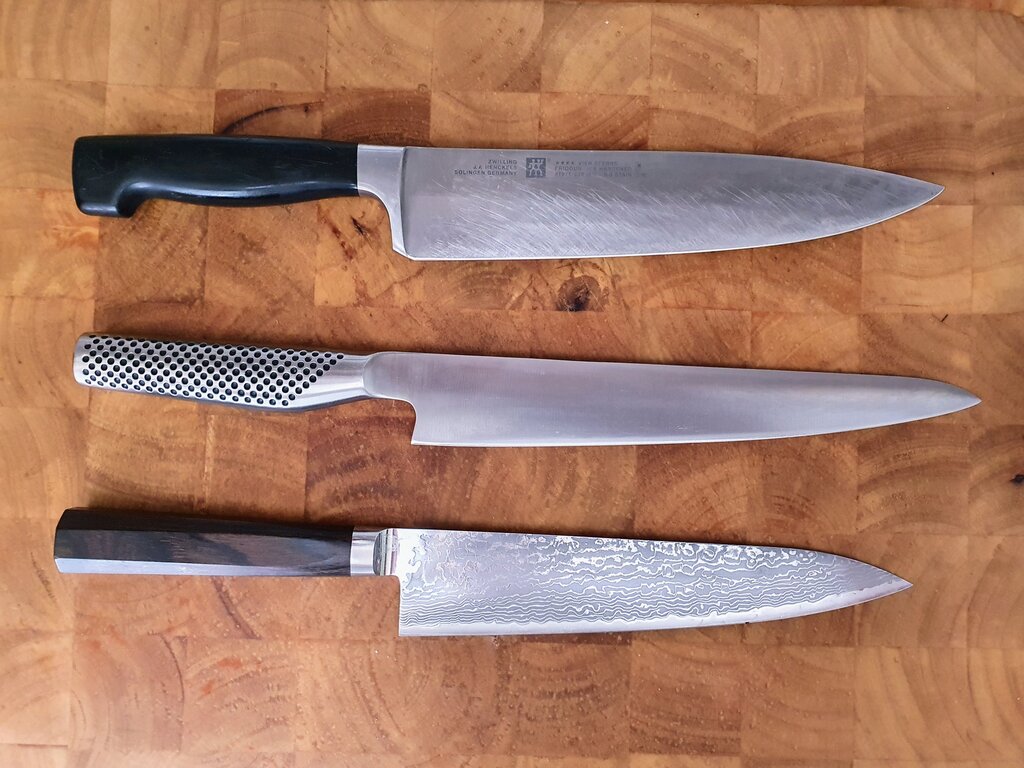
For most home cooks, three knives will cover nearly every situation you'll encounter:
| Knife Type | Primary Use |
|---|---|
| Chef's Knife | The all-purpose workhorse for chopping, dicing, and mincing. |
| Paring Knife | For small, detailed work like peeling, trimming, and slicing small fruits. |
| Serrated Knife | Perfect for cutting through foods with tough exteriors and soft interiors, like bread or tomatoes. |
Your chef's knife will be your most-used tool. It's designed for a wide range of tasks, from dicing an onion to carving a roasted chicken. If you're going to invest in one good piece of equipment, make it this one.
Handling Your Knife
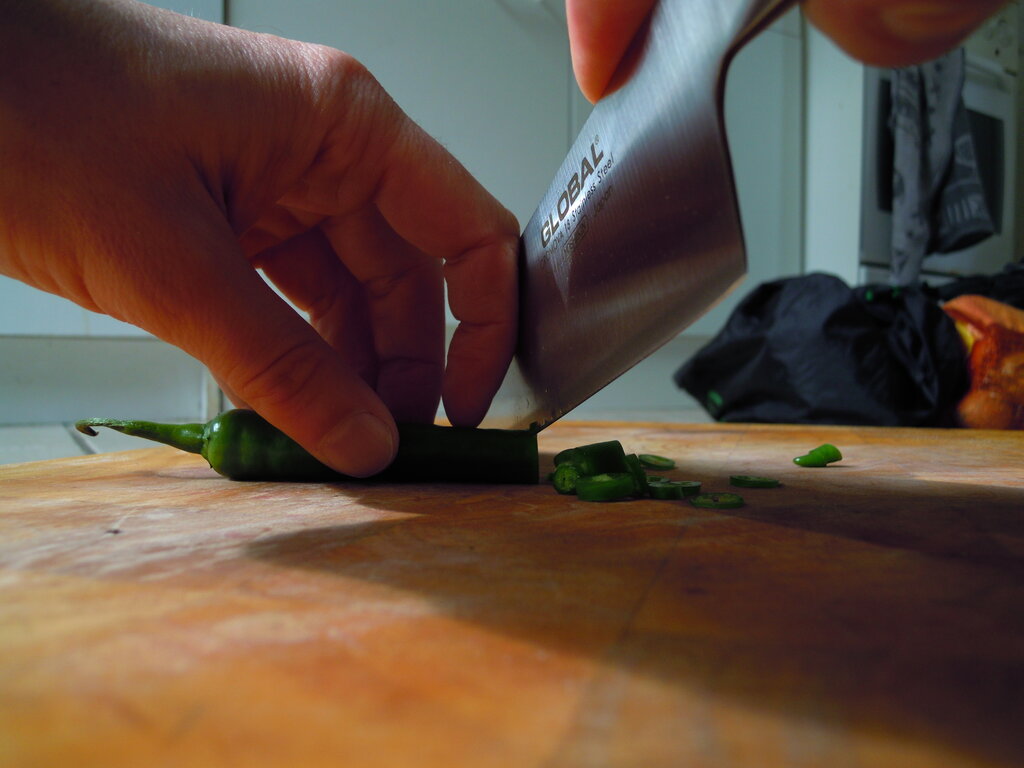
How you hold your knife affects your control, efficiency, and most importantly, your safety. A proper grip gives you power and precision, while protecting your fingers. The most common and stable grip for a chef's knife is the “pinch grip.” You'll pinch the blade itself right where it meets the handle with your thumb and index finger, then wrap your other three fingers around the handle.
Just as important is what your other hand—the guiding hand—is doing. To protect your fingertips, you'll use a technique called the “claw grip.” Curl your fingertips under your knuckles, creating a flat wall for the side of the knife to rest against. Your fingers guide the food, and your knuckles guide the blade, keeping your fingertips safely tucked away.
Making the Cut
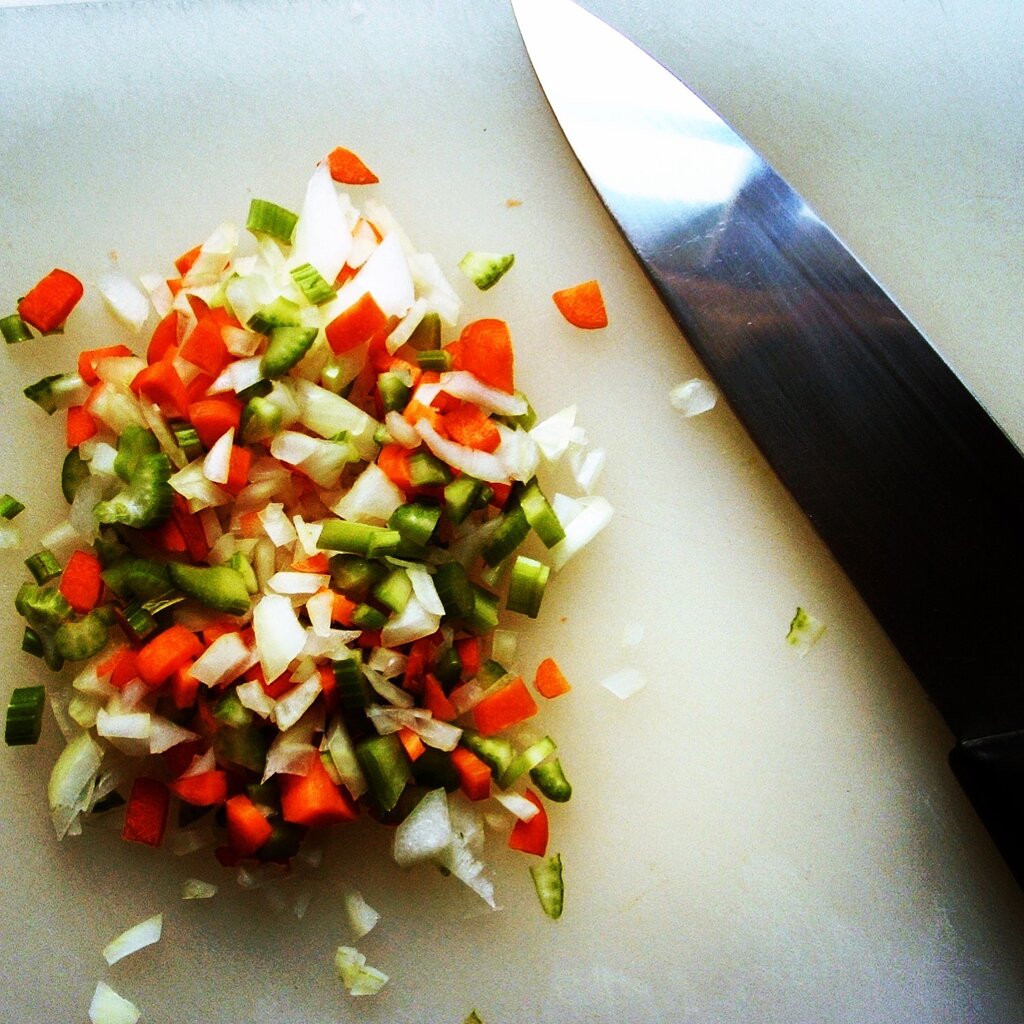
With the right knife and a safe grip, you're ready to learn the basic cuts. These terms describe the size and shape of your ingredients, and mastering them will make your food cook more evenly and look more professional. The most common motion with a chef's knife is a rocking chop, where the tip of the knife stays in contact with the cutting board.
Chop
verb
To cut food into irregularly shaped pieces. This is a rough cut where uniformity isn't the primary goal.
Dice
verb
To cut food into small, uniform cubes. Dicing can be small, medium, or large, but the key is consistency.
Mince
verb
To chop food into the smallest possible pieces. This is often used for aromatic ingredients like garlic and ginger to release their flavor.
Julienne
verb
To cut vegetables into long, thin strips, similar to matchsticks. This cut is great for salads, slaws, and garnishes.
Keeping a Sharp Edge
A sharp knife is a safe knife. A dull blade requires more pressure to cut, which makes it more likely to slip and cause an injury. Keeping your knives in good condition involves two processes: honing and sharpening.
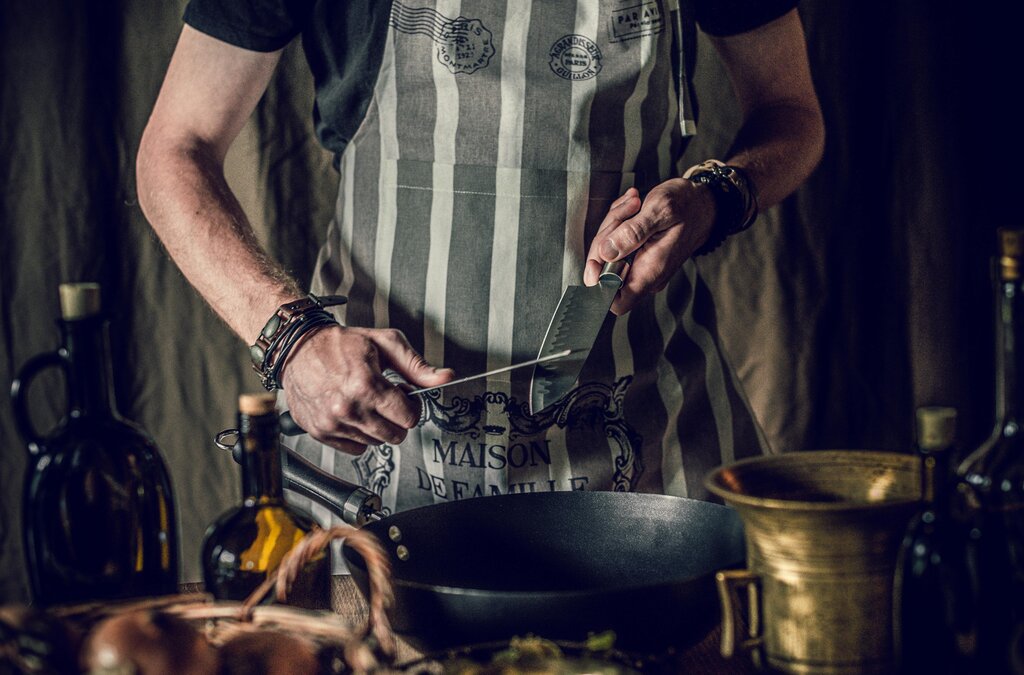
Honing realigns the microscopic edge of the blade, which gets knocked out of alignment with regular use. You should hone your knife often, even before each use. Sharpening actually removes a tiny amount of metal to create a brand-new edge. This is done less frequently, perhaps once or twice a year for a home cook.
Proper storage is also key. Tossing your knives into a drawer with other utensils will dull and chip the blades. Use a knife block, a magnetic strip, or individual blade guards to protect them.
Never put a good knife in the dishwasher. The high heat and harsh detergents can damage the blade and the handle. Always wash and dry your knives by hand.
Let's review the key terms we've covered before we test your knowledge.
Ready to see what you've learned?
Why is a sharp knife considered safer than a dull one?
When using a chef's knife, what is the primary role of the hand NOT holding the knife?
Mastering these fundamentals is the first step toward becoming a more confident and capable cook. With practice, these skills will become second nature.