Home Cooking Fundamentals Five Core Recipes
Knife Skills
The Essential Knives
Walk into any kitchen supply store and you'll see a wall of knives. It can be overwhelming. But for most home cooking, you only need a few key players. Forget the giant 15-piece block; mastering three essential knives will handle nearly any task you throw at them.
You really only need three: A good chef's knife, a paring knife, and a serrated knife.
Let's break down what makes each one special.
| Knife Type | Main Uses | Why You Need It |
|---|---|---|
| Chef's Knife | Slicing, dicing, chopping, mincing | This is your all-purpose workhorse for over 90% of cutting tasks. |
| Paring Knife | Peeling, trimming, coring, small detailed cuts | It's for delicate, in-hand work where a large knife is clumsy. |
| Serrated Knife | Slicing bread, tomatoes, citrus | The saw-like edge grips and cuts through tough skins and crusts without squishing the soft interior. |
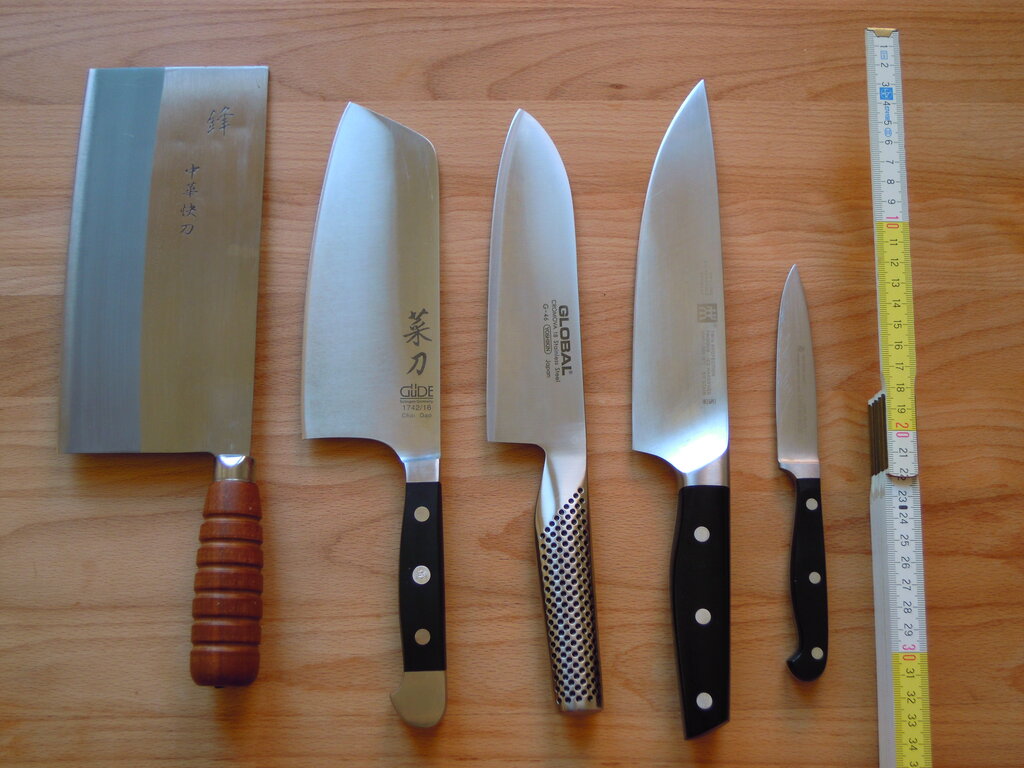
The chef's knife is the most important tool in your kit. A good one, typically 8 inches long, should feel like an extension of your hand. It's versatile enough to chop an onion, dice carrots, and mince garlic with ease.
Proper Grip and Stance
Before you make a single cut, how you hold your knife is critical for control and safety. Many beginners grab the handle with their whole fist, but the best method is the "pinch grip."
Here’s how it works: Pinch the blade itself, right where it meets the handle, between your thumb and forefinger. Then, wrap your remaining three fingers around the handle. This grip gives you much more control over the blade, making your cuts more precise and preventing the knife from slipping.
Your other hand, the guiding hand, is just as important. Curl your fingertips under to form a "claw." Your knuckles should be forward, acting as a guide for the side of the knife blade. This protects your fingertips from the sharp edge. Always move your claw hand back as you slice, keeping a safe distance.
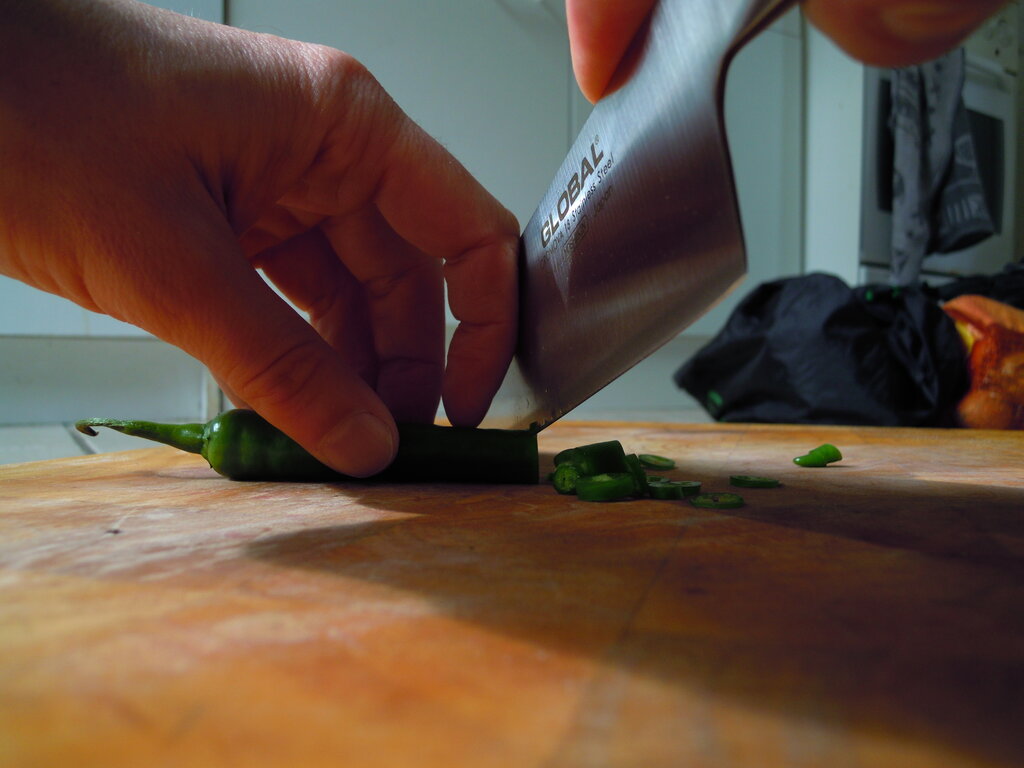
Stand comfortably with your feet shoulder-width apart, and make sure your cutting board is on a stable, non-slip surface. A damp paper towel placed under the board works wonders to keep it from sliding around.
The Basic Cuts
With your grip and stance set, you're ready to learn the three fundamental cuts: chopping, dicing, and mincing. The main difference between them is the size of the final pieces.
Chop
verb
To cut food into small, irregular pieces.
To chop, rest the tip of your chef's knife on the cutting board and raise and lower the heel of the knife in a rocking motion. Your claw hand guides the food under the blade. This is perfect for when you don't need perfect uniformity, like for soups or stocks.
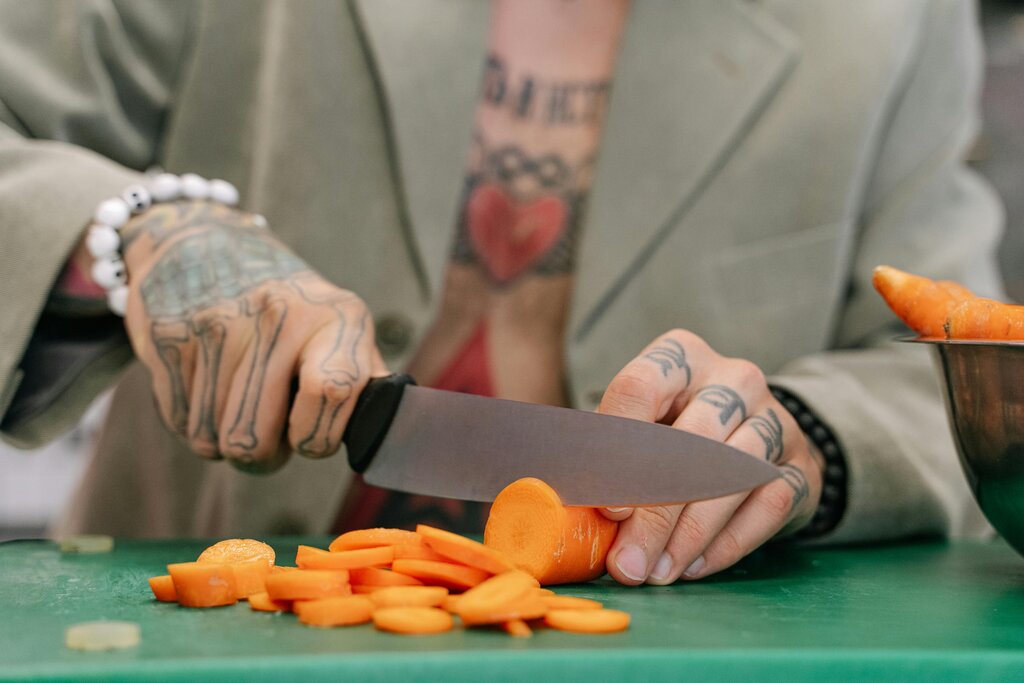
Dicing is just a more precise version of chopping. You're aiming for uniform, cube-shaped pieces. To dice an onion, for example, you first slice it vertically, then horizontally, and finally crosswise to create small, even cubes. Uniform pieces ensure that everything cooks at the same rate.
Mincing is the finest cut. The goal is to get the pieces as small as possible, almost like a paste. This is great for aromatics like garlic and ginger, as it releases the most flavor.
To mince, start by roughly chopping the ingredient. Then, place your guiding hand flat on the tip of the blade to hold it steady and use your dominant hand to rock the handle up and down rapidly, moving the blade over the pile until the pieces are tiny.
Safety and Care
A sharp knife is a safe knife. It sounds counterintuitive, but it's true. A dull knife requires more pressure to cut, making it more likely to slip and cause an injury. A sharp knife, on the other hand, bites into the food with little effort.
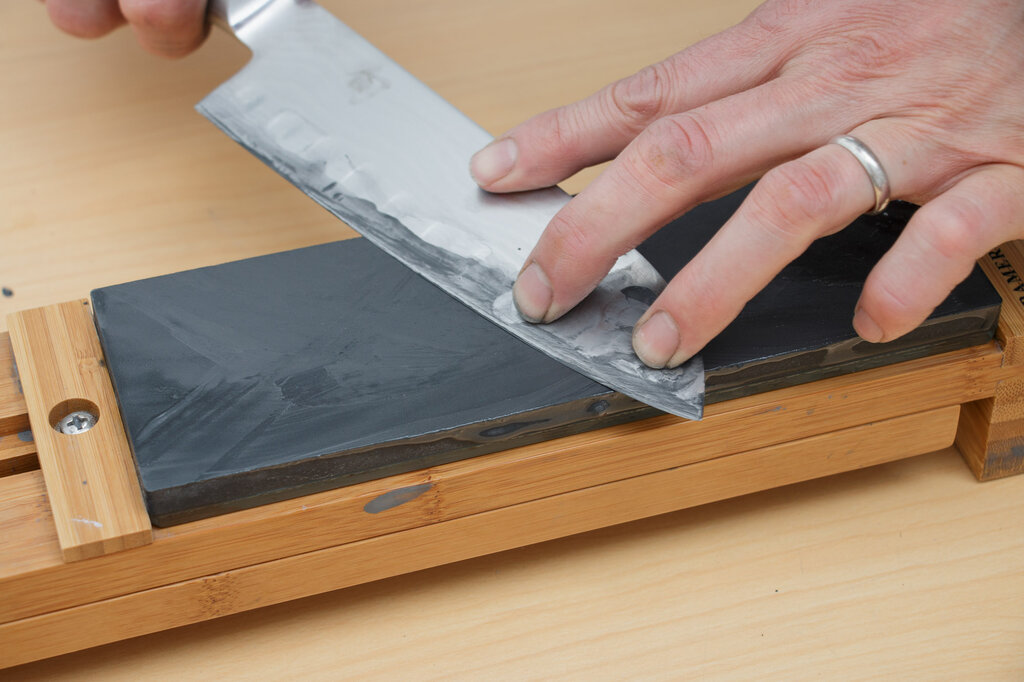
Invest in a whetstone or a pull-through sharpener to maintain your blades. How often you need to sharpen depends on how much you cook, but a good rule of thumb is a few times a year. In between sharpenings, use a honing steel to realign the edge of the blade before each use.
Always wash your knives by hand with soap and warm water, and dry them immediately. Never put them in the dishwasher. The high heat and harsh detergents can damage the blade and the handle. Store them in a knife block, on a magnetic strip, or with blade guards to protect the edges and prevent accidents.
Finally, always focus on the task at hand. Distractions are a recipe for disaster in the kitchen, especially when knives are involved. Pay attention, take your time, and your skills will improve with every meal you prepare.
Ready to test what you've learned?
What is the recommended 'pinch grip' for holding a chef's knife?
The primary purpose of forming a 'claw' with your guiding hand is to:
Practice is the key to confidence. Start with softer vegetables like zucchini before moving on to harder ones like carrots. With these fundamentals, you've built a solid foundation for all your future cooking adventures.