Home Cooking Fundamentals
Knife Skills
The Right Grip
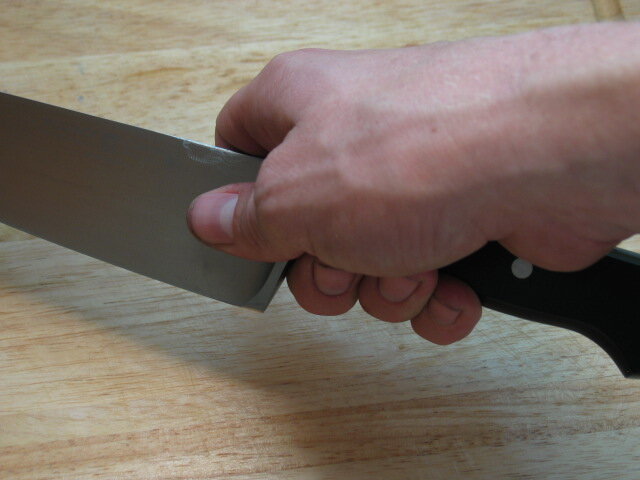
Before you even touch a vegetable, let's talk about how you hold your knife. The right grip gives you control, making your cuts more precise and, most importantly, safer. The most common and effective method is the pinch grip.
With the pinch grip, you pinch the base of the blade with your thumb and index finger, while your other three fingers curl around the handle. This grip makes the knife feel like an extension of your hand.
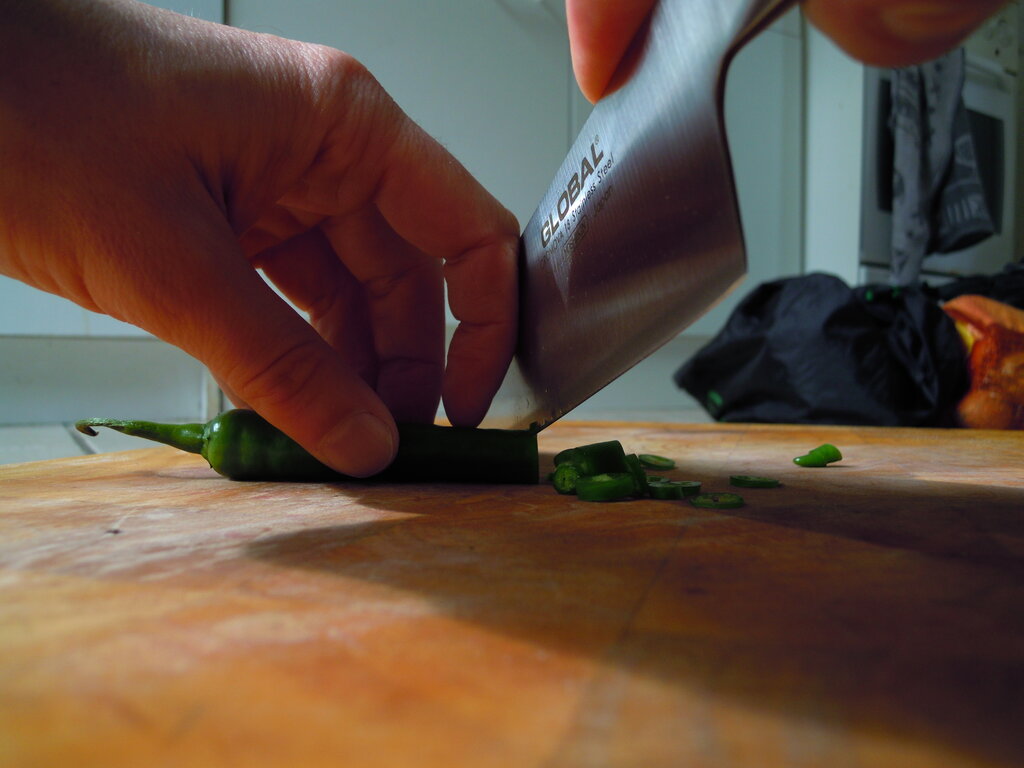
What about your other hand? The one holding the food? You'll use a technique called the claw grip. Curl your fingertips under your knuckles, like you're making a claw. Your knuckles then act as a guide for the side of the knife blade. This keeps your fingertips safely tucked away from the sharp edge.
Your Kitchen Toolkit
You don't need a massive block of knives to be a great home cook. A few key players will handle almost any task you throw at them. These are the essentials.
| Knife Type | Best For |
|---|---|
| Chef's Knife | Your all-purpose workhorse. Chopping, slicing, dicing, and mincing. |
| Paring Knife | Small, detailed tasks like peeling, trimming, and coring. |
| Serrated Knife | Slicing through foods with tough exteriors and soft interiors, like bread or tomatoes. |
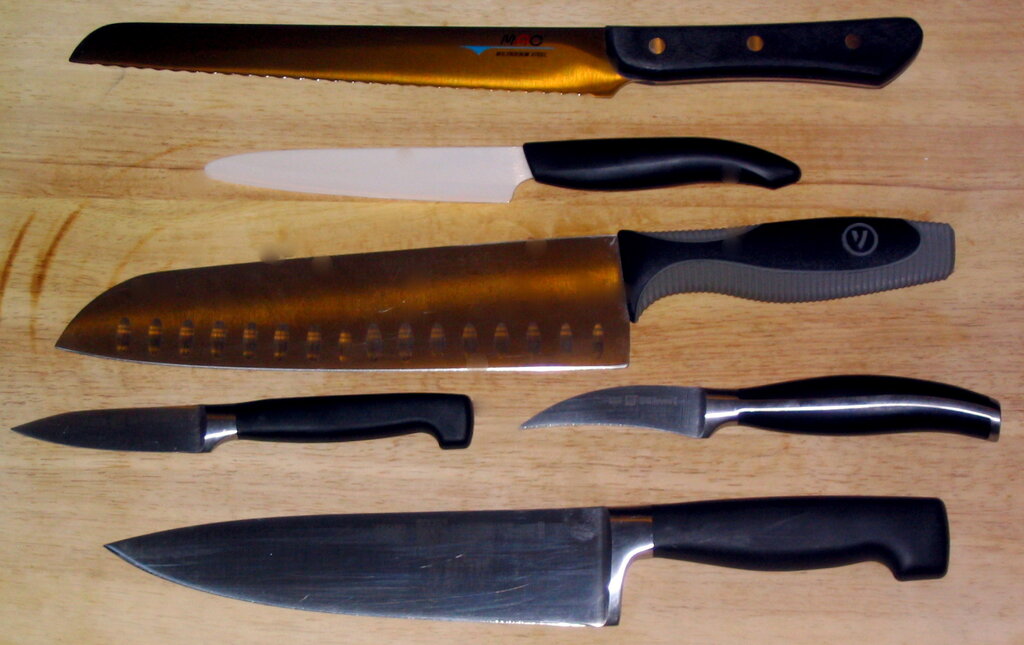
A good chef's knife, typically 8 inches long, will be your most-used tool. The paring knife is for delicate work where the larger blade would be clumsy. The serrated knife saws through crusty bread without squishing the soft inside.
Making the Cut
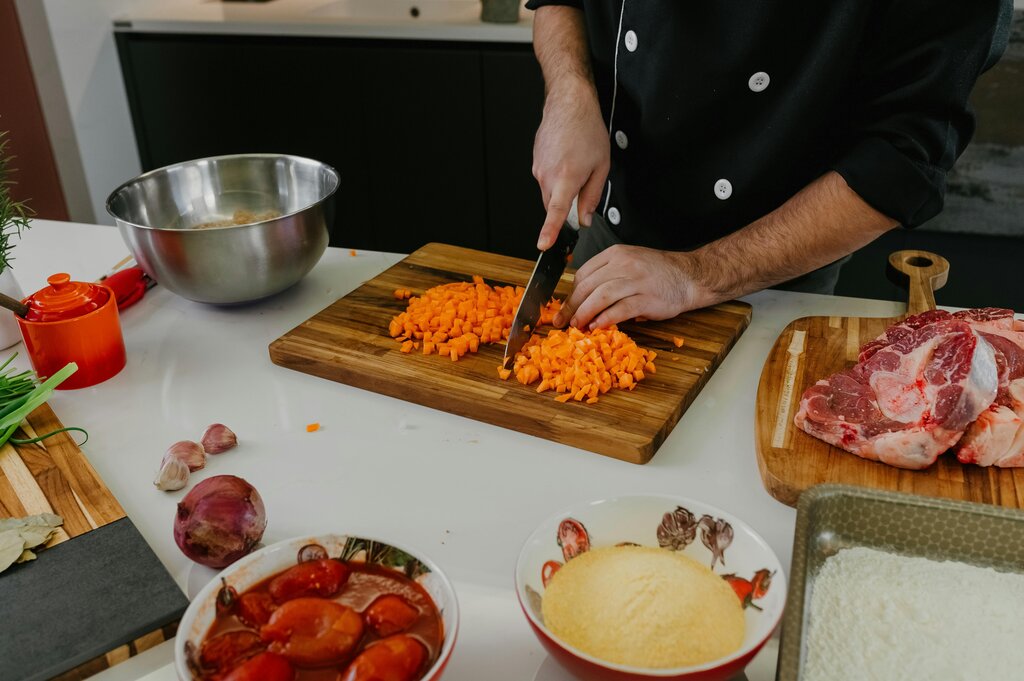
With the right knife and a secure grip, you're ready to learn the basic cuts. These techniques are the foundation for countless recipes. Let's start with a carrot to see the difference.
Chop: This is a less precise cut, resulting in pieces of a similar but not identical size. It's great for rustic soups or stews where uniformity isn't key.
Dice: Dicing creates small, uniform cubes. This is important when you want ingredients to cook evenly, like for a mirepoix (a mix of onion, carrot, and celery).
Julienne: This cut produces long, thin matchsticks. It’s often used for salads, slaws, and garnishes.
A Sharp Knife is a Safe Knife
It might sound counterintuitive, but a dull knife is far more dangerous than a sharp one. A sharp blade cuts cleanly through food with minimal pressure. A dull blade requires you to press down hard, increasing the chance it will slip off the food and into your hand.
“Sharp knives allow you to do your prep faster and more safely,” says Ralston, pointing out that duller knives tend to promote slips and cuts.
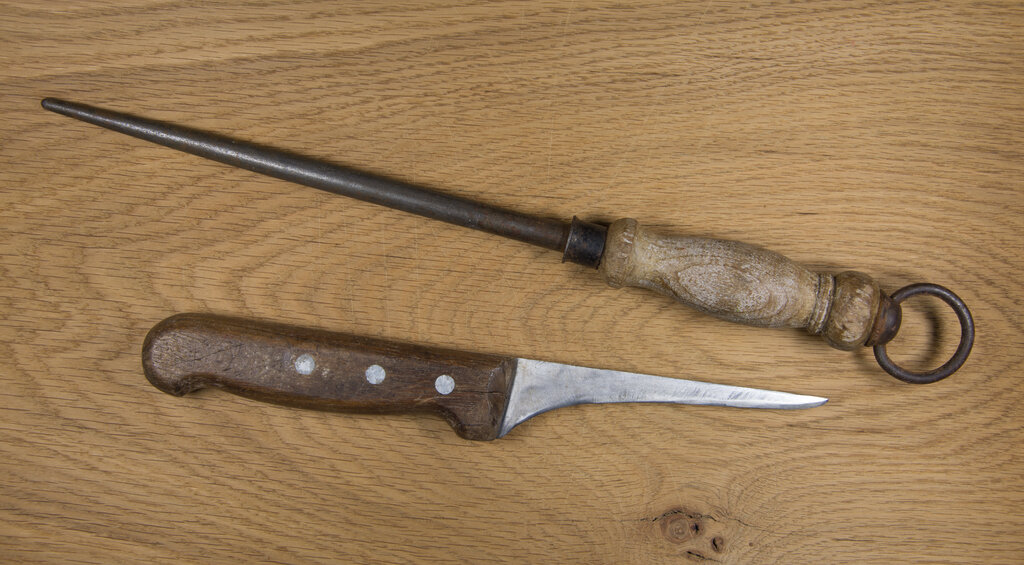
To maintain your knives, you'll need two tools: a honing steel and a sharpener.
Honing realigns the microscopic edge of the blade. It doesn't remove metal, it just straightens the edge. You should hone your knife frequently, even after every few uses.
Sharpening actually grinds away a tiny bit of the blade to create a brand new, sharp edge. This is done less often, perhaps once or twice a year for a home cook, using a whetstone or an electric sharpener.
Always remember a few key safety rules: never try to catch a falling knife, always cut on a stable surface like a cutting board, and carry a knife with the point down and the sharp edge facing away from you.
Ready to test your knowledge?
What is the primary difference between honing a knife and sharpening it?
When slicing a vegetable, the hand guiding the food should be in a 'claw grip' to protect the fingertips.
Mastering these basics takes practice, but it's a skill that will make every minute you spend in the kitchen more efficient and enjoyable.