Holistic Spiritual Wisdom and Inner Alignment
Foundations of Ancient Indian Wisdom
A Holistic Blueprint
Ancient Indian wisdom views life not as a collection of separate parts, but as a unified whole. Instead of seeing the body, mind, and spirit as distinct entities, this philosophy emphasizes their deep interconnection. Health and well-being aren't just about fixing a physical problem; they're about restoring balance to the entire system.
Ayurveda, an ancient Indian medical system, embodies a holistic approach to health, emphasizing the interconnectedness of body, mind, and spirit.
This perspective suggests that our thoughts can influence our physical health, and our physical state can shape our mental clarity. Everything is woven together. To understand this, we can look at the three core components of our being: the body, the mind, and the energy that animates them.
The Body as a Vessel
In Indian thought, the physical body is more than just a biological machine. It's considered a sacred vessel, a temporary home for our deeper consciousness. It is believed to be composed of five great elements, or Pancha Mahabhutas: Earth (Prithvi), Water (Jal), Fire (Agni), Air (Vayu), and Ether or Space (Akasha). A healthy body is one where these elements are in harmony.
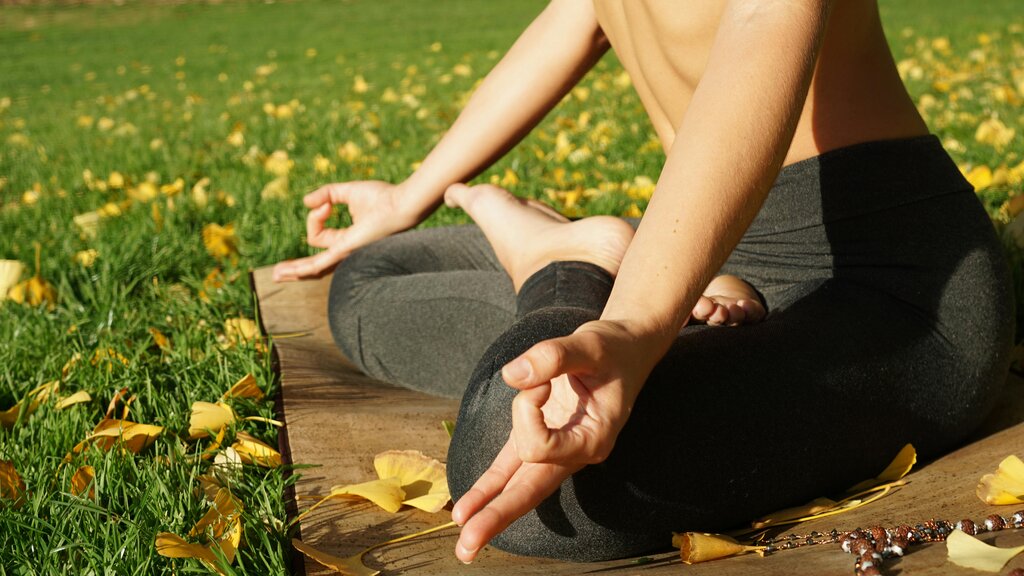
This physical form is often referred to as the Annamaya Kosha, or the sheath made of food. It's the most tangible layer of our existence, built and sustained by the food and water we consume. But it's also the starting point for a deeper journey inward. Taking care of the body isn't just for physical health, but to create a stable foundation for mental and energetic well-being.
The Landscape of the Mind
The mind, or manas, is seen as a constant flow of thoughts, emotions, and impressions. It's not a fixed object located in the brain, but a dynamic process that interprets the world through our senses. It's powerful, but it also has a tendency to be restless, jumping from one thought to the next like a restless monkey.
Ancient thinkers broke down the mind's functions to better understand it. Beyond the processing mind (manas), there is the intellect (buddhi), which is our capacity for discernment and decision-making. There is also the ego (ahamkara), which gives us our sense of 'I' or individual identity. A key goal of many practices is to quiet the restless manas so the clear wisdom of the buddhi can shine through.
The Flow of Life Force
What animates the body and powers the mind? Ancient Indian philosophy points to a vital life force energy.
Prana
noun
The vital life force or energy that permeates the body and the universe. It is the fundamental energy that sustains life.
Prana flows through everything. Think of it like electricity. A lamp is just a physical object (the body), but it needs electricity (prana) to light up and fulfill its function. Similarly, our bodies and minds need prana to operate. It is carried on the breath, which is why breathing practices are so central to many traditions. The quality and flow of our prana directly impact our vitality, mental state, and overall health.
This interconnection is practical, not just philosophical. If you feel stressed (a mental state), your breathing becomes shallow (affecting prana) and your shoulders might tense up (a physical response). Conversely, by consciously taking deep breaths (regulating prana), you can calm your mind and relax your body. Each element constantly influences the others.
A balanced life arises from understanding and nurturing all three aspects of our being. The health of one depends on the health of all.
Now, let's review these foundational concepts.
Ready to check your understanding?
According to the ancient Indian perspective, what is the fundamental relationship between the body, mind, and spirit?
The physical body, or Annamaya Kosha, is said to be composed of five great elements (Pancha Mahabhutas). Which of the following is NOT one of these elements?
Understanding these core principles—body, mind, and energy—provides a powerful framework for viewing health and life in a more connected and holistic way.