Holistic Sexual Wellness for Adults
Sexual Response Cycle
Mapping the Journey
For a long time, the dominant map for sexual response was a straight line. In the 1960s, researchers William Masters and Virginia Johnson proposed a four-stage linear model: excitement, plateau, orgasm, and resolution. It described a predictable climb to a peak, followed by a cool-down. This was groundbreaking work, but it presented a single, universal path.
However, human experience is rarely so uniform. More recent models acknowledge this diversity. Dr. Rosemary Basson proposed a non-linear, cyclical model that often begins with emotional intimacy or a desire for closeness, which then leads to arousal. In this view, desire isn't always the starting pistol; sometimes it's a response to pleasure and connection that are already happening. Satisfaction and positive emotional outcomes then reinforce the willingness to be sexual again in the future, creating a feedback loop.
Several qualitative studies on the female sexual response cycle have commented on the role of responsive desire in sexual interactions, noting that women often experience sexual arousal before sexual desire.
This model is particularly helpful for understanding arousal in long-term relationships, where the initial spark of spontaneous desire might be replaced by a more intentional and responsive form of intimacy.
The Brain's Balancing Act
Regardless of how the journey starts, the brain is the control centre, constantly weighing reasons to proceed against reasons to stop. The provides a powerful framework for this internal negotiation. It suggests that our sexual response is managed by two independent neurological systems: a gas pedal and a brake pedal.
The Sexual Excitation System (SES), or the 'gas', is the part of your brain that scans for sexually relevant information. It’s what gets triggered by your turn-ons, whether they're physical sensations, specific contexts, or erotic thoughts. A sensitive SES means you get aroused easily.
Conversely, the Sexual Inhibition System (SIS), or the 'brake', scans for reasons not to get aroused. These are your turn-offs. They can be external threats like a lack of privacy, or internal ones like stress, anxiety, or body image concerns. Everyone has a unique combination of sensitivities in their gas and brake pedals.
Think of it this way: Driving a car requires both an accelerator and a brake. A healthy sexual response system is not about having a supersensitive gas pedal; it's about being able to use both pedals effectively depending on the situation.
The Body's Response
When the 'gas' outweighs the 'brake', the brain signals the body to prepare for sexual activity. This process is orchestrated by the (ANS), the same system that controls your breathing, heartbeat, and digestion without your conscious input. The ANS has two main branches that work in a delicate balance during arousal.
Initially, the parasympathetic nervous system, known for its 'rest and digest' functions, takes the lead. It relaxes blood vessels, allowing blood to flow into the genitals. This phenomenon, called vasocongestion, is responsible for erections in men and the swelling of the clitoris and labia in women. It also triggers lubrication.
As excitement builds, the sympathetic nervous system, famous for 'fight or flight', joins in. It's not about danger here, but about energy and readiness. This system increases heart rate, blood pressure, and breathing. It also causes myotonia, or increased muscle tension, throughout the body, building towards the release of orgasm. After orgasm, the parasympathetic system helps the body return to its resting state.
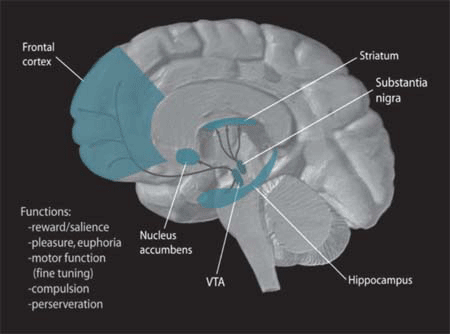
Understanding this interplay is key. Stress and anxiety activate the 'fight or flight' response prematurely, which can act as a powerful brake. Feeling safe, relaxed, and comfortable allows the parasympathetic system to do its job, paving the way for arousal.
To better understand your own responses, let's review the core concepts.
Now, let's check your understanding of these models and mechanisms.
What is a primary distinction between the linear model of sexual response proposed by Masters and Johnson and the cyclical model proposed by Dr. Rosemary Basson?
According to the Dual Control Model, a person's 'turn-ons' and sensitivity to erotic cues are managed by which system?
By understanding these different models and the physiological processes at play, you gain the literacy to understand physical pleasure not as a simple reflex, but as a complex and personal interaction between your brain, your body, and your environment.