History of Women's Medical Neglect
Defining Hysteria
The Diagnosis of Hysteria
For centuries, if a woman was considered difficult, anxious, or simply deviated from social norms, there was a convenient medical label for her: hysteria. This term, which has its roots in the Greek word for uterus, hystera, was one of the most common diagnoses for women for over two thousand years. The underlying assumption was that a woman’s health, both mental and physical, was dictated by her reproductive organs.
The term hysteria originated in Ancient Greece.
Early theories, particularly from ancient Greece, proposed the idea of a ''. Physicians believed the uterus could detach and move freely throughout a woman's body, causing a wide array of symptoms by pressing on other organs. If it moved upward, it might cause breathlessness or fainting. If it went elsewhere, it could result in paralysis or convulsions. The prescribed 'cure' was often marriage and pregnancy, which would supposedly return the womb to its rightful place.
From Uterus to Nerves
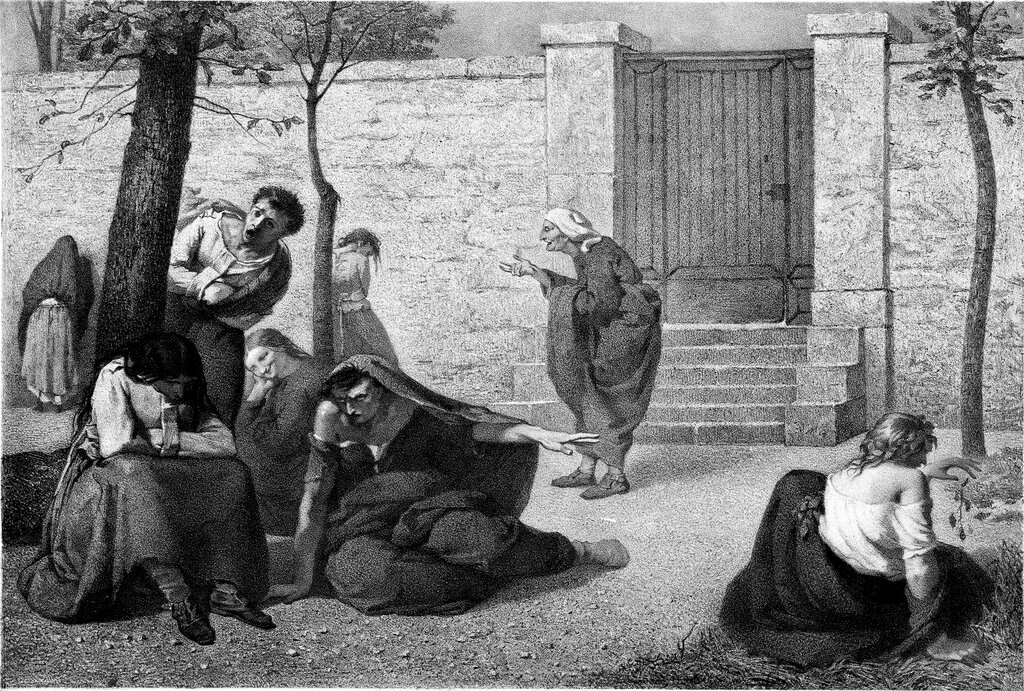
By the 19th century, the wandering womb theory had fallen out of fashion, but the diagnosis of hysteria remained as prevalent as ever. The focus simply shifted from the uterus to the nervous system. This transition was largely driven by neurologists like Jean-Martin Charcot in Paris. He treated patients at the Salpêtrière hospital, where he used hypnosis to both induce and relieve hysterical symptoms like paralysis and seizures. Charcot argued that hysteria was a genuine neurological disorder, caused by a hereditary weakness in the nervous system.

A young studied with Charcot and was initially convinced by his neurological explanation. However, Freud later broke from this model. He began to suspect the root cause was not physical but psychological, stemming from repressed memories and traumas. This was a radical shift, suggesting that the mind could produce profound physical symptoms, a concept that would become central to psychoanalysis.
A Social Diagnosis
Despite the evolving medical explanations, hysteria consistently served a social function: to regulate female behavior. The Victorian era idealized women as passive, domestic, and submissive. A 'proper' lady was expected to manage the home, raise children, and be a calming influence on her husband. She was not supposed to have strong opinions, ambitions, or overt desires.
Hysteria became a catch-all diagnosis for any woman who failed to meet this ideal. Symptoms weren't just physical; they included 'moral' failings like nervousness, irritability, emotional outbursts, and even reading novels, which was thought to overstimulate a woman's delicate mind.
In this context, a diagnosis of hysteria was a powerful tool of social control. It pathologized female non-conformity, turning legitimate emotional distress or intellectual ambition into a medical illness. It dismissed women's experiences and reinforced the idea that their bodies and minds were inherently unstable. This framework allowed society to manage 'troublesome' women without having to address the restrictive social conditions that might have been causing their distress in the first place.
While we no longer use the term in medicine, the history of hysteria offers a crucial lesson on how social biases can shape medical understanding, often to the detriment of those seeking help.